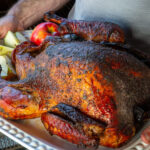
How to Brine a Turkey With Apple Cider the Right Way
This homemade Apple Cider Turkey Brine combines fresh apple cider, honey, warm spices, and citrus to create an incredibly juicy, flavorful Thanksgiving turkey. The combination of sweet apples, cinnamon, ginger, and orange infuses the turkey with a delicate seasonal flavor that pairs beautifully with both smoked and oven-roasted turkey.
Servings 1 turkey
Equipment
- 1 22 Quart Cambro With Lid
Ingredients
Brine Ingredients
- 2 gallons apple cider divided
- 1 cup kosher salt
- ½ cup honey or brown sugar
- 2 cinnamon stick
- 7 whole cloves
- 1- inch piece fresh ginger thinly sliced
- 1-2 oranges fresh (juice of)
Turkey
- 12-16 pound whole raw turkey fresh or completely thawed
Optional Add-Ins
- 3 sprigs Fresh rosemary, sage, thyme
Instructions
Prepare the Apple Cider Brine
- Combine the cider, salt, and honey. Pour 1 gallon of apple cider into a large stockpot, reserving the second gallon for later. Add the kosher salt and honey, stirring to combine.
- Place the cinnamon sticks, whole cloves, and thinly sliced fresh ginger into the pot.
- Prepare the orange. Using a citrus zester or channel knife, remove strips of zest from the orange and add them to the cider mixture. Cut the orange in half and squeeze its juice directly into the pot.
- If using any optional fresh herbs or optional additions add them now.
- Heat the brine. Bring the cider mixture to a boil over medium-high heat, stirring occasionally until the kosher salt and honey have completely dissolved.
- Cool the brine. Remove the stockpot from the heat and allow the mixture to cool. Once it reaches room temperature, transfer it to the refrigerator until thoroughly chilled. Never add warm brine directly to raw turkey.
Brine the Turkey
- Prepare the turkey. Remove the packaging and giblets and neck from the turkey, making sure the bird is completely thawed before beginning. Place the turkey breast-side down in a clean, food-safe 5-gallon bucket or large brining container.
- Add the remaining cider. Pour the reserved gallon of cold apple cider over the turkey.
- Pour in the prepared brine. Once the cooked apple cider mixture has chilled completely, add it to the container with the turkey. Make sure the bird is submerged in the brining liquid.
- Refrigerate and brine. Cover the container and refrigerate for 24 hours, keeping the turkey and brine at 40°F or below. For a longer brine, the turkey may remain in the solution for up to 48 hours. Larger turkeys should be turned once during the process to help ensure even brining.
Remove the Turkey From the Brine
- Remove and dry the turkey. When the turkey has finished brining, carefully lift it from the cider mixture and allow the excess liquid to drain away. Use paper towels to thoroughly pat the skin dry.
- Discard the brine. Remove the large spices and fruit pieces and discard the used brining liquid. Thoroughly wash and sanitize the brining container and any surfaces that came into contact with the raw turkey.
- Place the turkey on a sheet pan or roasting rack and refrigerate allowing the skin to dry out for 2 hours. This step is optional but it encourages crispy skin. Season and cook. Your apple cider brined turkey is now ready for smoking or roasting. Season the outside with your favorite turkey rub or compound butter before cooking.
Notes
Brining Time: For the best balance of flavor and moisture, I recommend brining the turkey for approximately 24 hours. An overnight brine will also produce good results, and the turkey can remain in this solution for 36-48 hours.
Kosher Salt: This recipe uses 1 cup of kosher salt for 2 gallons of apple cider. This is the traditional brining ratio used in culinary school textbooks. Kosher salt must be used, not table salt.
Apple Cider: Use fresh apple cider, not apple cider vinegar. Apple juice may be substituted if cider isn't available.
Turkey Size: This recipe makes approximately 2 gallons of brine, suitable for submerging one whole turkey in an appropriately sized container. Larger birds may need to be turned halfway through brining.