
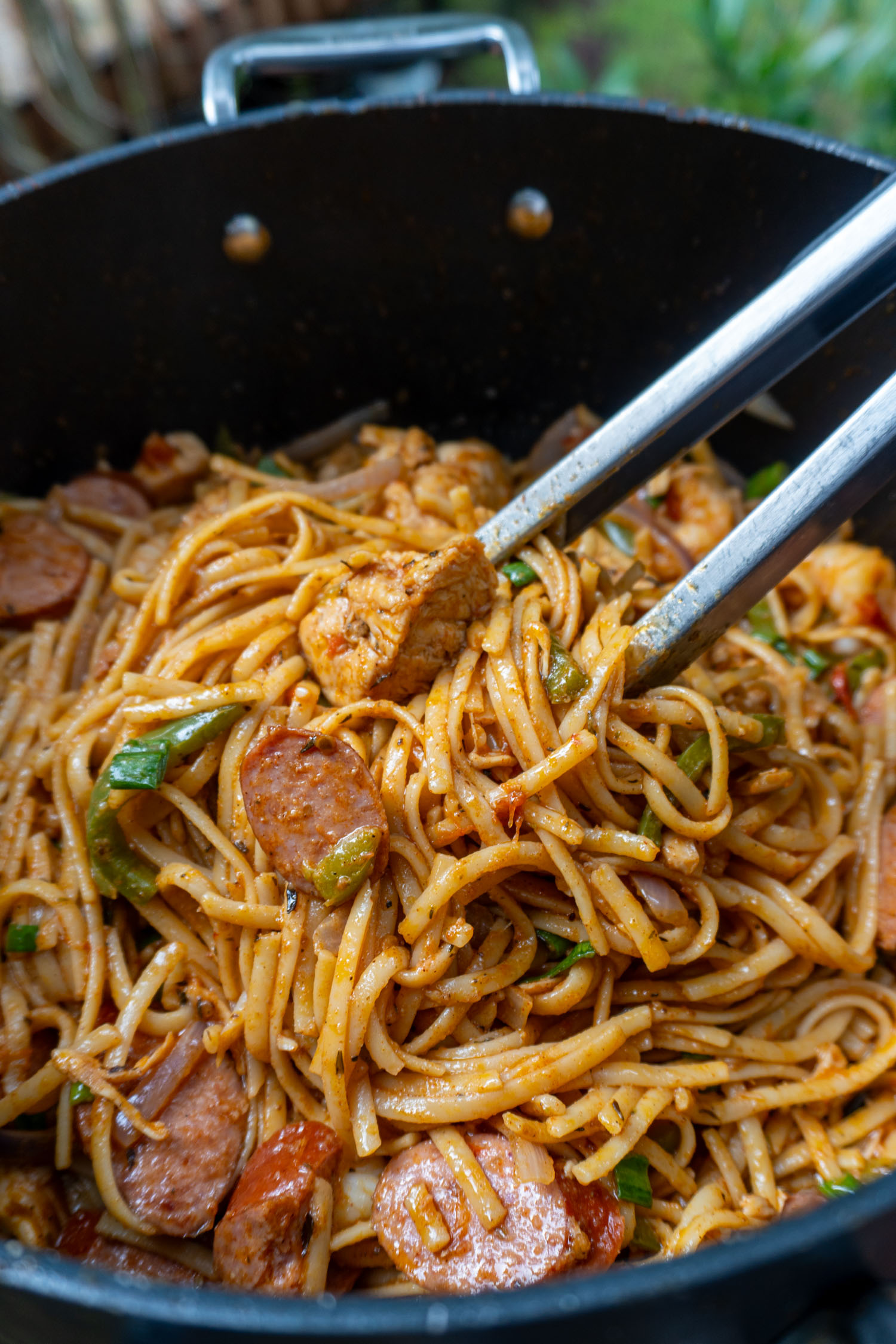
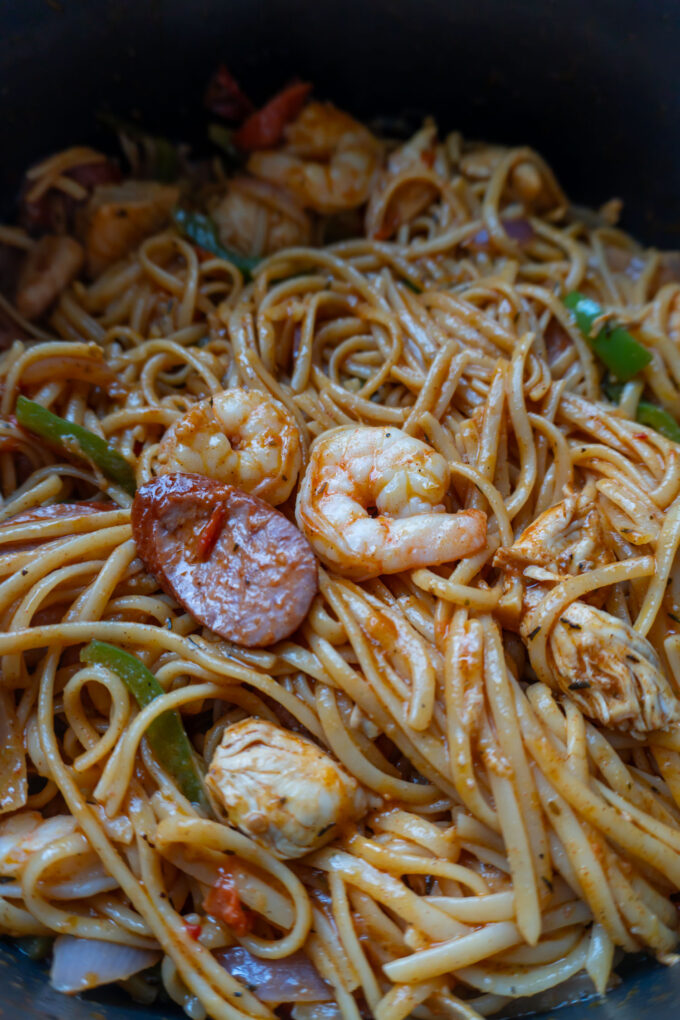
Pastalaya is a loud, buttery, and bold party pasta dish straight from Louisiana.
If you've never heard of it, think jambalaya’s cousin who traded rice for pasta, loaded with smoky sausage, tender chicken, juicy shrimp, and a Cajun butter sauce that coats every strand of linguine like it means business!
This is the kind of skillet you carry straight to the table and let everyone fend for themselves. It's cajun cuisine, but every recipe can be a little different, given the cooks individual preferences (just like gumbo).
What Does Pastalaya Taste Like?
Rich, bold, spicy, loaded with as many meats as your best gumbo, and more filling due to the pasta. One pot feeds a lot of mouths.
If you understand how fat carries flavor, you understand why this dish works.
Cajun cooking isn’t just about heat — it’s about blooming spices in butter or roux, building layers with browned proteins and the holy trinity (green or red bell pepper, onion, and celery), and finishing pasta directly in the sauce so the starch emulsifies everything into one glossy, cohesive skillet.
It's a lot like our Crawfish Monica Recipe (another cajun pasta dish) we posted last year for Mardi Gras. Instead of fettuccini with a spicy cream sauce, we're talking robust meats in a spicy cajun butter sauce.
When is a Good Time to Make A Batch Of Pastalaya?
Our Pastalaya recipe makes a big batch, which we associate with party food and gathering together. It could be great for Jazz Fest, Mardi Gras, the Big Game, a neighborhood potluck, or whenever you need to feed a lot of people but make it easy.
This is also a one pot dish if you use something large like the iconic Magnalite pan, or a large dutch oven pot.
History of Pastalaya in Louisiana
Pastalaya is not an old Creole classic like gumbo or jambalaya — it’s actually a modern Cajun adaptation that grew out of community cooking traditions in South Louisiana.
It Comes from Jambalaya
Traditional jambalaya (especially the Cajun “brown” version) is built by:
- Browning meat
- Building a seasoned base
- Cooking rice directly in the pot so it absorbs flavor
At some point in the late 20th century — likely 1980s–1990s — cooks in rural Louisiana began swapping rice for pasta. The structure stayed the same, but spaghetti or linguine replaced the rice. The result? Pastalaya. Instead of rice absorbing liquid, pasta is simmered in seasoned broth and fat, soaking up that smoky, spiced flavor.
Cajun vs. Creole Roots
This is important for New Orleans context.
New Orleans cuisine is traditionally Creole, creole cuisines are influenced by:
- French
- Spanish
- Caribbean
- African traditions
Classic Creole dishes are tomato-forward and city-based.
Pastalaya, however, is more closely tied to Cajun country — the Acadian-descended communities of Southwest Louisiana. It’s a rural, big-batch, outdoor cooking dish. Think:
- Church fairs
- Fundraisers
- Hunting camps
- Crawfish boils
It later made its way into New Orleans through festivals and catering culture, but it didn’t originate there.
Why Pasta?
There are a few practical theories:
- Feeds a crowd cheaply – Pasta can stretch protein even further.
- Easier texture control – Large-batch rice can overcook; pasta is more forgiving in festival-sized pots.
- Italian influence – South Louisiana has long-standing Sicilian immigrant communities (especially in New Orleans), so pasta wasn’t foreign to the region.
The dish is now common at Louisiana fairs and Mardi Gras events — especially in huge black iron pots cooked over propane burners.
Is Pastalaya “Authentic”?
Yes — but in a different way.
It’s authentic in the sense that:
- It evolved locally.
- It follows Cajun cooking structure.
- It’s cooked communally.
But it’s not a 200-year-old French colonial dish. It’s more of a 40-year-old Louisiana innovation.
What Makes This “Pastalaya”
Traditionally, pastalaya is the pasta cousin of jambalaya — a big batch Cajun dish cooked outdoors for a crowd. Instead of rice, you use pasta, and instead of subtlety… you go bold.
This version leans into butter for richness while still keeping that Louisiana backbone.
Optional Add-Ins (Urban Cowgirl Style)
- Splash of heavy cream for a slightly creamy version
- A handful of parmesan cheese (not traditional, but delicious)
- Smoked sausage from the smoker for extra depth
- For a Texan hit, add in 3 roasted green chiles or a 4 oz. can
- Finish with lemon zest for brightness
Perfect — here’s a clean “Optional Substitutions & Variations” section you can drop straight into your blog post.
Optional Substitutions & Variations
One of the best things about pastalaya is how flexible it is. It was born as a practical, feed-a-crowd dish — so adapting it is part of the tradition.
Swap the Chicken
- Use chicken thighs instead of tenders for deeper flavor and more moisture.
- Leftover rotisserie chicken works in a pinch — just stir it in at the end so it doesn’t dry out.
Change the Sausage
- Andouille is classic, but any smoked sausage works.
- Want to go full meat lovers style? Add tasso, diced ham, or even a little browned ground beef.
Shrimp Adjustments
- Skip shrimp entirely for a simpler chicken-and-sausage version.
- Or double the shrimp and reduce the chicken for a coastal spin.
Seasoning Flexibility
- You can use a store-bought Cajun seasoning blend instead of measuring individual spices.
- Prefer something slightly milder and more herb-forward? Swap in Creole seasoning.
- Always taste and adjust — seasoning blends vary wildly in salt content.
Pasta Options
- Linguine gives you that silky, coated texture.
- Penne pasta works beautifully if you prefer something that traps sauce in the ridges.
- Any sturdy dry pasta will work — just cook it slightly under al dente so it finishes in the sauce.
This dish is essentially jambalaya made in place of rice, so the structure stays the same even if the shape changes.
Butter Adjustments
- Reduce the butter and replace part of it with olive oil if you want a slightly lighter finish.
- Add a splash of cream for a richer, almost étouffée-style sauce.
Heat Level
- Keep the skillet at medium heat when building the sauce so the garlic doesn’t burn.
- Want it spicier? Increase cayenne or hot sauce gradually — you can always add more.
Pastalaya Recipe
Ingredients
Pasta & Protein
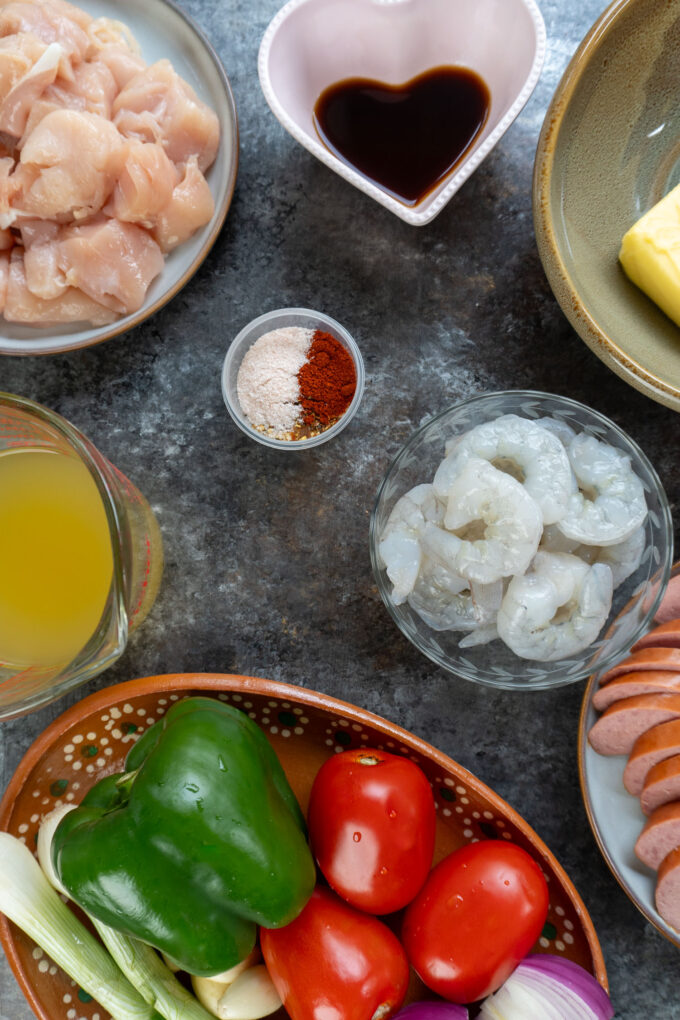
- 1 pound linguine
- 6 chicken tenders or 3 chicken breasts
- 1 pound andouille sausage or smoked sausage sliced into coins
- ½ pound shrimp peeled and deveined
Cajun Butter Sauce
- 8 ounces 2 sticks butter softened, room temperature
- 4 large garlic cloves minced
- 1½ tablespoons Worcestershire sauce
- 2 tablespoons Louisiana-style hot sauce like Crystal Hot Sauce
- ⅛ teaspoon cayenne pepper or more if you like heat
- 1 teaspoon black pepper
- 1 teaspoon dried oregano
- 1½ teaspoons dried thyme
- 2 teaspoons onion powder
- ¼ teaspoon white pepper
- ¼ teaspoon red pepper flakes
- 1 teaspoon paprika
- 1 teaspoon salt
- 8 ounces chicken stock
Vegetables:
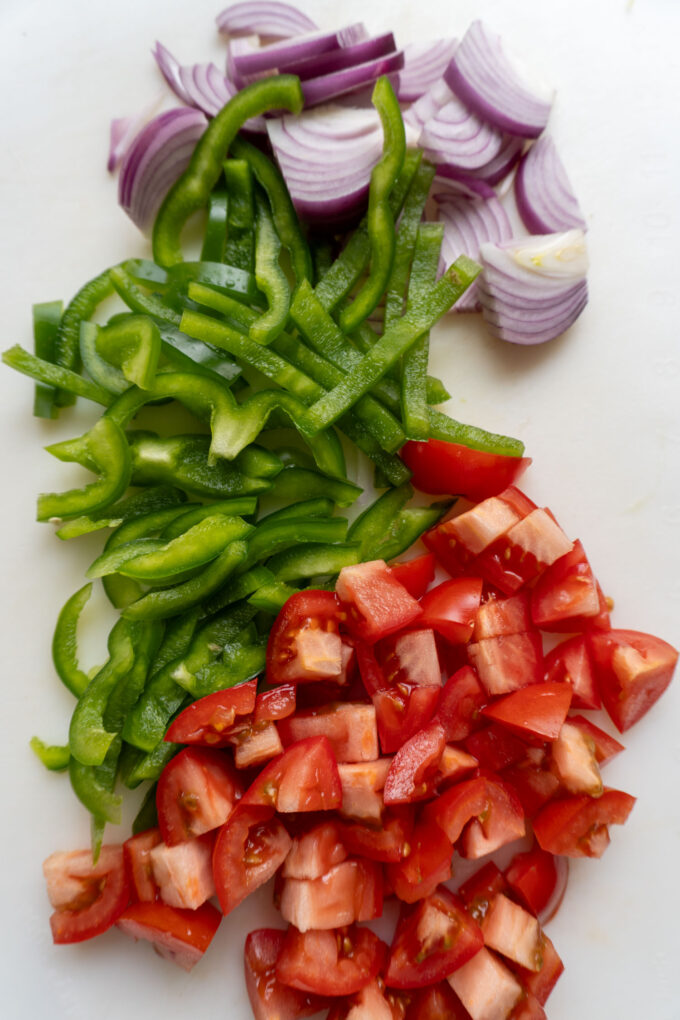
- 1 Green Bell Pepper sliced into strips
- 1/4 Red Onion sliced into strips
- 3 Roma tomatoes chopped
Garnish:
- 6 Green Onions chopped
- 1/3 cup Fresh parsley chopped
Instructions
Cook the Pasta
- Bring a large pot of salted water to a boil.
- Cook linguine until just shy of al dente (about 1 minute under package instructions).
- Chef Tip: Undercooking slightly keeps the pasta from over-softening when it finishes in the sauce.
Build the Cajun Butter
- Add all butter ingredients to the softened butter, including Worcestershire, hot sauce, and spices. Mash well with a fork until fully combined. Divide the butter in half — use one half to brown the meat and reserve the remaining half to finish the sauce.
Brown the Proteins
- In a large dutch-oven or high-sided skillet: Heat the pan to medium. Add half of the butter to the skillet.
- In the melted cajun butter sauce, brown the sausage first. Remove and set aside.
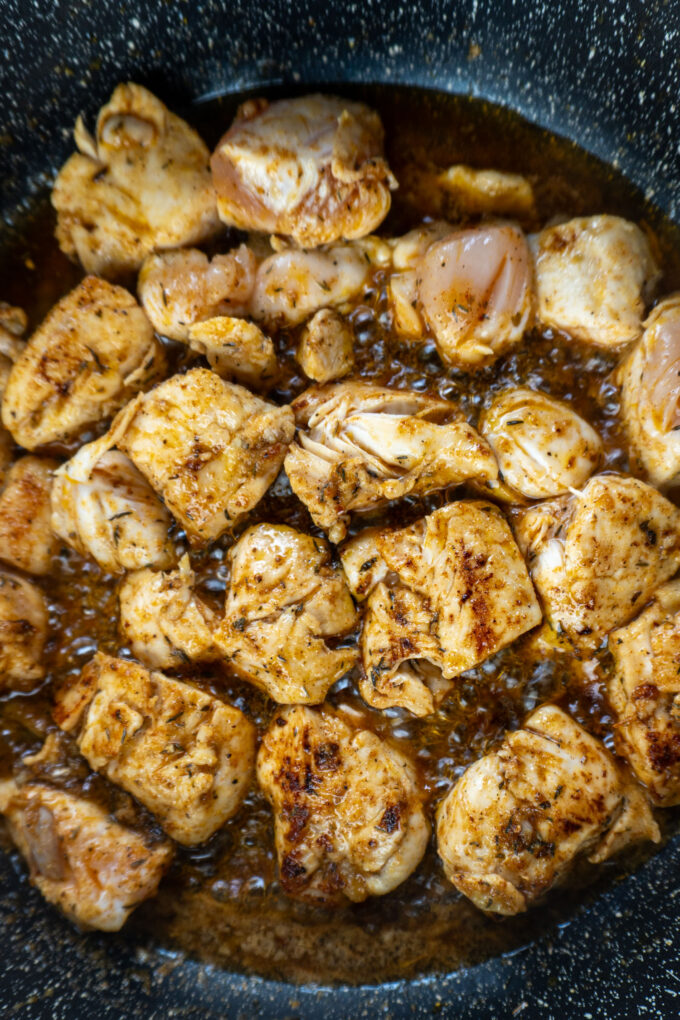
- In the rendered fat, cook the chicken until golden and cooked through. Remove.
- Add shrimp last and cook just until pink (about 60–90 seconds per side). Remove immediately.
- Why separate? Each protein has a different cook time. Overcooked shrimp = rubber bands. We don’t do that here.Science Moment: Fat carries spice compounds beautifully. Blooming spices in butter releases fat-soluble flavor molecules, giving you a deeper Cajun profile instead of raw spice heat.
Sauté The Veggies
- Sauté the bell pepper, onion, and tomato in the cajun butter for 3-5 minutes or until tender.
Bring It All Together
- Lower the heat. Return sausage, chicken, and shrimp to the pan.
- Add drained linguine and toss thoroughly in the butter sauce.
- Add the second half of the cajun butter and toss well. Add the chicken broth to emulsify and help the sauce cling to the noodles. Toss well with tongs.
- Simmer 2–3 minutes until everything is glossy and coated.
Taste & Adjust
- Check salt and heat. Add extra hot sauce or cayenne if you want more kick.
Finish and Garnish
- Finish with fresh chopped parsley and chopped green onions. Serve hot in bowls with extra hot sauce for those who like it spicy!
Jen says
So tasty! I made this for dinner with friends and now they request it all the time!
Robert says
Did this for a tailgate. Turned out fantastic.