
Smoking salmon sounds impressive, but let’s be honest — it makes a lot of people nervous. Dry fish, a raw interior, or salmon that just tastes like smoke and nothing else? No thanks.
Especially when it’s treated with a plain-Jane barbecue rub and left at that. If you’ve ever wondered whether smoked salmon is really worth the effort — this recipe is for you. People can't stop devouring it!
Our approach is different, but effective...a combination of rub and glaze, painted on to a cross-hatched side of salmon that fills every fold with sticky sweet heat flavor. Maple syrup gives the salmon richness, mandarin orange zest adds an aromatic citrus lift, and a pinch of red pepper flakes brings everything into balance.
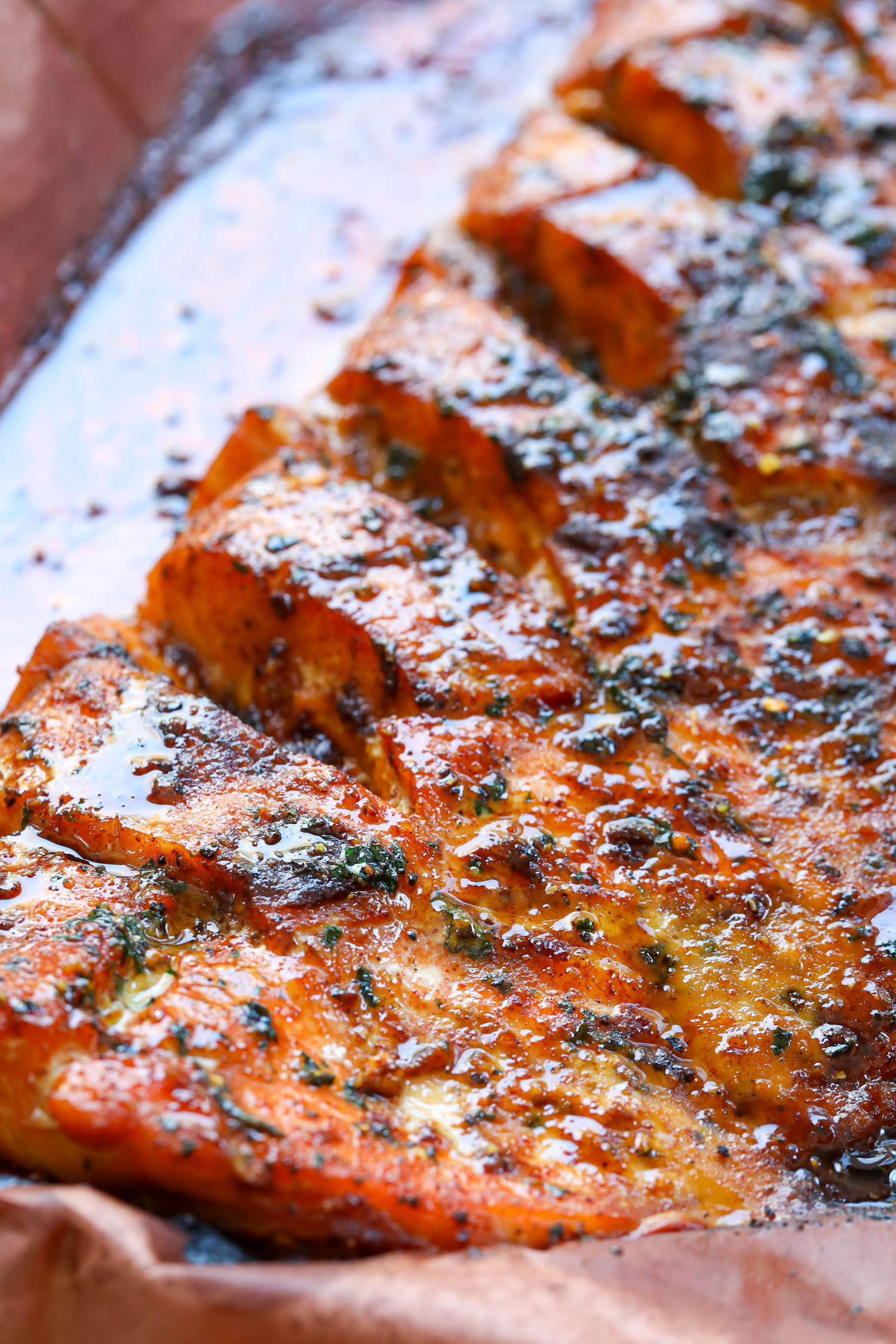
When that glaze hits a side of salmon and goes into a low, steady smoker, the magic happens. The glaze tightens instead of dripping, the edges caramelize without burning, and the salmon stays juicy and tender all the way through.
It’s the kind of recipe that makes people think you did something complicated — even though the process is straightforward and forgiving.
In this post, I’ll walk you through exactly how to smoke salmon step by step, explain the easiest ways to work with your salmon fillet, and show you how to get a glossy, flavorful side of smoked salmon that turns out right every single time — whether you’re new to smoking or already comfortable at the grill.
Why This Smoked Salmon Recipe Works
The Recipe:
When developing this recipe, the goal was balance. Salmon is naturally rich, so the glaze needed sweet flavors to complement that richness — not overwhelm it. Maple syrup brings depth rather than using simple brown sugar, and mandarin orange zest adds aroma and dimension. A pinch of red pepper flakes provides contrast, keeping the glaze from tasting one‑note or overly sweet.
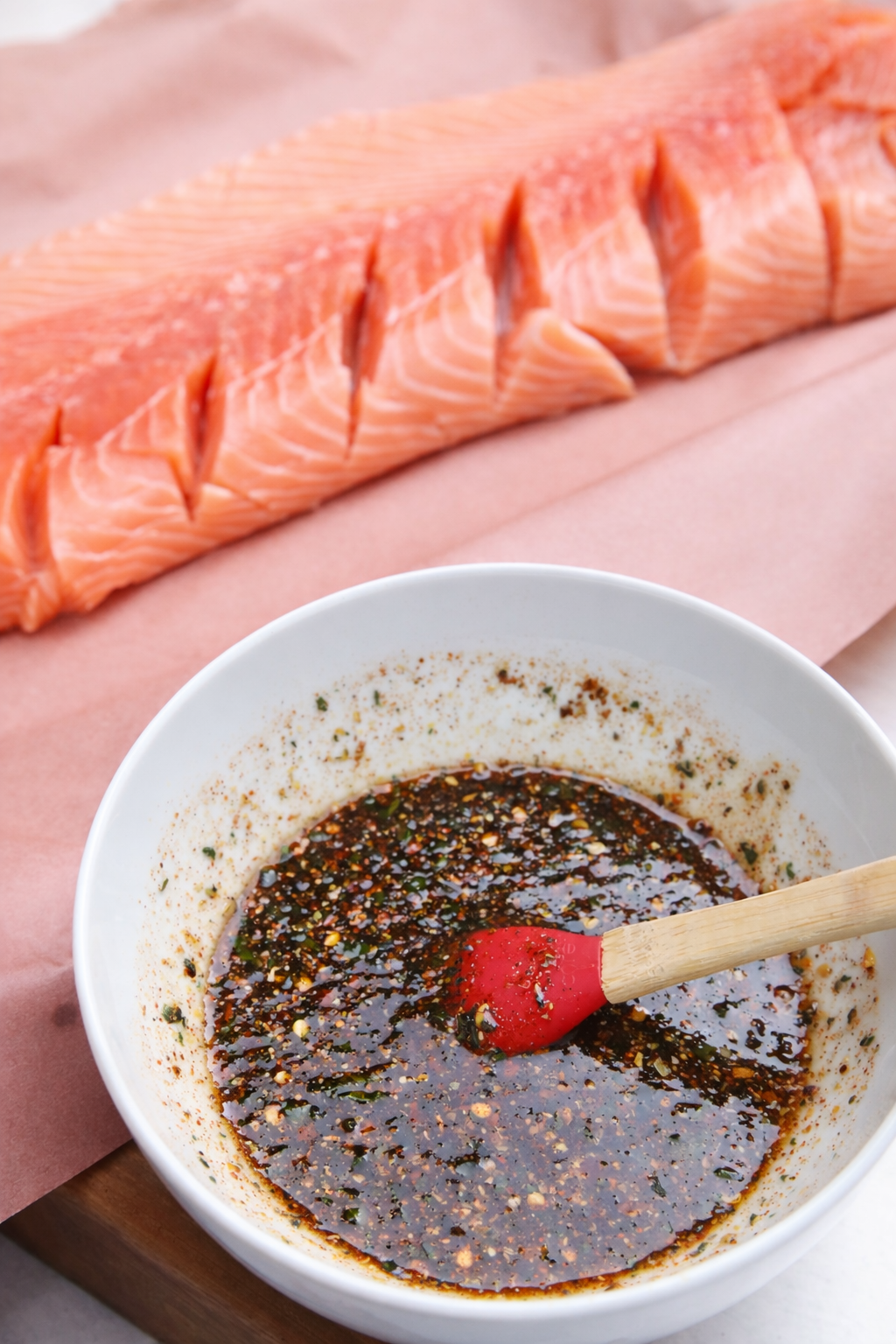
The Technique:
Crosshatching the raw salmon allows the glaze to penetrate deep into the flesh, seasoning every bite instead of just coating the surface. Smoking at a controlled low temperature preserves moisture while allowing the glaze to tighten and cling. This salmon is smoked at a higher temperature which means dinner is only about an hour away. For dinner on the smoker, that's about as fast as you can get!
Choosing the Best Salmon to Smoke
This recipe was developed using farm‑raised salmon, which tends to be thicker, fattier, and more forgiving during long, low‑temperature smoking. It's also available almost everywhere.
That said, you can absolutely use other types of salmon:
- Atlantic salmon: Mild, fatty, and ideal for glazing
- King (Chinook) salmon: Rich and luxurious, but cooks faster
- Sockeye salmon: Leaner with deeper color; reduce smoking time
- Coho salmon: Balanced and versatile
Leaner wild salmon will cook faster and can dry out more easily, so keep a closer eye on internal temperature.
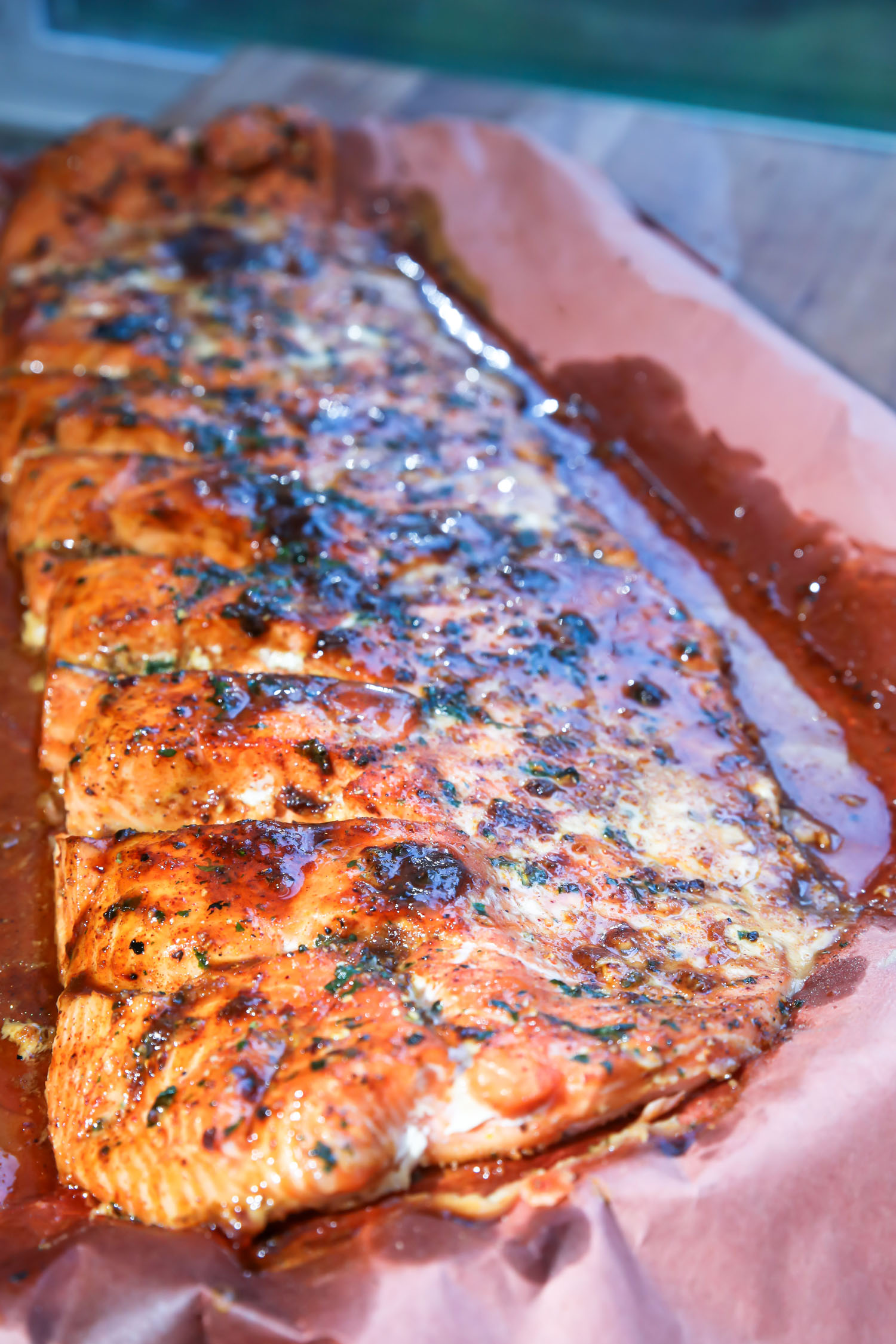
What Is The Difference Between Hot-Smoked Salmon and Cold-Smoked Salmon
Fresh salmon naturally has a high fat content, which is exactly why it’s so forgiving on the smoker — when it’s treated correctly. That richness protects the fish from drying out and gives you room to build layers of flavor instead of just smoke. That being said there are two method to smoke salmon and you'll have to experiment to find out your favorite way.
Hot-Smoked Salmon
This is what your recipe is.
- Temperature: Usually smoked between 175–225°F
- Texture: Flaky, tender, and fully cooked
- Appearance: Opaque, sometimes lightly caramelized on the outside
- Internal temperature: Finished around 135–140°F
- How it’s eaten: Warm or room temperature, as a main dish, in salads, bowls, or served straight off the grill
Cold-Smoked Salmon
This is the lox-style salmon you see on bagels.
- Temperature: Smoked at under 90°F (often 70–80°F)
- Texture: Silky, translucent, and raw-looking
- Appearance: Deep coral color, glossy
- Internal temperature: Never reaches a “cooked” temp
- How it’s eaten: Thinly sliced, cold, usually with cream cheese, capers, and onions
Which One Should You Use?
For this recipe — hot-smoked salmon is absolutely the right choice because:
- The glaze caramelizes instead of melting off
- The salmon cooks through safely
- You get flaky, juicy texture instead of raw silkiness
How to Prepare the Salmon for Smoking
1. Pat the Salmon Dry
Remove the side of salmon from the refrigerator and place it on a butcher paper lined baking sheet for easy transportation, allowing the salmon to begin coming to room temperature while prepping the recipe. Use a paper towel to remove surface moisture from the side of salmon. This helps the glaze adhere and promotes better smoke absorption.
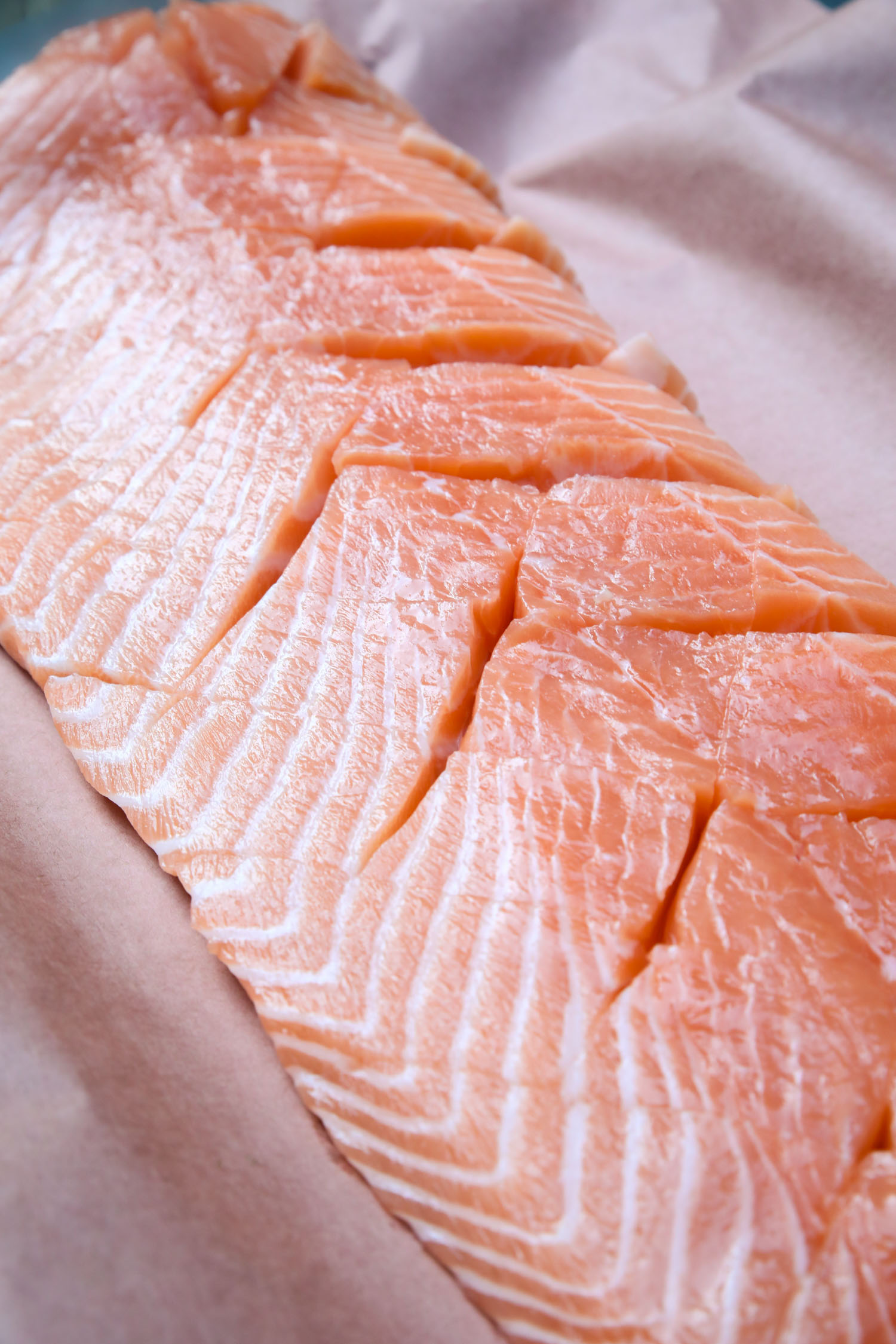
2. Crosshatch the Salmon
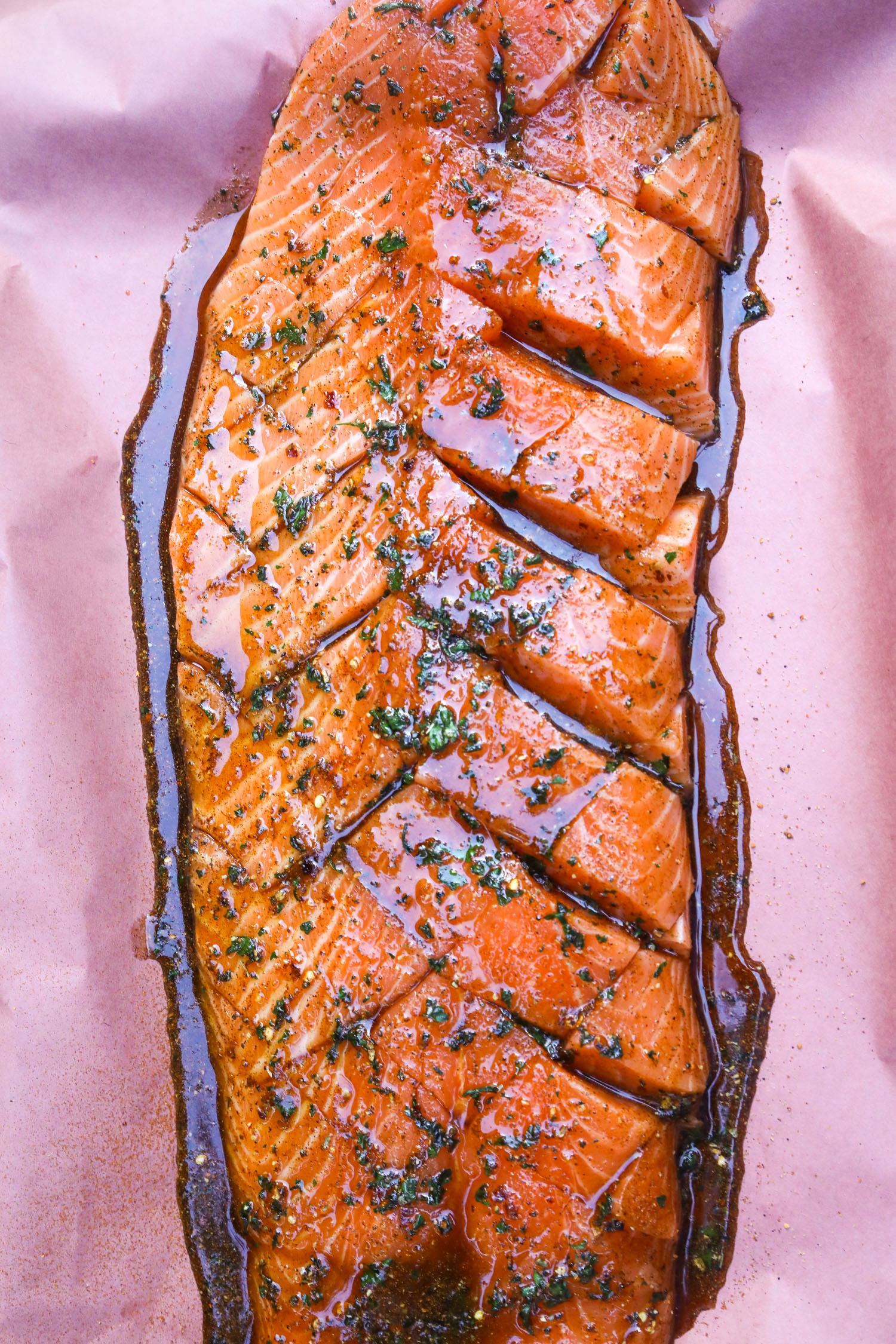
Using a sharp knife, lightly score the raw salmon in a crosshatch pattern. This step is critical — it allows the glaze to sink into the flesh rather than sliding off during smoking which adds to the punch in flavor.
3. Glaze The Salmon Heavily
In our recipe the glaze is behaving like a rub. It's loaded in spices and citrus zest that encrust the salmon, running into every nook and cranny of the crosshatch lines. We think this works better than a dry brine as it helps absorb smoke flavor, while offering the dynamic of a sweet lacquer glazed finish.
4. Prep The Pellet Grill or Traditional Smoker
Brush and clean the chamber of your barbecue smoker and fill with wood chips or your selected wood for this project. Pellet smoker folks will set the smoker to 200-225 degrees, depending on how long you'd like your smoke time to last. For your first time, I'd recommend going low and slow (the max a side of salmon will take is 1.5 hours) to ensure that you do not overcook the salmon. Higher temps can finish the salmon in as little as 45 minutes.
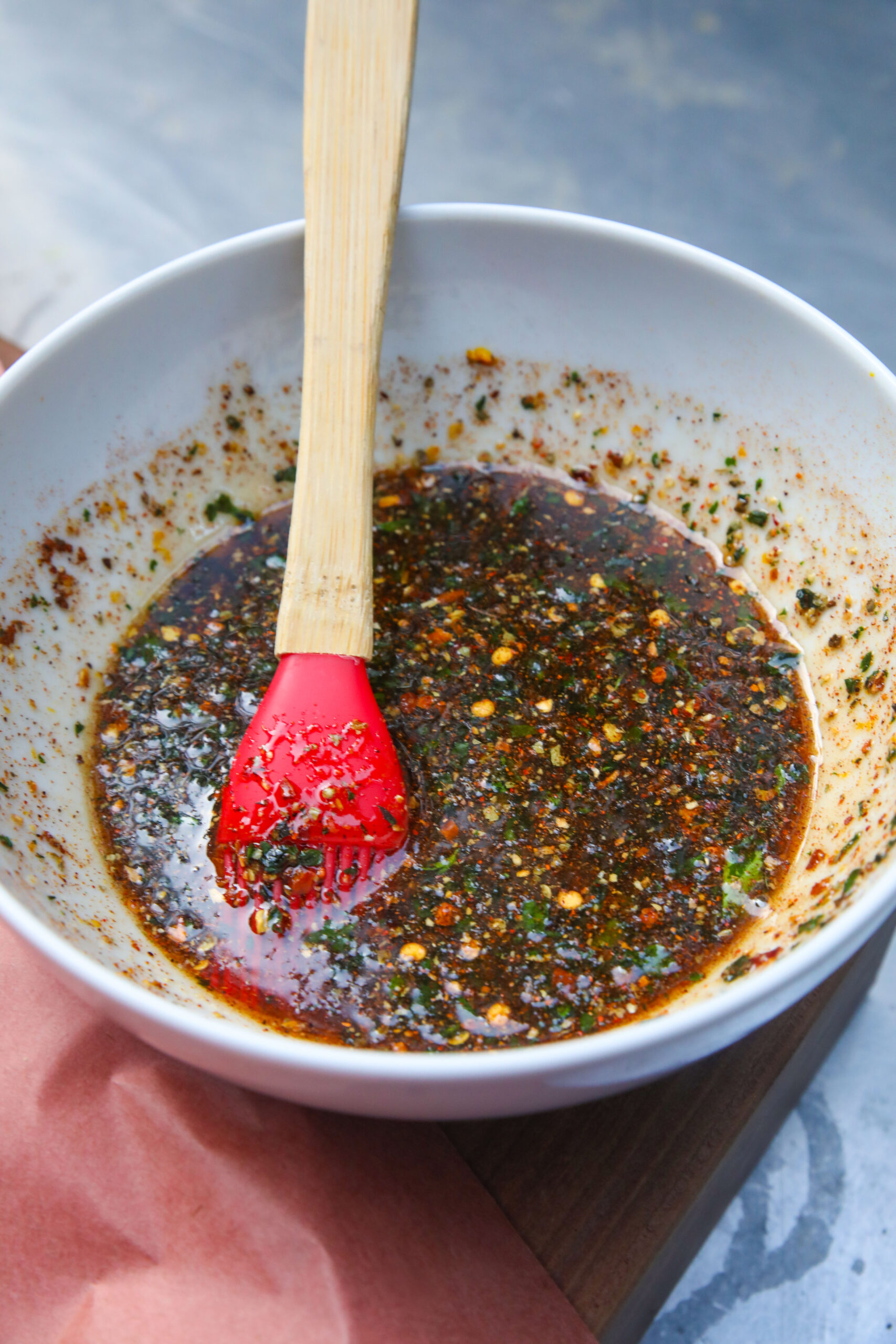
Making the Maple Orange Glaze
In a bowl, combine the maple syrup, mandarin orange zest, all-purpose seasoning, seafood seasoning, Texas chili powder, red pepper flakes, and chopped parsley. Stir until fully blended.
The aroma should be bright, sweet, and savory, with just a hint of heat. This glaze was designed to enhance the salmon, not mask it.
How to Smoke Salmon Step by Step
Step 1: Prepare the Baking Sheet
Line a baking sheet with butcher paper. This makes transferring the salmon easy and prevents sticking. The butcher paper also catches excess glaze while allowing airflow.
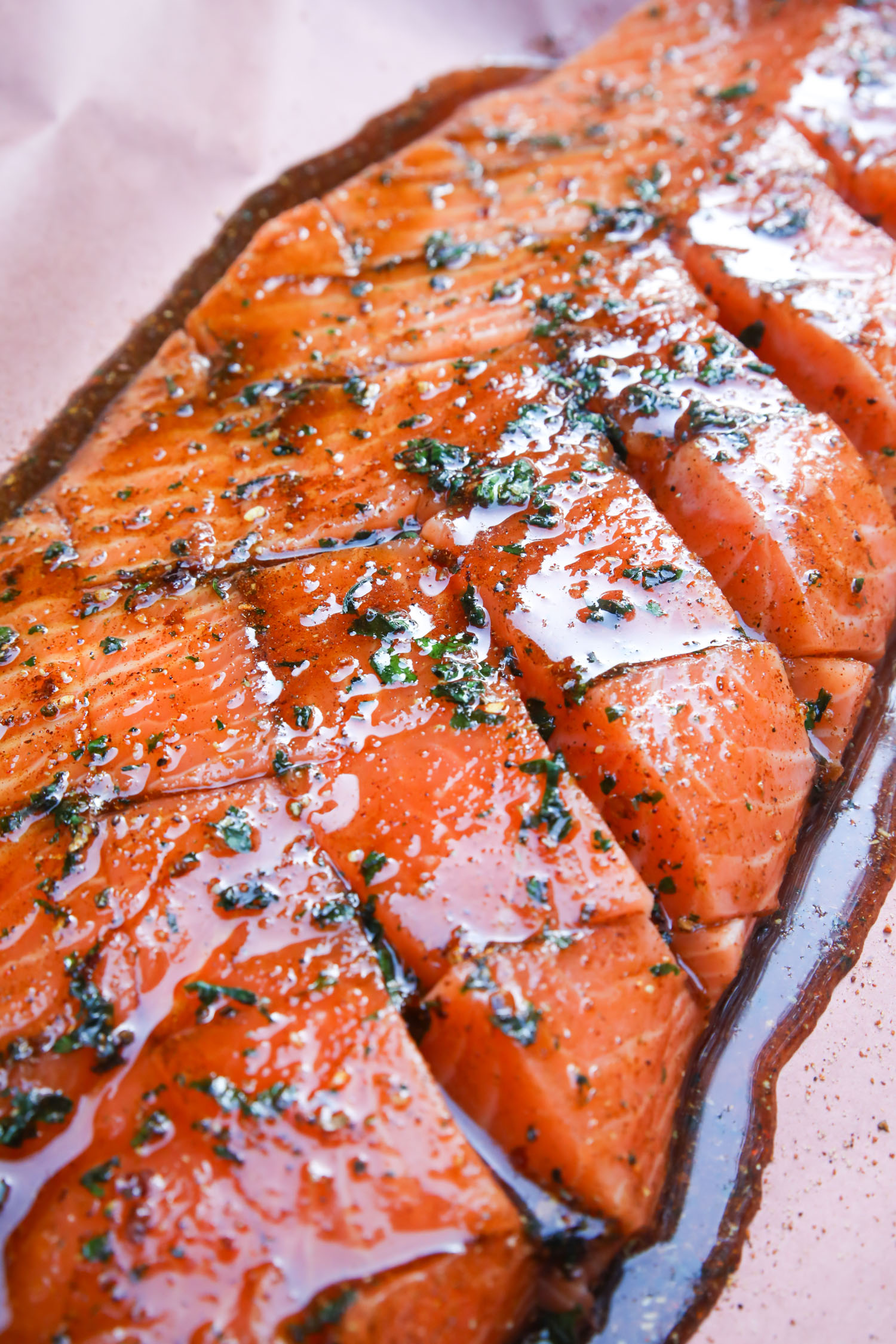
Step 2: Apply the Glaze
Brush the glaze generously over the entire side of salmon, making sure it gets into every crosshatched cut.
Step 3: Preheat the Smoker
Set your smoker to 200–225°F. This temperature range is ideal for smoking salmon without drying it out.
Step 4: Smoke the Salmon
Place the salmon (on the butcher paper and baking sheet) into the smoker. Smoke for 45–75 minutes, depending on thickness.
Doneness and Internal Temperature
Salmon is done when it reaches an internal temperature of 135–140°F in the thickest part. Use a reliable thermometer — guessing leads to overcooked fish.
- 120–125°F: Rare, very soft texture
- 130–135°F: Medium, moist and flaky
- 135–140°F: Fully cooked but still juicy
Remove the salmon as soon as it hits your target temperature. Carryover heat will continue cooking it slightly.
Common Mistakes When Smoking Salmon
- Smoking too hot: Temperatures above 225°F can cause the glaze to burn before the salmon cooks through.
- Skipping the crosshatch: The glaze won’t penetrate and will run off the salmon. You want it to be nestled between the folds.
- Overcooking: Salmon dries out quickly past 140°F.
- Too much smoke: Salmon absorbs smoke fast — less is more.
Pro Tips for Perfect Smoked Salmon
- Use mild wood like apple, alder, or cherry
- Keep the smoker lid closed as much as possible
- Brush on a light extra layer of glaze halfway through if desired
- Let the salmon rest 5–10 minutes before serving
Serving Ideas
This smoked salmon is excellent served warm, flaked over salads, served alongside roasted vegetables and rice or mashed potatoes. Leftovers keep well refrigerated for 2-3 days.
Smoked Salmon Recipe With Maple Glaze
Equipment
- 1 Pellet Grill or Barbecue Smoker
- 1 Sheet Pan
- Butcher Paper
Ingredients
Glaze
- 1 cup maple syrup
- Zest of 2 mandarin oranges
- 1 Tbsp Garlic herb all-purpose seasoning Sazon
- 1 Tbsp seafood seasoning
- 2 tsp Texas chili powder or any mild chile powder
- 1 tsp red pepper flakes adjust to taste
- 1 Tbsp chopped fresh parsley for color
Salmon
- 1 Side of Salmon
Instructions
Preheat the smoker
- Heat smoker to 200–225°F.
Make the glaze
- In a bowl, whisk together: maple syrup, mandarin zest, sazon, seafood seasoning, chili powder, red pepper flakes, and parsley.
Prep the salmon
- Keep it skin-on.
- Pat the top dry with paper towels (helps the glaze cling).
- Place salmon on a tray or board. (If you like easy handling: set it on butcher paper on a baking sheet.)
Glaze
- Brush a generous layer of glaze over the top and sides.
- (Optional but amazing) Let it sit 10–15 minutes while the smoker finishes coming up to temp so the surface gets slightly tacky.
Smoke
- Put the salmon in the smoker at 200–225°F for 45–75 minutes, depending on thickness.
- Start checking at 45 minutes.
How to know it’s done
- It should look glossy, feel firm but still juicy, and flake when gently pressed.
- If you use a thermometer: pull it when the thickest part is around 125–135°F for moist/restaurant-style (go higher if you prefer firmer).
Rest + serve
- Rest 5–10 minutes.
- Serve with rice, pasta, atop salads, or with a green vegetable.

Allan says
Great recipes
Ben M says
Will try this tomorrow. Did you cure it before cooking? Thx!
Sarah Penrod says
I did not! This is more of a hot smoked salmon with a delicious glaze. I would use a cure if I did a cold smoked salmon though.
Larry says
Where has this been all my life!