
For years, our reader's have requested a recipe for Texas barbecue brisket that you could make in your oven. And I resisted.
To me, the only real way to make Texas brisket was low and slow on a smoker, with wood smoke and time. But one day, it hit me—what if we could recreate those same iconic Texas flavors using a classic dry rub and simulate bark by using the right techniques?
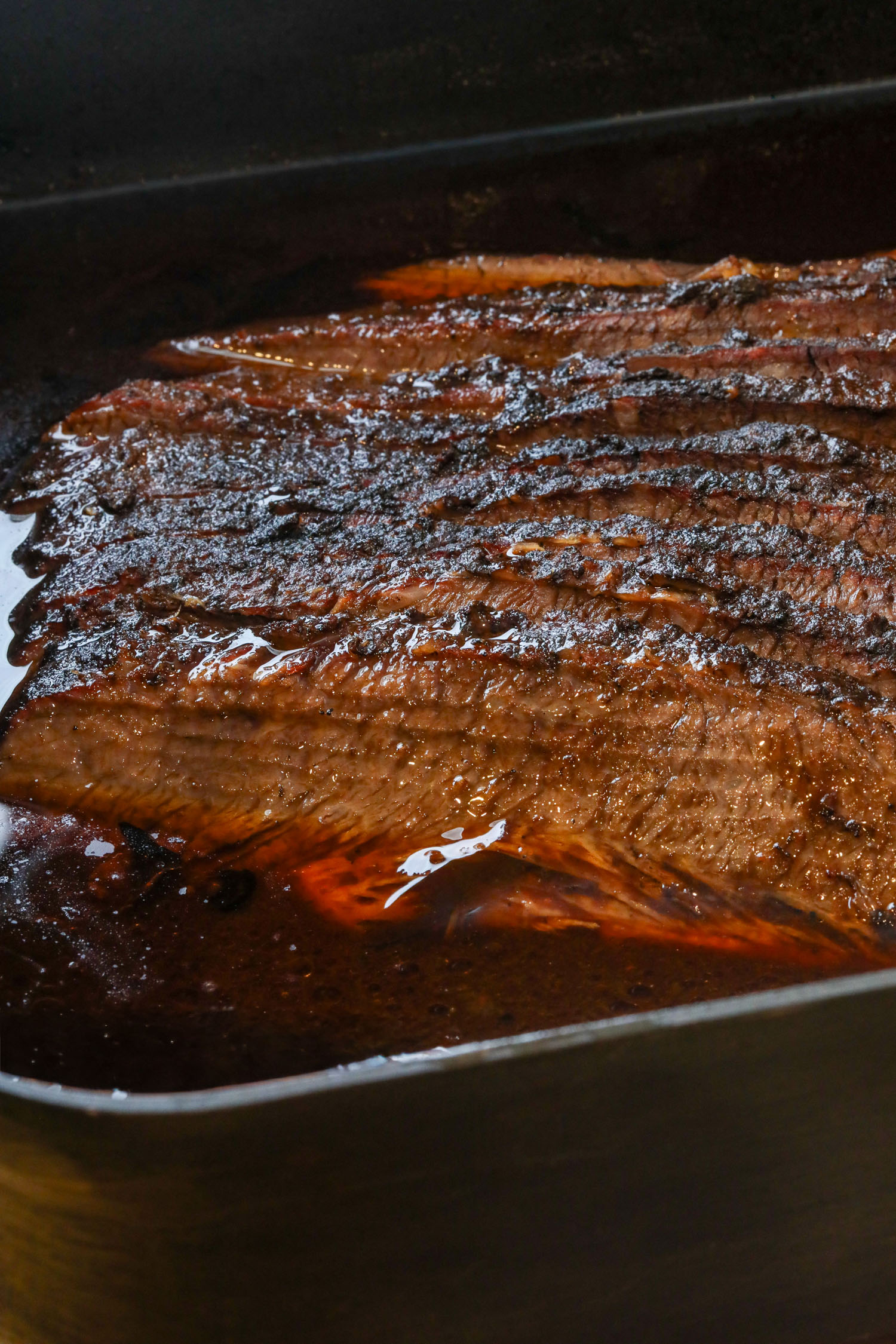
What if we could give people without a barbecue smoker a way to experience the taste of one of our most beloved Texas dishes… right from their own oven? And I set out once and for all to hack an approach to the seasoning, the tenderness, and yes, even the bark!
Truthfully, it’s not exactly the way we make it in Texas—but shockingly, the flavor wasn’t that far off.
Even more surprising? Everyone on the team agreed this recipe and technique landed firmly in our top three briskets of all time. And that’s saying something.
So whether you’re not ready to commit to a $1,500 smoker, you’re cooking on vacation in an Airbnb, or your apartment won’t allow a barbecue smoker—this is the closest I can get to sharing my favorite taste of Texas with you, without a barbecue smoker.
The Complications – Why People Say It Can’t Be Done
Texas brisket is known for its bark—that dark, flavorful crust on the outside of the meat. It forms when smoke, dry rub, the brisket surface, and evaporation all work together over time to create a savory and almost candy-like crust, reminiscent of beef jerky. For a lot of people, the bark is the best bite on the plate.


That’s where the skepticism comes in—because traditionally, bark is built in a smoker. How could it be created in an oven?
Then there’s the smoke ring. Some people still believe it’s the sign of a “proper” brisket, but here’s the truth: that beautiful pink ring is actually caused by a chemical reaction between nitrogen dioxide in wood smoke and the meat’s myoglobin—not the flavor itself.
So while it’s nice to see, a brisket can be incredibly delicious without one. No smoke ring doesn’t mean it wasn’t done right—it just means it wasn’t exposed to those exact gases during cooking. In an oven, you’re not burning wood—so those gases aren’t present.
Lastly, the flavor of real wood smoke is impossible to fully replicate—even with products like liquid smoke—so we’ll give the naysayers that one. But after you try this oven brisket, you’ll have to admit… it comes pretty darn close for anyone working with limited options.
How To Cook Brisket In The Oven
Cooking brisket in the oven isn’t traditional Texas barbecue—but with the right technique, it gets shockingly close.
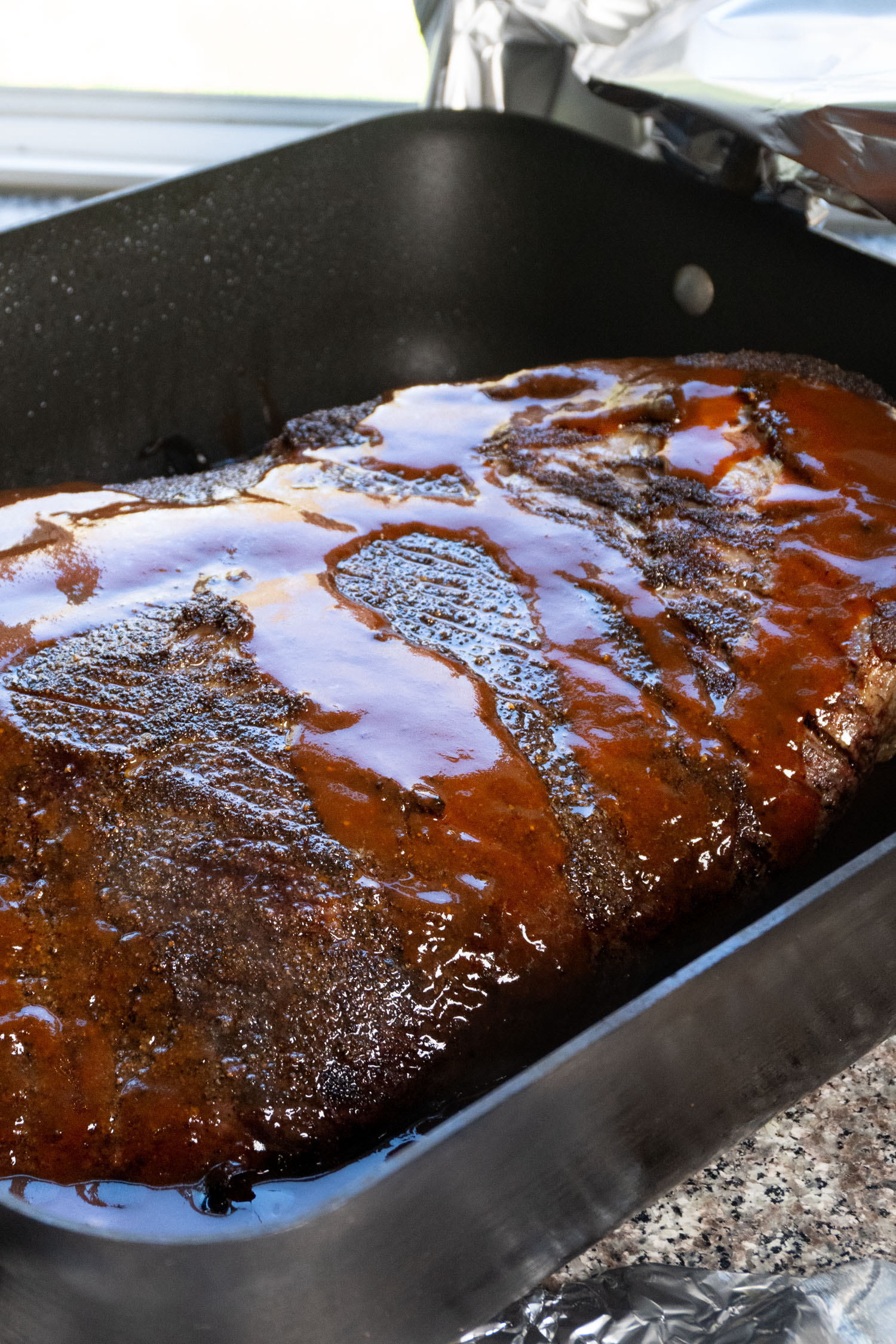
This method is all about building flavor in stages: first setting the exterior, then braising low and slow, and finishing with tender, sliceable meat that still has that signature bite.
The Method at a Glance
- Trim for a cleaner cook Unlike smoked brisket, we trim the raw brisket more aggressively here. Less excess fat means a better sauce and less grease in the pan. I have an entire step-by-step photo guide located here. Click for trimming tutorial.
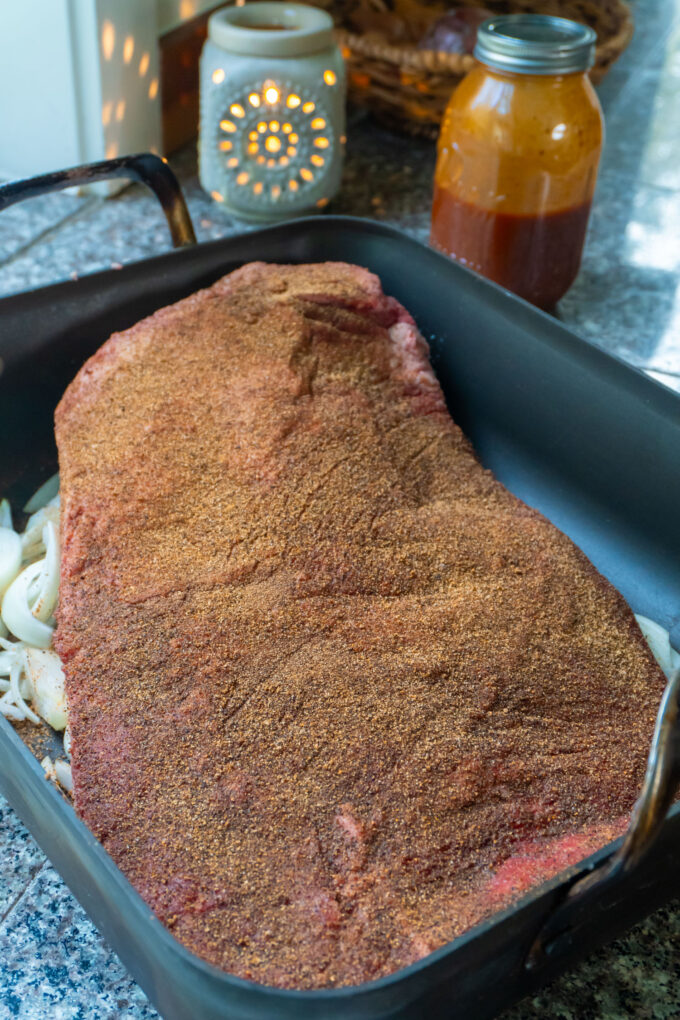
- Season heavily + build your base Lay down sliced onions, place the brisket fat side down, and coat it generously with your Texas-style rub. A light spray of oil helps encourage crust development.
- Start hot to set the exterior Roast at 400°F for 20–30 minutes until the brisket is sizzling. This step jumpstarts flavor and mimics that classic brisket bark.
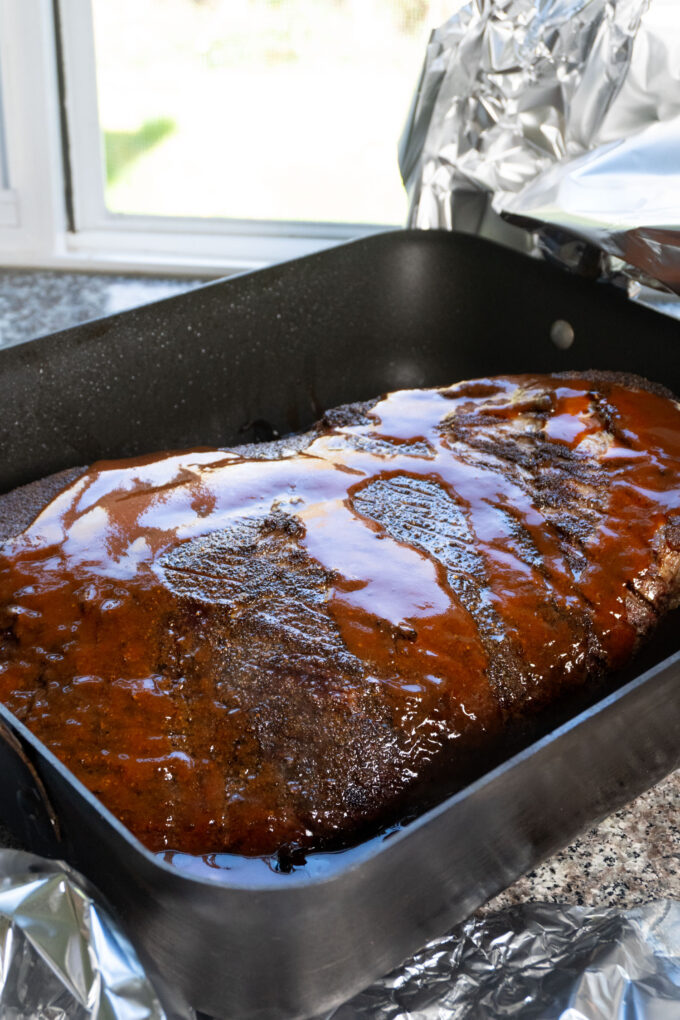
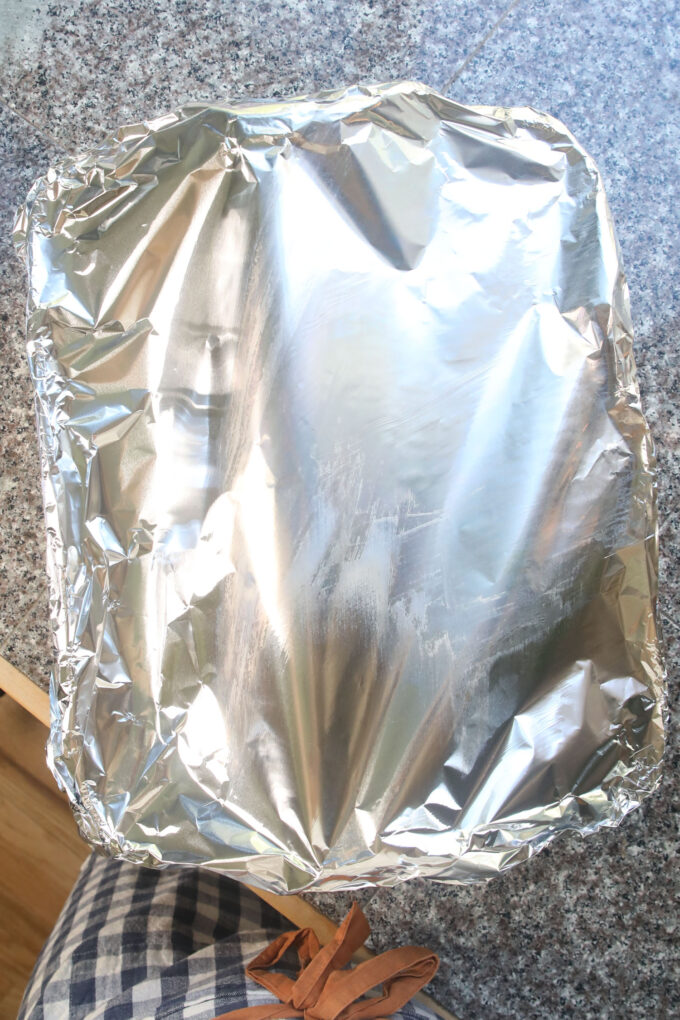
- Add sauce + seal tightly Pour in your barbecue sauce, insert a thermometer, and wrap the pan tightly with foil. This creates a sealed environment for a rich, flavorful braise.
- Cook low and steady at 300°F Lower the oven to 300°F and cook until the brisket reaches about 210°F internal temperature. This typically takes 15–20 minutes per pound for tender brisket.
- Cook until probe tender Don’t rely on time alone—the brisket is done when a probe slides in easily with little resistance.
- Rest and slice properly Let it rest, then slice against the grain. Slightly thicker slices help keep everything intact since oven brisket is extra tender.
Tips and Tricks to Customize the Recipe
- Any barbecue sauce may be used, I prefer Stubb's if I don't make my own
- If you use larger than a 10 lb brisket you will need to add additional barbecue sauce, or beef broth, to create enough braising liquid to partially submerge the oven-baked brisket
- For smoky flavor, some people like to add a dash of liquid smoke to the bbq sauce
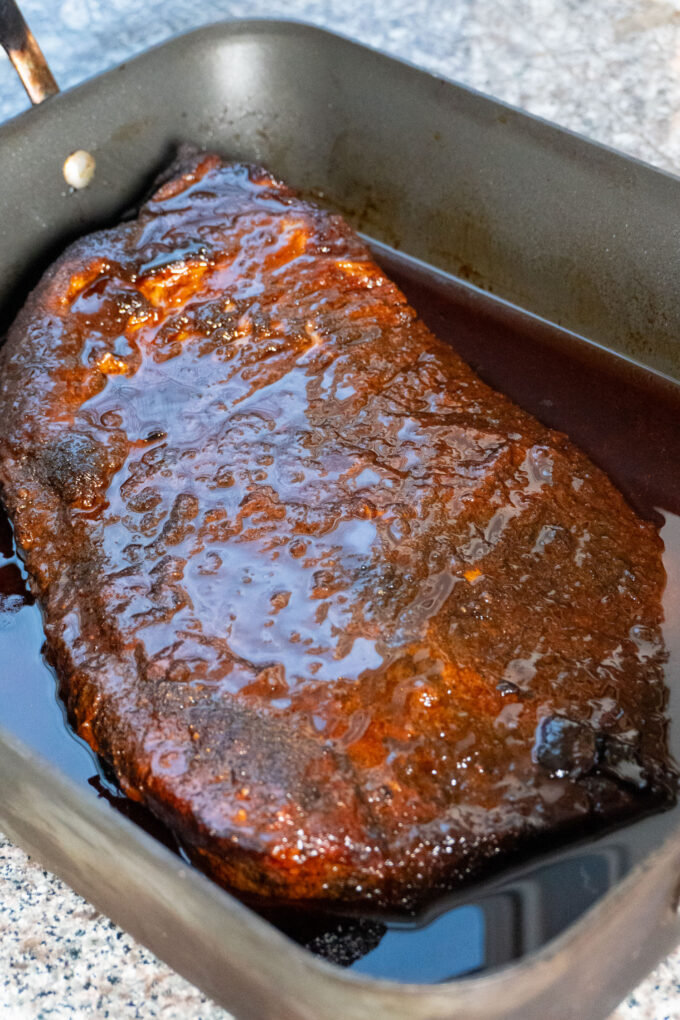
- At 300° F it takes 15-20 minutes per pound, fully wrapped in aluminum foil or covered with a lid in the oven.
How To Remove The Grease Layer
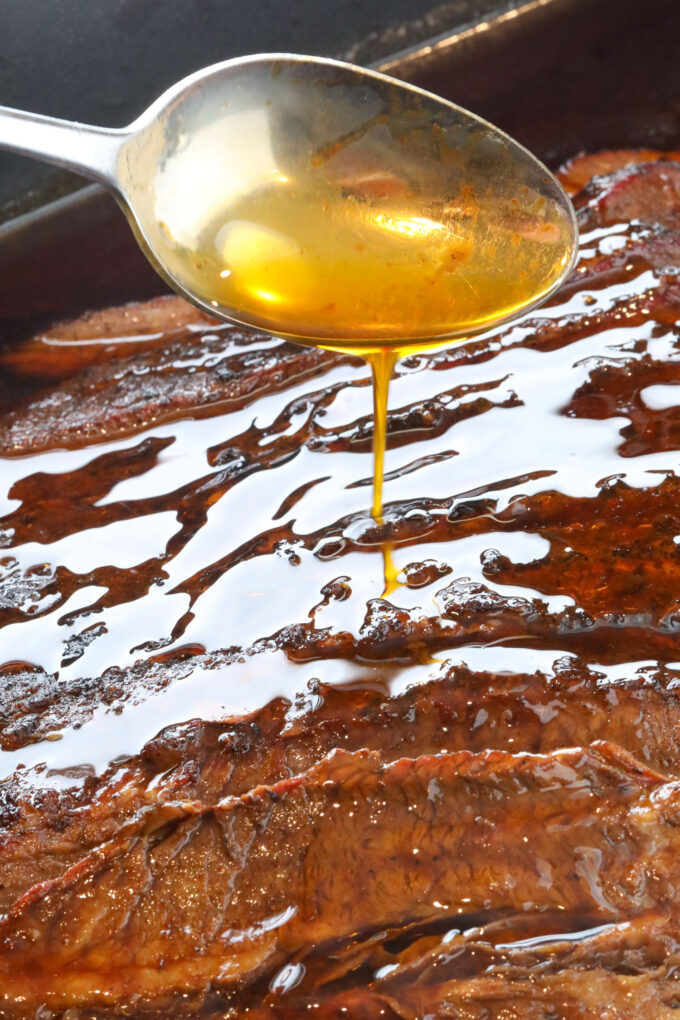
Method 1: Use a Gravy Separator (Best Way)
The best way to remove grease is with a gravy separator.
- Pour the pan juices into the separator
- Let it sit for a minute—the fat rises to the top
- Pour the sauce out from the bottom, leaving the grease behind
This gives you a smooth, balanced sauce without losing flavor.
Method 2: Chill and Lift (Next Day Trick)
If you’re working ahead, this method is effortless:
- Refrigerate the brisket and juices together
- The fat will solidify into a firm layer on top
- Simply lift it off with a spoon or your hands
This is one of the easiest ways to clean up your sauce while keeping that deep meaty flavor intact.
Pro Tip
Don’t remove all the fat—just the excess. A good brisket needs a little richness to carry flavor. The goal is balance, not dryness.
How To Slice Oven Baked Brisket
1. Let it rest first
Before slicing, rest the brisket at least 15–30 minutes. This keeps all those juices inside the meat instead of running all over your cutting board.
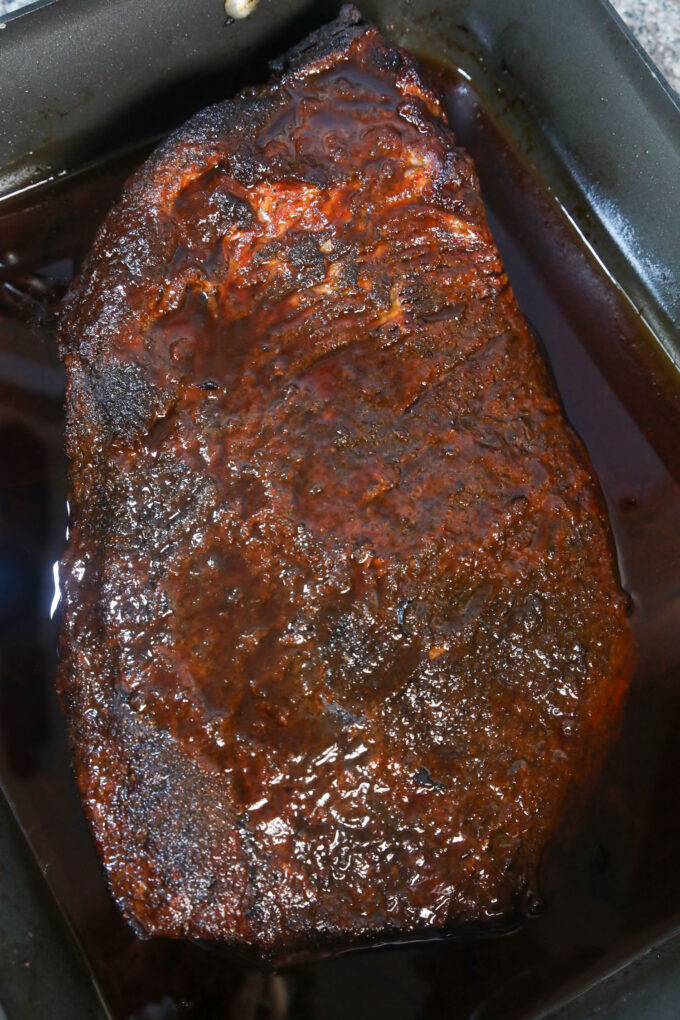
2. Separate the flat and the point
Brisket has two muscles:
- Flat – leaner, uniform slices
- Point – fattier, more marbled
Cut between them to separate. This makes slicing much easier (and more accurate).
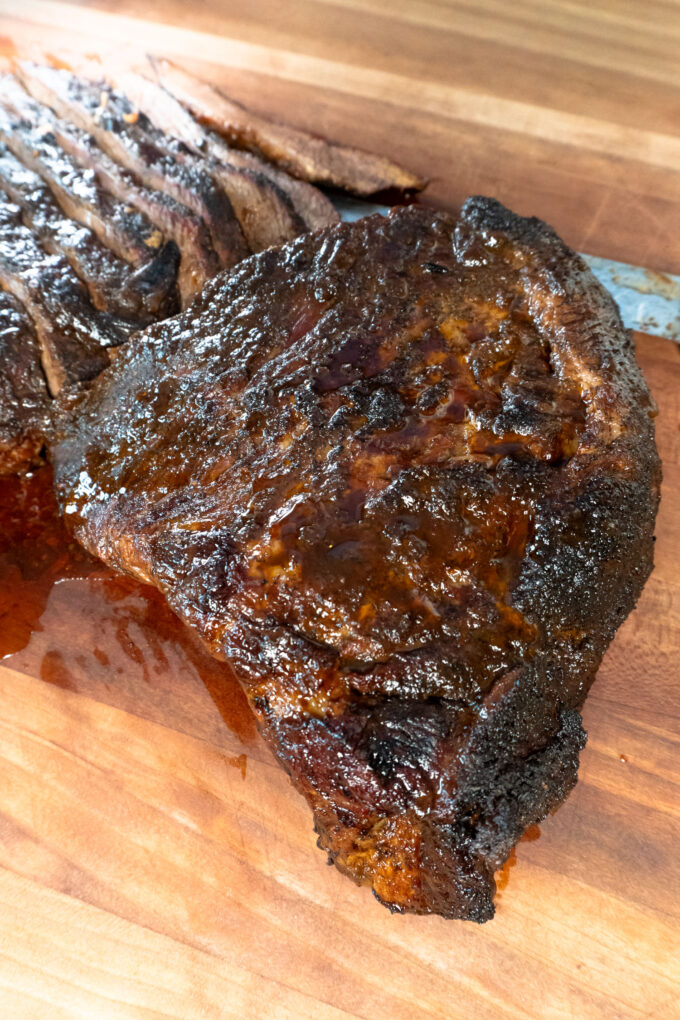
3. Find the grain (this is everything)
Look closely at the direction the muscle fibers run—that’s the grain.
You always want to slice against the grain, not with it.
- Flat: grain typically runs lengthwise
- Point: grain runs in a different direction, so rotate before slicing
4. Slice slightly thicker than smoked brisket
Oven brisket is more delicate, so:
- Aim for about 1/4 inch slices (or slightly thicker)
- Thicker slices help it hold together better because oven-cooked brisket is ultra tender
5. Use a long, sharp knife
A slicing knife or carving knife works best.
- Use smooth, long strokes
- Avoid sawing back and forth (this tears the meat)
- Stack tender slices in another warmed baking dish if you're going to separate the grease from the pan juices before serving
How To Store Leftover Brisket
The best way to store brisket is with moisture and protection from air:
- Slice only what you plan to eat
- Keep the remaining brisket whole whenever possible
- Place it in an airtight container or wrap tightly in foil
- Add some of the cooking juices or sauce to keep that rich, meaty flavor intact
Store in the refrigerator for up to 4 days.
Freezing Leftover Brisket
For longer storage:
- Wrap tightly in plastic wrap, then foil (or vacuum seal)
- Include a little sauce or juices before sealing
- Freeze for up to 2–3 months
This helps preserve that deep, smoky, meaty flavor instead of drying out the meat.
Reheating Without Drying It Out
The biggest mistake people make is reheating brisket dry.
To keep it tasting like a good brisket (even the next day):
- Refrigerating brisket allows the grease to migrate to the top in a yellow-orange float. Feel free to discard grease if you like, the sauce has plenty of beefy flavor.
- Add a splash of broth or leftover sauce before reheating
- Cover and reheat low and slow (oven at 300°F or microwave until just hot throughout)
- Heat just until warmed through—don’t overcook
Pro Tip
Brisket reheated properly can taste even richer the next day because the flavors have had time to settle and deepen—almost like a really good stew!
What To Serve With Brisket?
Our favorite recipe to serve with brisket can be found in our sides category. Some cultural favorites to serve are potato salad, baked beans, corn salad, green beans, macaroni and cheese, and coleslaw.
Texas Barbecue Brisket In The Oven Recipe
Equipment
- 1 Roasting Pan
- 1 Oven thermometer (I use Thermoworks)
- Heavy-duty foil
Ingredients
For the Brisket
- 1 Whole brisket 10 pounds or under, to fit roasting pan
- 2 onions thinly sliced
- 1/4 cup brisket rub mine, or use your favorite brand
- Sprayable cooking oil avocado oil, grapeseed, etc.
- 2 cups barbecue sauce mine, or use Stubb's
Texas Brisket Dry Rub
- 1/4 cup table grind black pepper
- 1/4 cup Lawry’s seasoning salt
- 1 tablespoon garlic powder
- 1 tablespoon onion powder
- 1/2 tablespoon Gebhardt’s chili powder
- 1/4 teaspoon cumin
Homemade Barbecue Sauce
- 1 1/4 cups ketchup
- 1/2 cup white vinegar
- 1/2 cup tomato sauce
- 2 tablespoons molasses
- 1/4 cup honey
- 2 teaspoons buffalo sauce
- 1/4 teaspoon salt
- 1/4 teaspoon onion powder
- 1/2 teaspoon red pepper flakes
- 1/8 teaspoon celery seed
- 1/8 teaspoon cayenne
Instructions
Trimming the Brisket
- For this oven method, we trim more aggressively than traditional smoked brisket. The goal is simple: reduce excess grease in the sauce while keeping enough fat for flavor.
- Remove as much hard white fat as possible: Trim the fat cap down to about 1/4 inch. (We show photos in the body of this blog post and have an entire post on trimming a brisket located below)https://urbancowgirllife.com/how-to-trim-a-brisket-for-smoking-step-by-step-guide-with-photos/Trim edges as needed so the brisket fits snugly in your roasting panDon’t stress perfection here—this is about function, not competition trimming. (Pro tip: save the fat for tallow or beans and freeze it for later.)
Make the Dry Rub
- Combine all ingredients in an airtight container and shake well.
- You can use a shaker bottle, spice jar, or your hands—whatever gets the job done.
- About 1/4 cup rub per brisket is perfect.
Season the Brisket
- Preheat oven to 400°F.
- Lay sliced onions in the bottom of the roasting pan
- Place brisket fat side down on top
- Season heavily on top and sides with the rub
- Spray generously with cooking oil (this helps build that crust)
Roast to Set the “Bark”
- Place the brisket uncovered in the 400°F oven for 20 minutes. You should hear it sizzling—that’s exactly what you want. If needed, extend to 30 minutes depending on your oven. This step jumpstarts flavor and mimics that classic brisket bark exterior.
- Remove from oven carefully, the pan will be hot.
Make the Barbecue Sauce
- You can use 2 cups store-bought (I love Stubb’s), or make your own:
- Combine all ingredients in a saucepan
- Bring to a simmer
- Add up to 1/2 cup water if needed for consistency
Prepare for the Long Roast
- Pour 2 cups barbecue sauce into the pan
- Insert a probe thermometer into the thickest part
- Cover tightly with double-layer heavy-duty foil. This must be airtight—this is what turns the cook into a flavor-packed braise.
Roast the Brisket (300°F)
- Lower oven to 300°F and return brisket to oven.
- Cook until internal temp reaches ~210°F
- Expect 15–20 minutes per pound. A 10-pound brisket may take around 3 hours
- This is much faster than traditional smoking because we’re cooking in a sealed, moist environment. You’re not cooking to time—you’re cooking to probe tender.
Resting and Slicing
- Remove brisket from oven and rest at least 15 minutes. Probe should slide in easily (like butter)
- Slice on a cutting board with a juice moat
- Separate flat and point
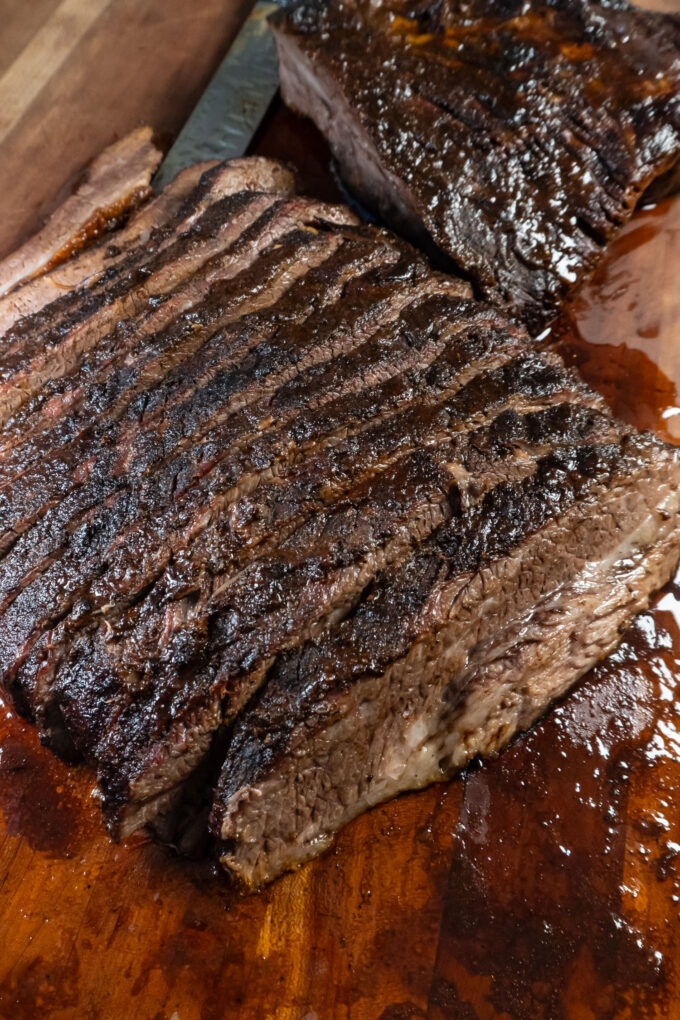
- Slice against the grain (about 1/4 inch thick)
- Slightly thicker slices help keep oven brisket intact since it’s more tender than smoked.
Serving the Sauce
- That pan sauce is astonishingly flavored! Serve as-is, or use a gravy separator to remove excess grease.
- Spoon over sliced brisket and serve immediately.


Lee says
I smoke my meat but my wife saw this recipe on facebook and wanted to try. In many ways it is as good or better than smoked brisket. This recipe will be used for the holidays this year as we thought it was easier to get done than staying up late into the night and being tired when family get here.
Jayme says
This is my 10th recipe to make off this blog and it's always "the best ever" says my family. You did convince us to get a smoker but I like using the oven too. Thanks Sarah
Sarah Penrod says
I love to hear that!! Hope you enjoyed this one!
Jake says
I could barely get it on the table because the kids wouldn't stop grabbing slices. I didnt have a large roaster so i used a really large disposable catering style pan. The family says this will be a regular thing!
Sarah Penrod says
Awseome Jake! happy to hear that!
Allen says
Tried this this weekend thinking we'd use it for easter sunday if it was too rainy to use the barbeque. My wife said it may be better than smoked brisket. It took 3 1/2 hours because we could only find a 12 pounder.
Sarah Penrod says
It's a great recipe to have for weird situations when you can't get outside!
Philip says
This was incredibly easy to make versus smoking a brisket and it tasted so damn rich! Fantastico!