
There are cities you visit for the history, and then there are cities you visit for the food. In New Orleans, you can do both at the same time—eating, walking, wandering, and somehow seeing the whole city between bites (and sips of a Hurricane, if you like).
So rather than make restaurant reservations and spend our trip bar hopping, we turned 48 hours in New Orleans into our own self-guided food tour—walking through the French Quarter, following recommendations, splitting dishes whenever possible, and leaving enough room for whatever looked too good to pass up along the way.
And yes, if you've seen the video you know there were a lot of chargrilled oysters. If you haven't seen the video, here is a link.
Starting Point: Hotel Monteleone, 214 Royal Street
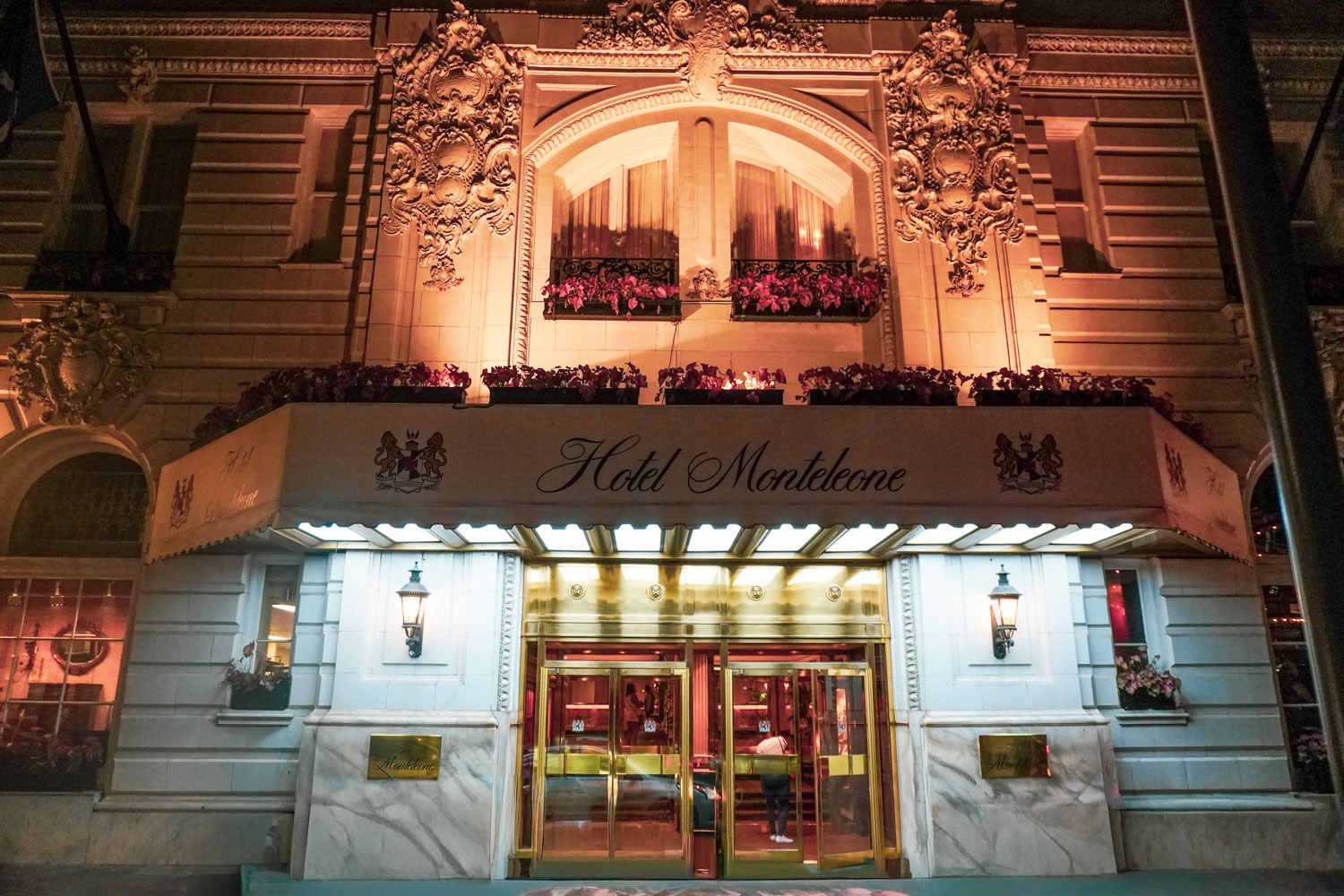
Hotel Monteleone sits right in the middle of nearly everything on this tour, with the exception of Jacques-Imo’s, which is about a fifteen-minute ride outside the French Quarter. Beyond the restaurants we’ll cover, you’ll also be within easy walking distance of shops, historic sights, bars, and plenty of other stops that are probably already on your New Orleans list.
It can be pricey during festival season, but we learned the hard way that staying farther out isn’t always the bargain it appears to be. On one trip, we booked a cheaper Airbnb outside the French Quarter and ended up taking so many Ubers that I vowed we’d never stay outside the Quarter again.
For us, the convenience is worth it. You can walk almost everywhere, come and go throughout the day, and Hotel Monteleone also happens to be home to the historic Carousel Bar, where the bar itself slowly rotates while you drink.
If Hotel Monteleone isn’t in the budget, I’d still strongly recommend choosing another hotel in the French Quarter. For a trip built around walking, eating, and exploring, location makes a huge difference.
Day 1: Begin With Beignets
Our first real morning in the French Quarter began the way a New Orleans morning probably should: with powdered sugar everywhere.
Beignets are practically a New Orleans rite of passage—warm, pillowy squares of fried dough absolutely buried in powdered sugar, preferably devoured with café au lait while making a complete mess of yourself. They’re one of the city’s most iconic foods and a delicious little piece of its French and Creole culinary history.
We stopped at Café Beignet for warm beignets and chicory coffee, then carried everything outside to the courtyard. This is one of my favorite ways to experience New Orleans. Don't rush breakfast. Sit outside and watch the Quarter happen around you. If you're lucky you can already hear the jazz music creeping through the breeze.
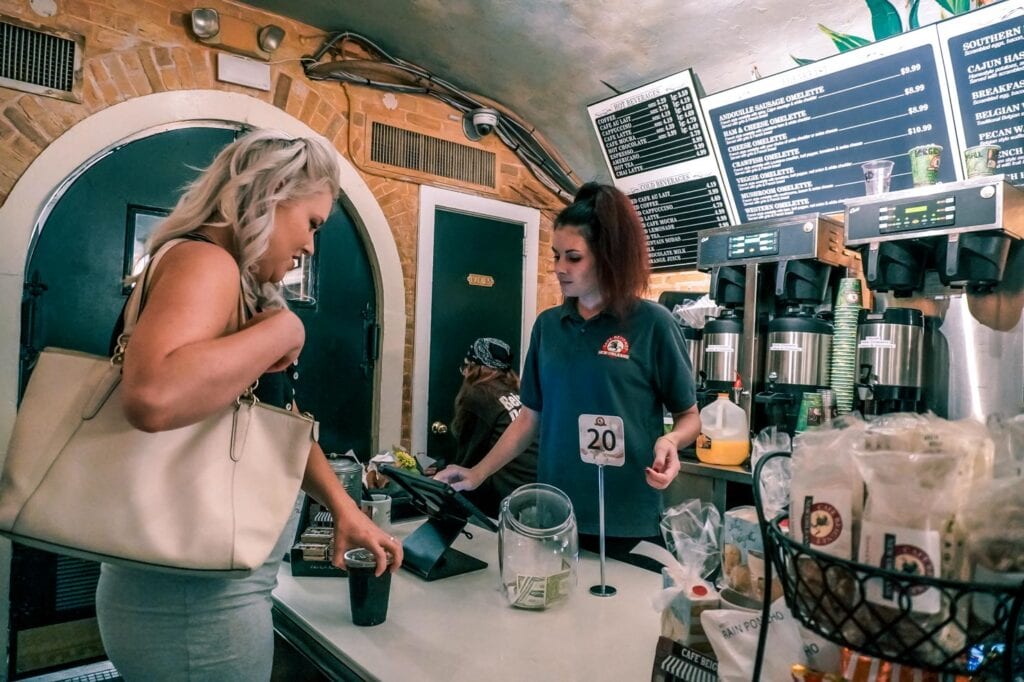
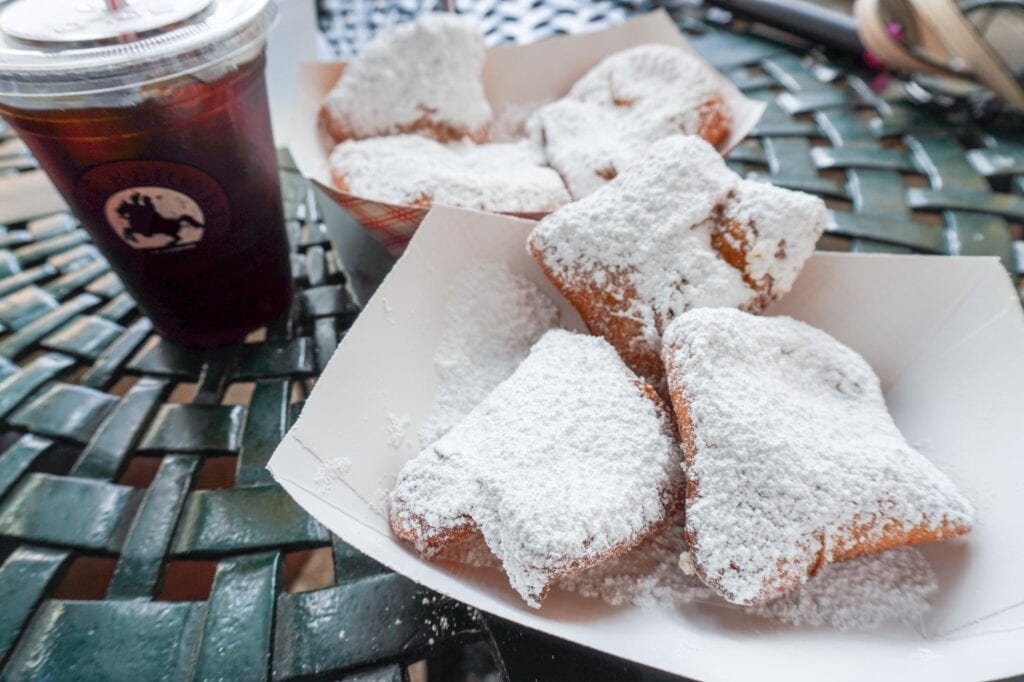
Royal Street is half the fun here. You’ve got gorgeous old buildings, street musicians, little shops, tour groups ducking down side streets, and people just wandering around with no real agenda—which honestly feels like the best way to do New Orleans.
The beignets are great, but sitting here and watching the French Quarter happen around you is really part of the experience.
When you're ready to continue on, head to the right and start walking toward Jackson Square.
Walk Through Jackson Square
A good food tour needs a few strategic breaks from eating, and luckily New Orleans makes those pretty easy. Jackson Square is the perfect place to slow down for a minute. Walk the square, take in St. Louis Cathedral, browse the local artists set up around the streets, and just enjoy being right in the middle of the French Quarter.
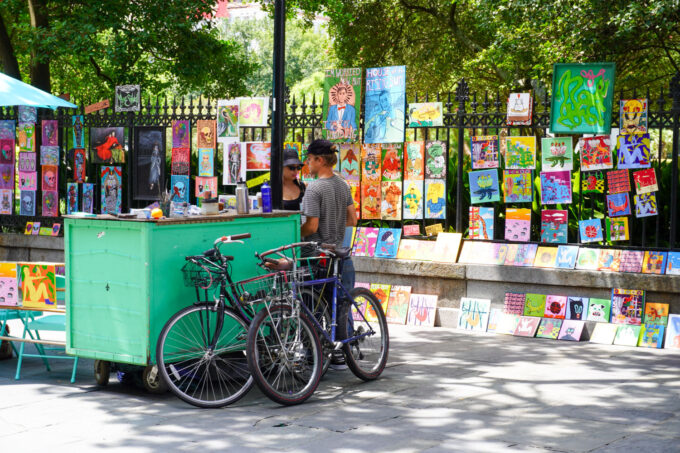
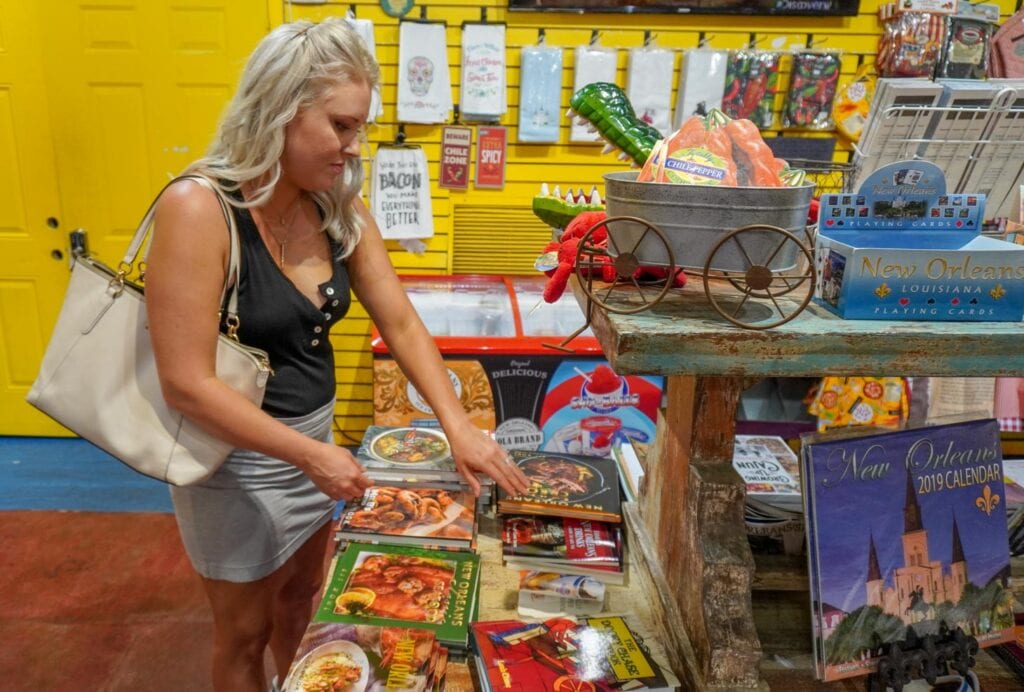
This is one of those places where New Orleans really starts to show off a little—food, music, architecture, history, and people-watching all happening at once. Treat yourself to some souvenirs in the book and candy shops throughout the area. I bought five cookbooks, obviously.
Then follow Decatur Street toward one of the city's most famous sandwiches at Central Grocery.
Split a Muffuletta at Central Grocery
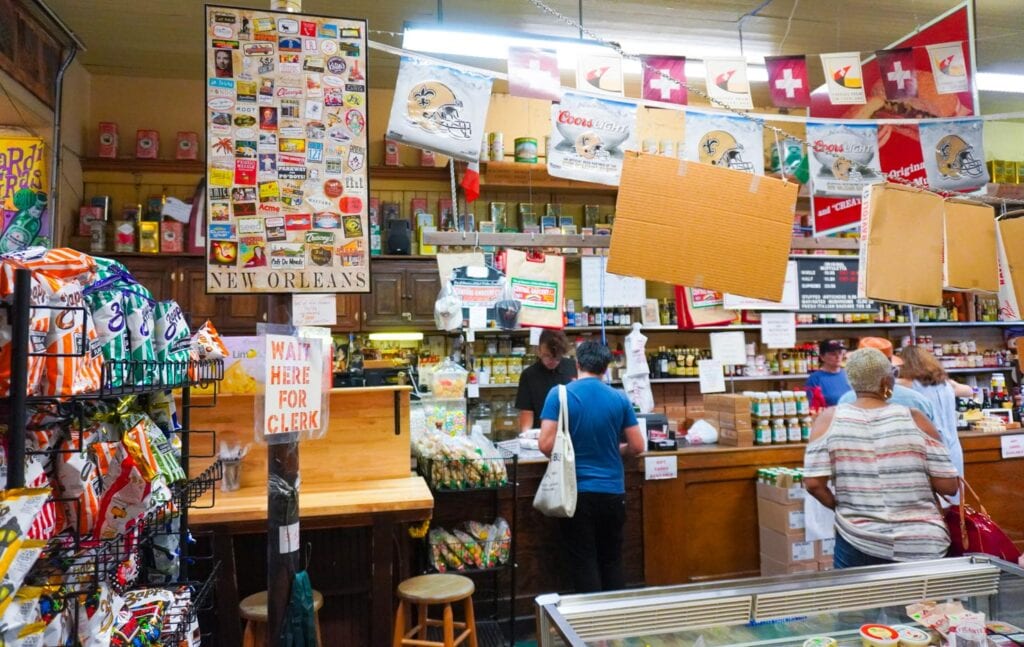
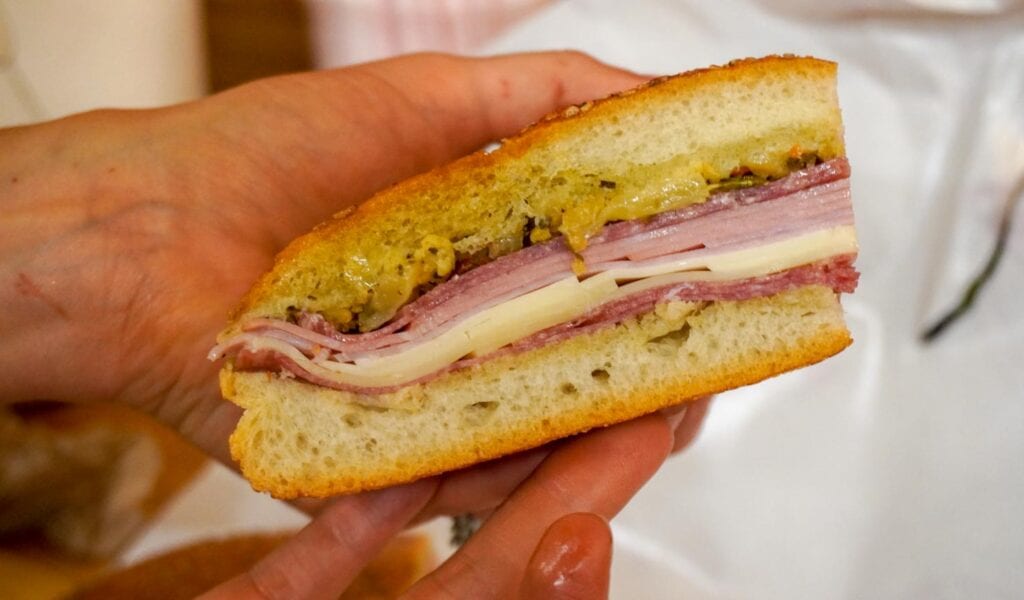
New Orleans has given America an absurd number of iconic foods, and the muffuletta sandwich deserves a place near the top of the list.
At Central Grocery, the sandwich is stacked with Italian meats and cheese, but the ingredient that makes the whole thing sing is the salty, briny olive salad pressed into the bread. This is also where restraint becomes important. You're on a food tour. Split one.
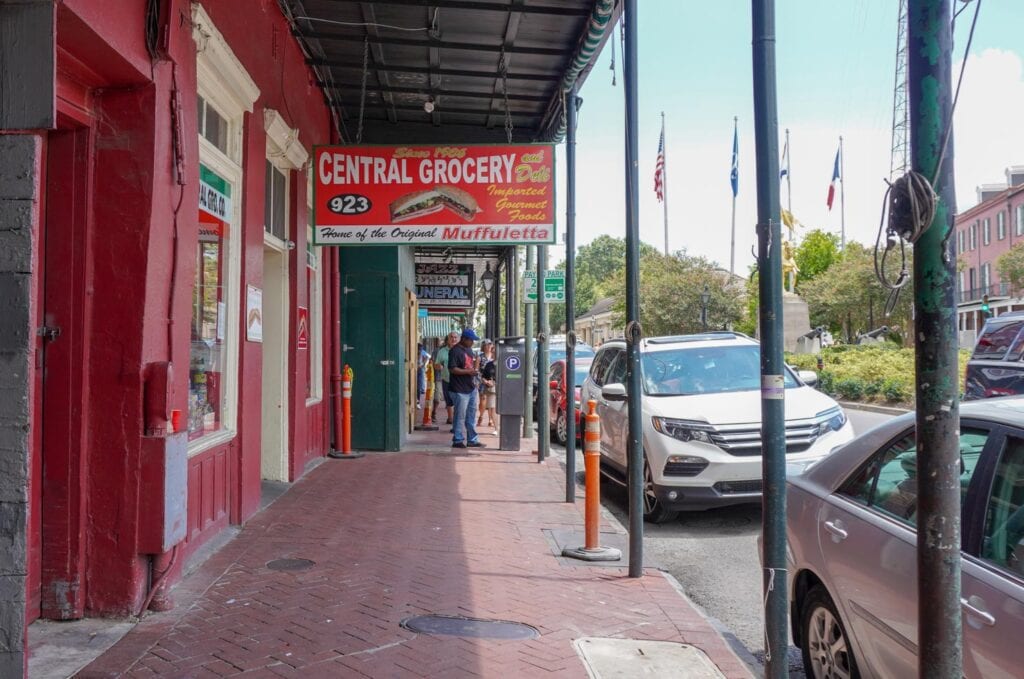
Central Grocery is the kind of place I love visiting as a chef because the shelves are almost as interesting as the sandwich. Creole mustard, seasonings, local specialties, cookbooks and ingredients begin telling the story of Louisiana food before you've even eaten them. I bought the praline liqueur and make a praline cheesecake every summer!
Head across the street, towards the water, to the impossible to miss French Market.
Wander Through the French Market
From Central Grocery, continue into the French Market, where this stops feeling quite so much like a restaurant crawl and starts feeling a farmer's market.
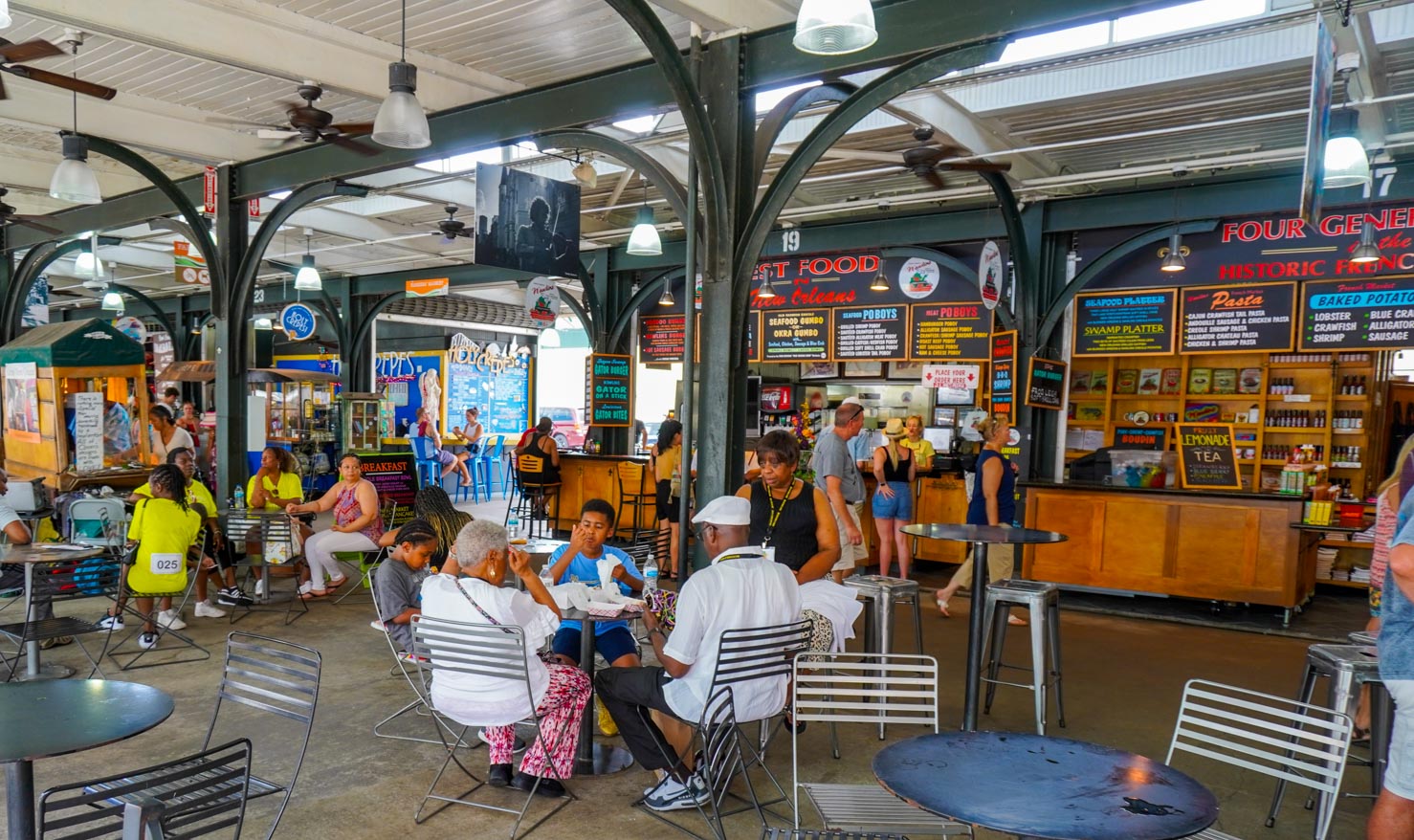
The French Market is basically a big, open-air stretch of New Orleans history where food, local vendors, souvenirs, produce, art, and people-watching all collide. It’s been part of the city for generations, and even though it’s definitely touristy now, it still feels like one of those places you should wander through at least once.
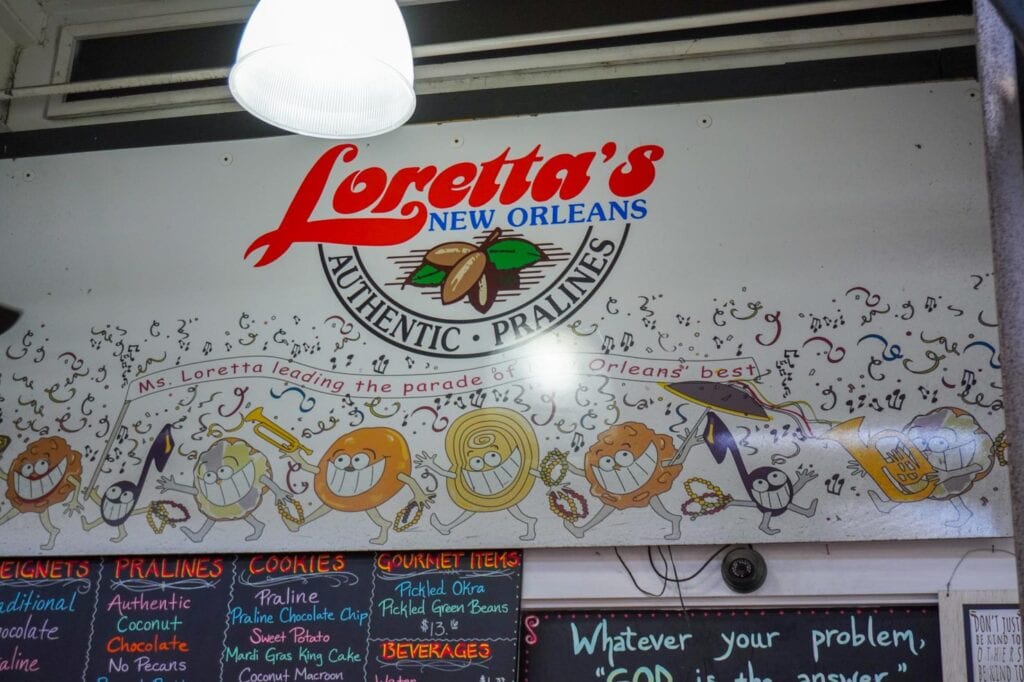
I had a long conversation with a local woman whose family owns a stall, and taught me her grandmother's secret recipe for gumbo. This can be a once in a lifetime culinary experience if you let it. Grab a praline, poke around the stalls, listen to whatever music is happening nearby, and just let yourself get distracted for a while.
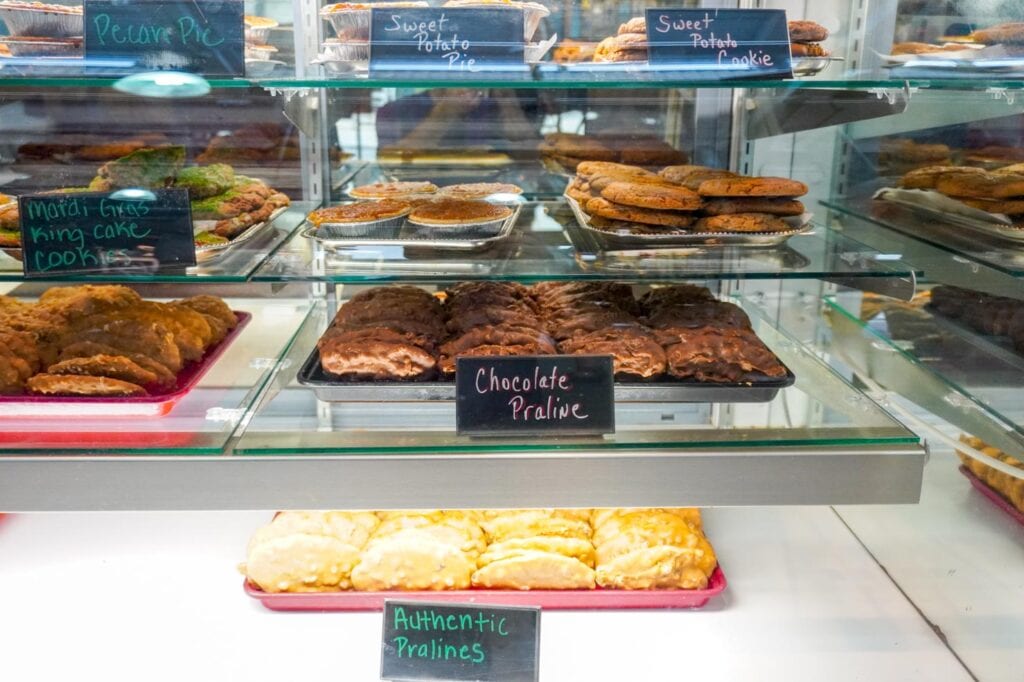
We picked up pralines from Loretta's, where the display case presents a dangerous number of reasons to abandon whatever food schedule you thought you were following.
And if there's a crab beignet available, I'm going to need you to try one!
From there, we grabbed Hurricanes and listened to live jazz at Gazebo Café.
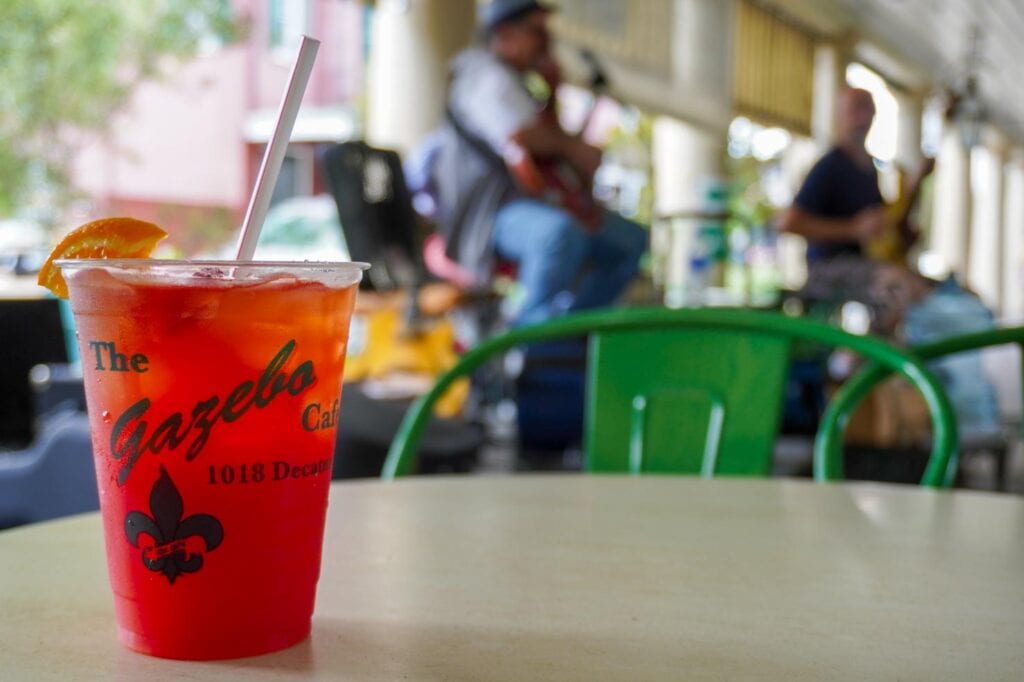
At some point you realize you aren't really checking things off a list anymore. You're just in New Orleans doing your thing.
When you're ready, head to Pat O'Brien's
Pat O'Brien's Patio For Drinks
Pat O’Brien’s is famous for a lot more than just being a good place to grab a drink. It started as a speakeasy during Prohibition, moved into its current French Quarter home—a building that dates back to 1791—and eventually became known for its dueling pianos, flaming courtyard fountain, and, most importantly, the Hurricane, the rum-heavy cocktail Pat O’Brien’s helped make famous.
And because this is New Orleans, naturally it also comes with a ghost story. The upstairs ladies’ room is said to be haunted by the spirit of a former restroom attendant, with guests reporting footsteps, strange noises, cold spots, and activity coming from seemingly empty stalls. There are even stories of the piano playing a note or two with no one sitting at it. Whether you believe any of that or not, it makes ordering a Hurricane in the courtyard just a little more fun.
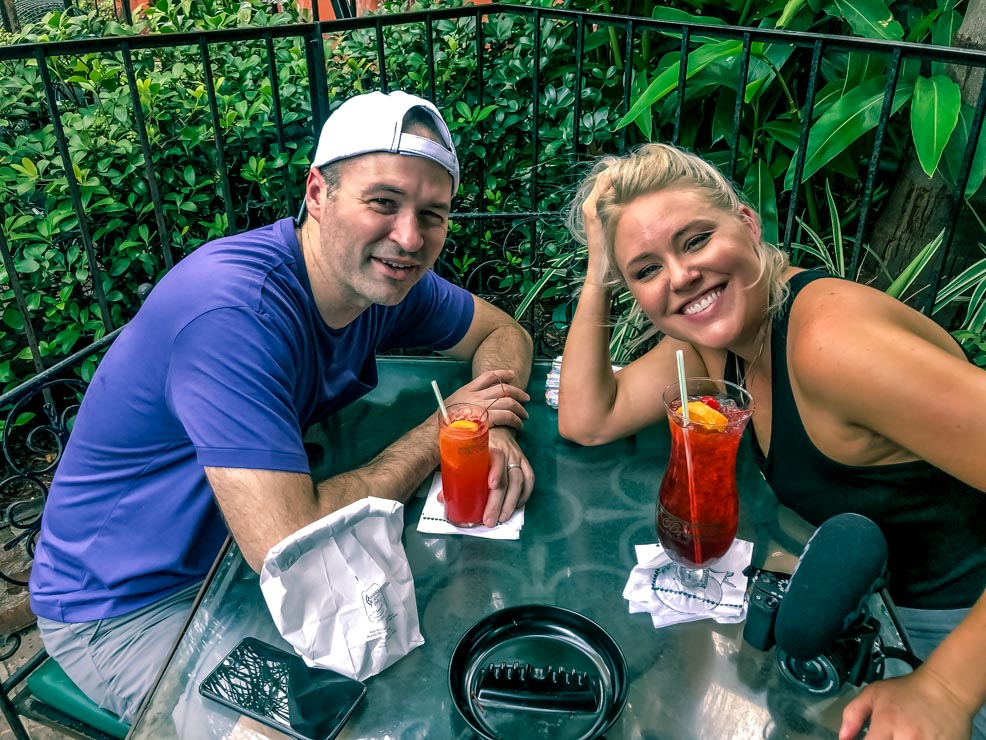
We headed straight for the courtyard, ordered drinks, and settled in just as a light rain started moving through the French Quarter. Sitting under an umbrella with the courtyard glowing from the rain felt like such a perfect New Orleans moment that we had absolutely no reason to rush off anywhere else.
I ordered the classic Hurricane, because obviously, and Dereck ordered a 57 Chevy, which he proceeded to talk about for the rest of the trip. Pat's also offers a full menu of New Orleans food so grab some Alligator Bites and stay hydrated. We've got a long road ahead!
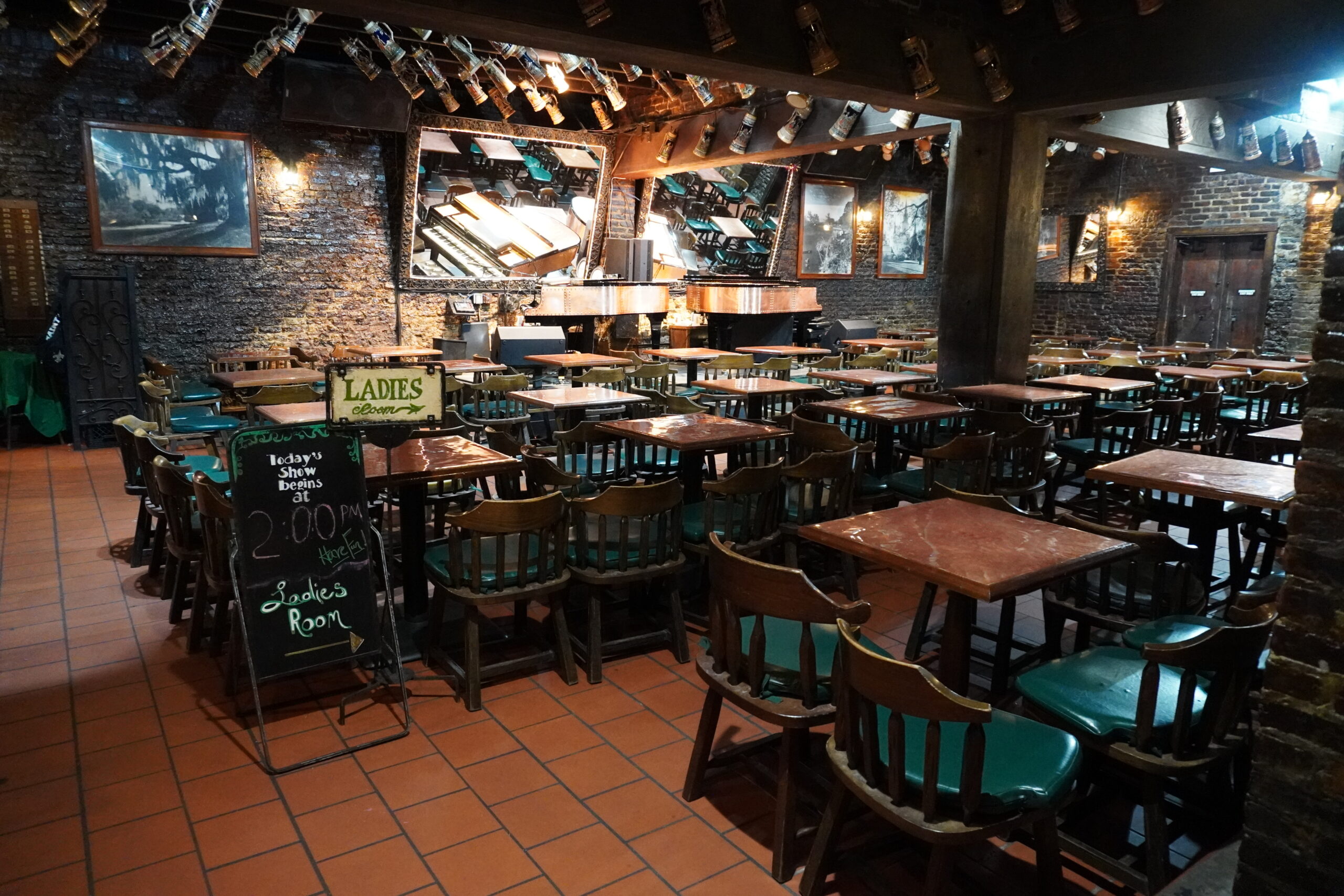
If you get here in the evening you'll be treated to the famous dueling piano players. You can come inside the main bar during the day to take pics or visit the restroom (just watch out for the resident ghost!)
When you're ready, head back to Hotel Monteleone for more drinks. (This is New Orleans, after all!)
Cocktails At The Carousel Bar
Then came one of my favorite discoveries of the entire trip. Inside the historic Hotel Monteleone is the Carousel Bar, where the circular bar itself slowly rotates as you drink.
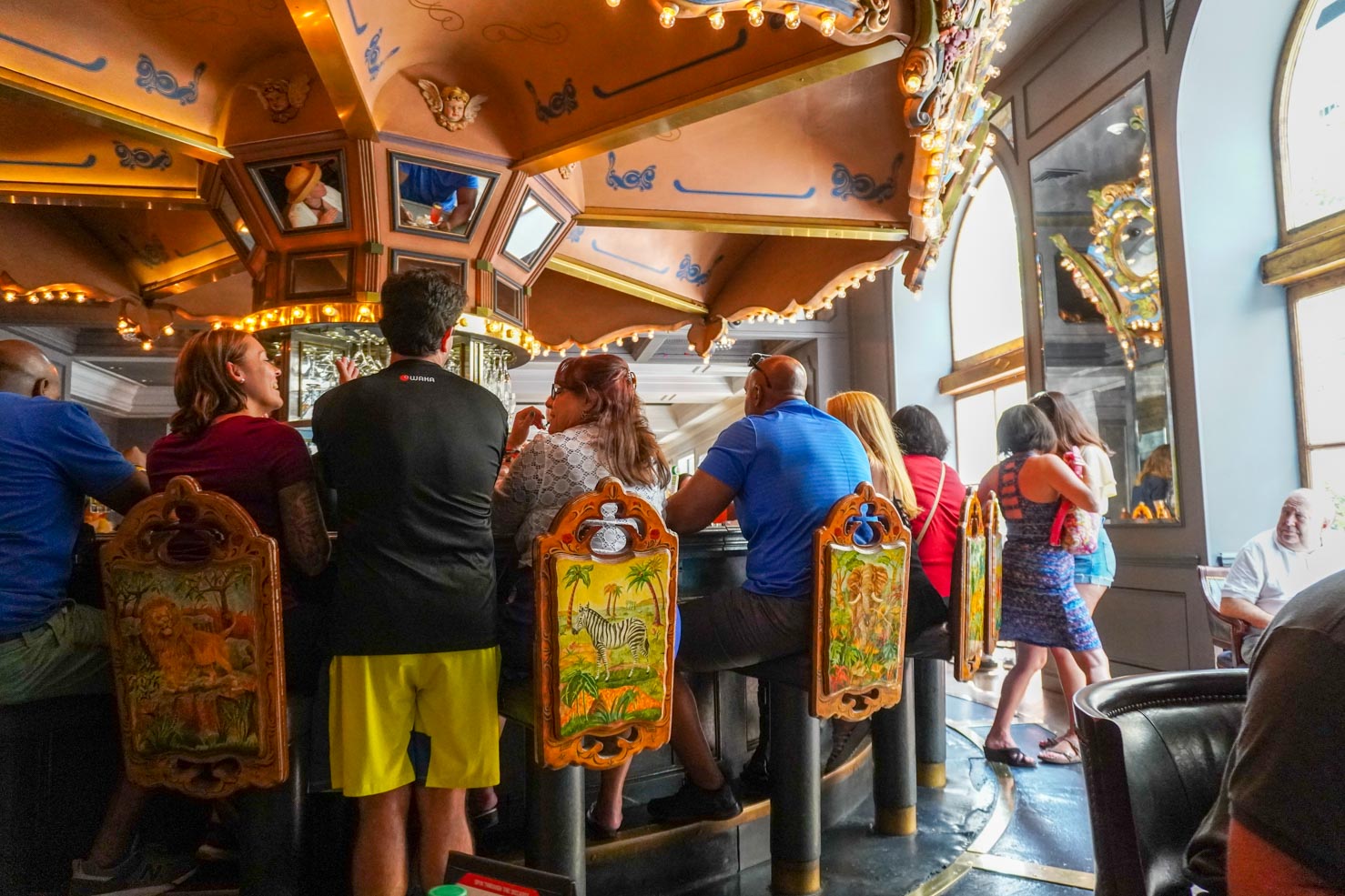
The Carousel Bar at Hotel Monteleone has been spinning since 1949, with 25 seats that slowly rotate around the bar about once every 15 minutes. Over the years, it became a favorite haunt for literary legends like Tennessee Williams and Truman Capote, and the hotel itself hosted writers including William Faulkner, Ernest Hemingway, Eudora Welty, and Anne Rice.
Capote even liked to claim he was born at the hotel—not quite true, but very New Orleans. And if you want one of the actual rotating seats, get there early. The novelty might get you through the door, but the cocktails are why I'd go back.
As a chef, this was one of the stops that really caught my attention. The drinks were being approached almost like composed dishes—herbs, infusions, fruit, syrups, unusual spirits and flavors layered together deliberately instead of simply being sweetened and poured over ice.
Secret Knowledge: The hotel souvenir shop has a lovely book containing the history of the hotel, but more importantly, recipes for their most popular drinks.
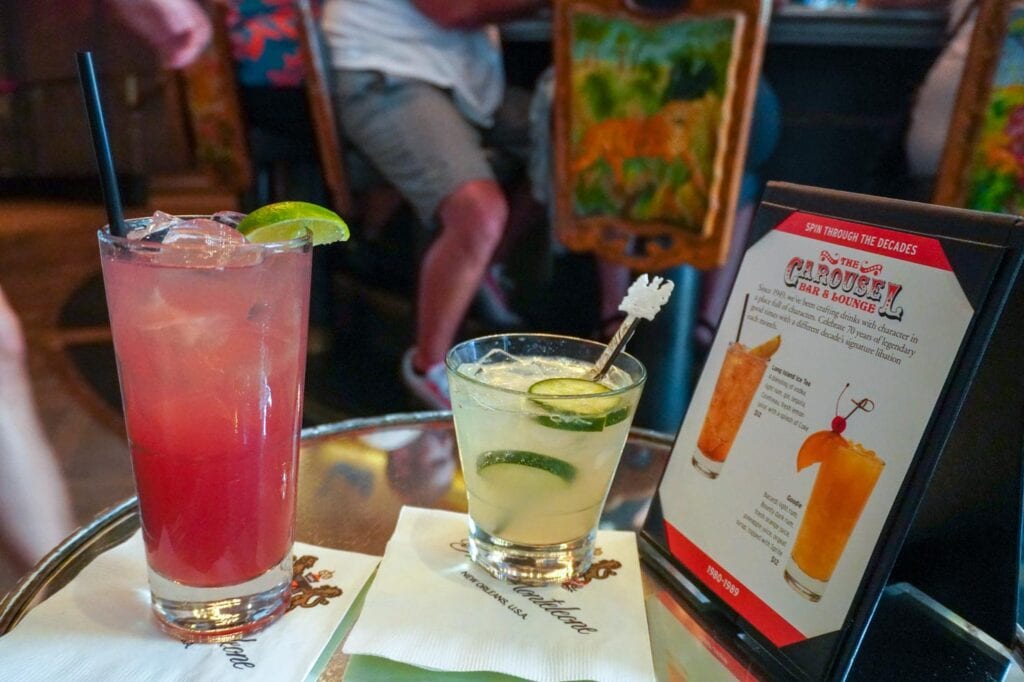
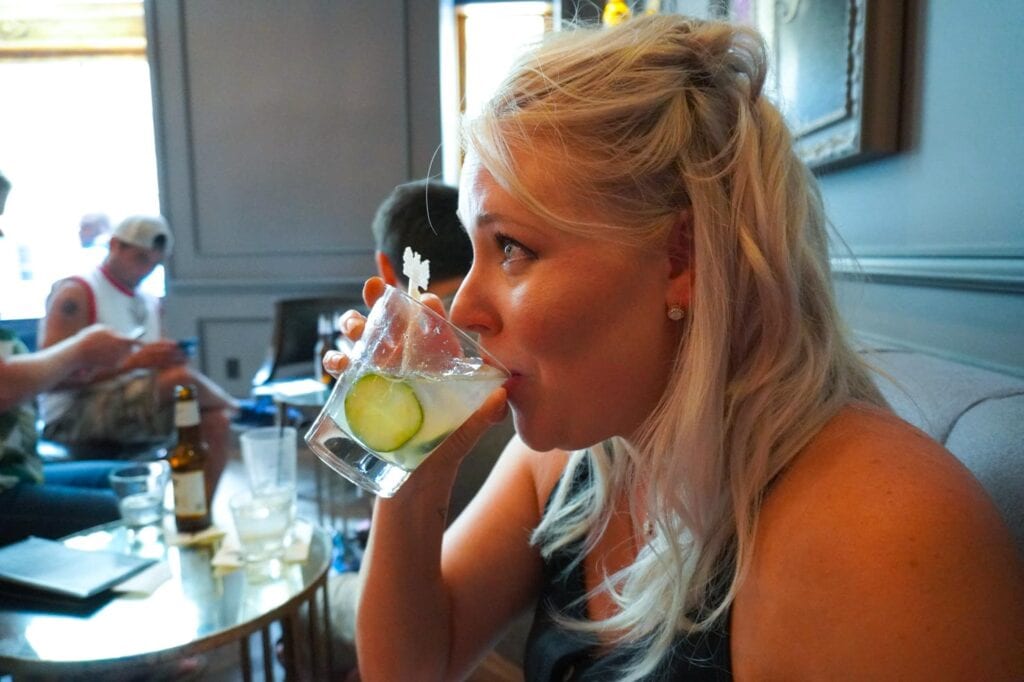
If you're lucky enough to get one of the rotating bar seats, take it. Otherwise, order something interesting and stay awhile. New Orleans understands the value of an experience, and you're encouraged to linger and soak up the feeling.
Take A Nap, Then Prepare For Dinner At Antoine's
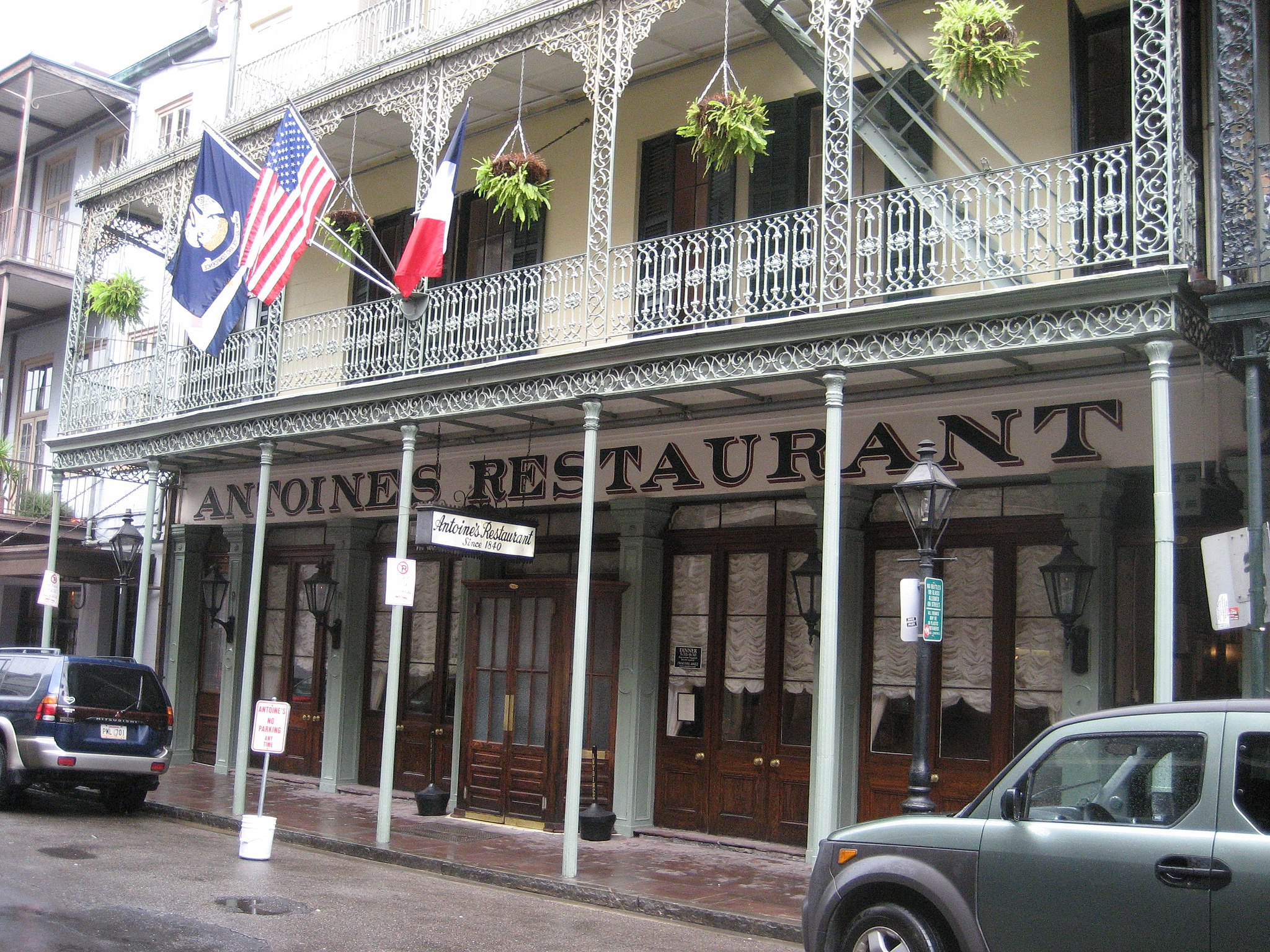
If you’re going to splurge on one old-school New Orleans dinner, make it Antoine’s. Open since 1840, it’s considered the oldest family-run restaurant in the country, and it’s the birthplace of Oysters Rockefeller—so yes, you absolutely need to order them here.
It even inspired the 1948 murder mystery Dinner at Antoine’s by Frances Parkinson Keyes, a longtime patron of the restaurant. Antoine’s owner Roy Alciatore actually worked with Keyes while she was writing it, and when the novel was published, he threw a private dinner at the restaurant for more than 200 guests.
So this isn’t just a place to stop for dinner. You’re sitting inside a restaurant that has been part of New Orleans for more than 180 years, eating dishes that were actually invented here, in rooms that have been hosting dinners, celebrations and probably a fair amount of New Orleans gossip for generations.
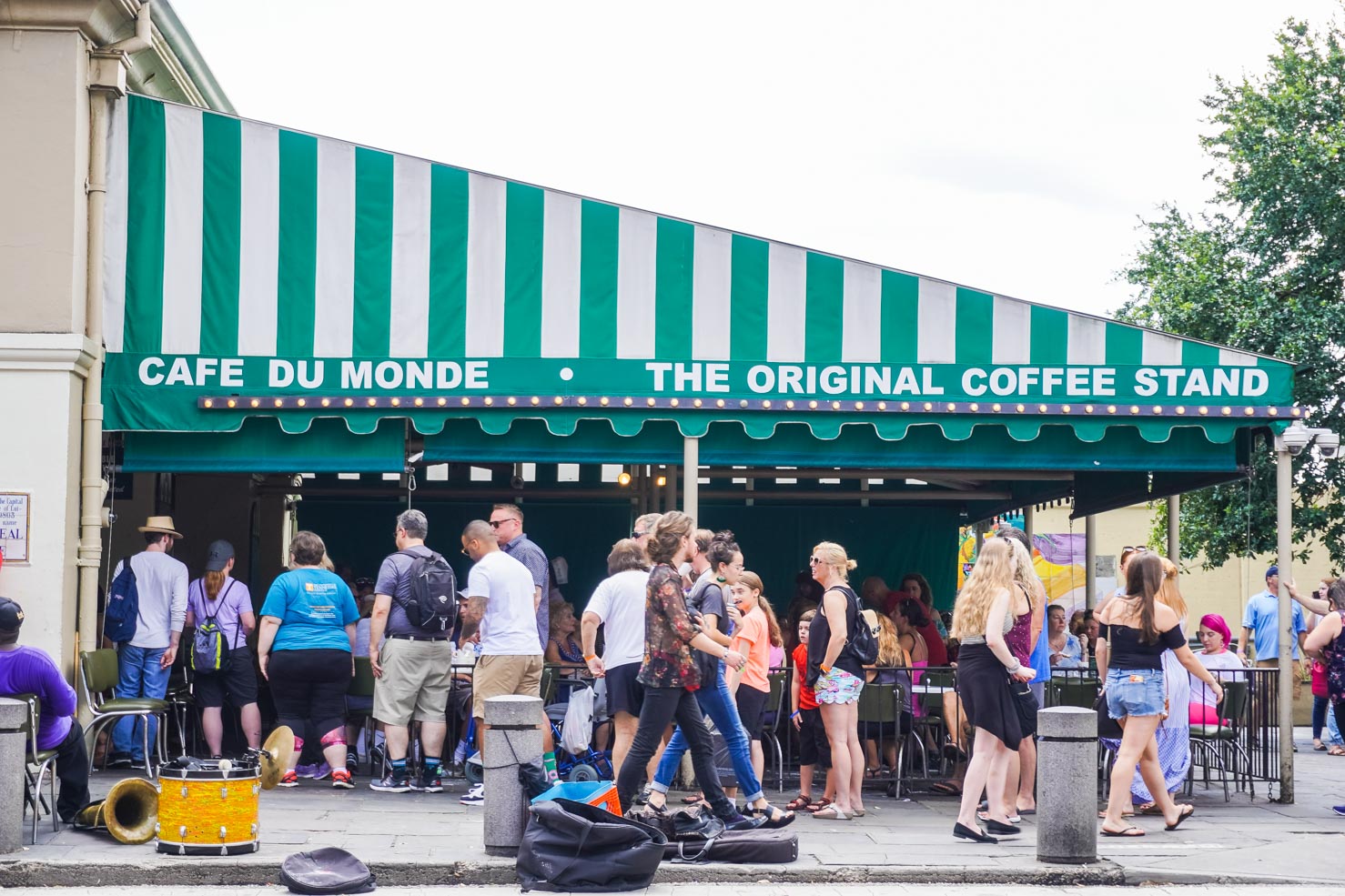
And after dinner? Take an Uber over to Café Du Monde for beignets and decaf coffee, or get to to bed for a full day tomorrow.
Day Two
One of my rules when traveling is simple: When several locals independently tell you to eat something, eat it. By our second day, our carefully researched food itinerary had started being hijacked by Uber drivers, bartenders, waiters and people sitting next to us. This is a very good sign. It means local eats, not restaurants with heavy PR budgets, are rising to the surface of the itinerary. So, this day we let the locals guide us.
Breakfast at Ruby Slipper
Our driver sent us to Ruby Slipper, and the crowd waiting outside seemed to confirm we'd been given good information. We ordered Bananas Foster French Toast, Shrimp and Grits, Biscuits with Honey Butter and a Bacon Bloody Mary for Dereck.
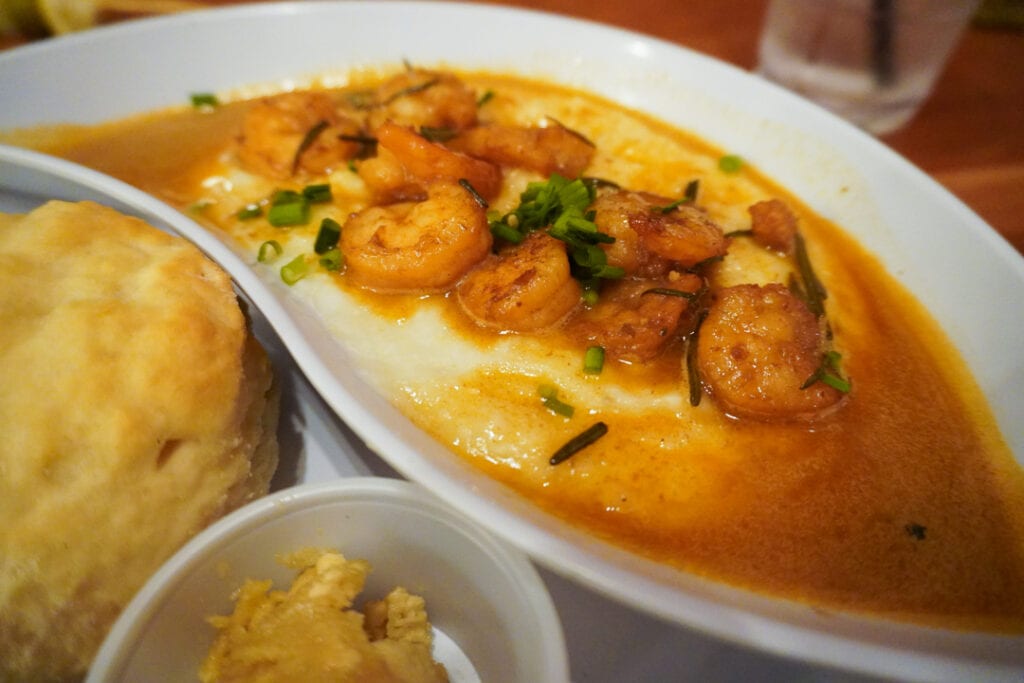
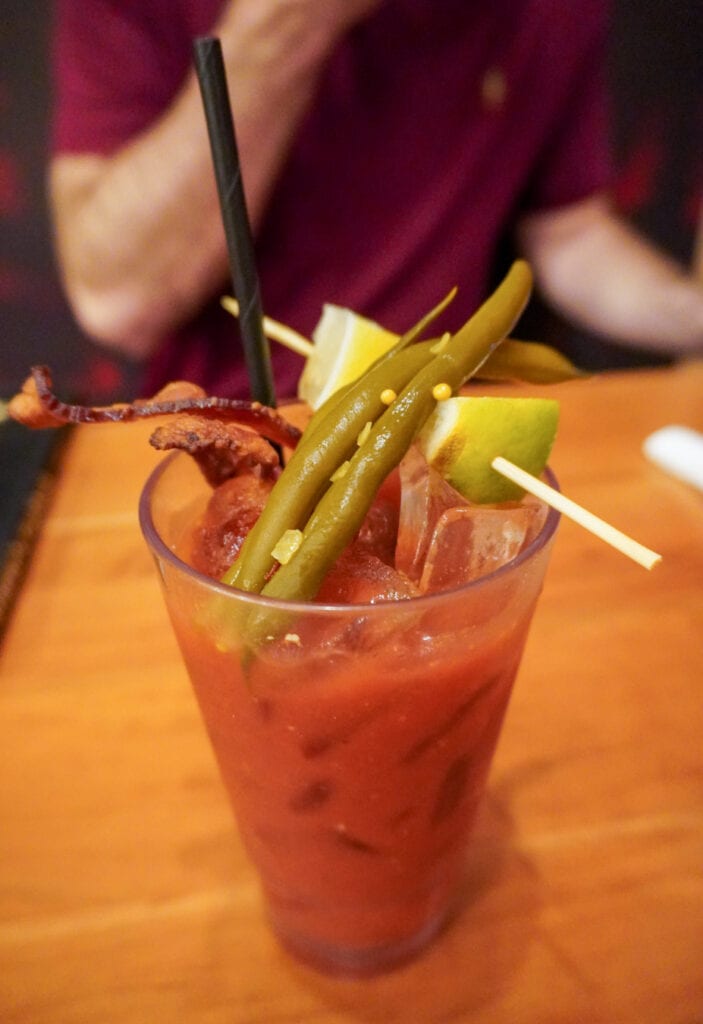
I temporarily switched to water in what can only be described as an act of optimism toward my liver. The dishes were phenomenal, but if I were doing this trip again, I’d keep breakfast simple and save some room for what comes next—because our next discovery quite literally changed the fabric of our date nights for the rest of our lives.
We discovered chargrilled oysters.
Acme Oyster House: Discover New Orleans Favorite Snack
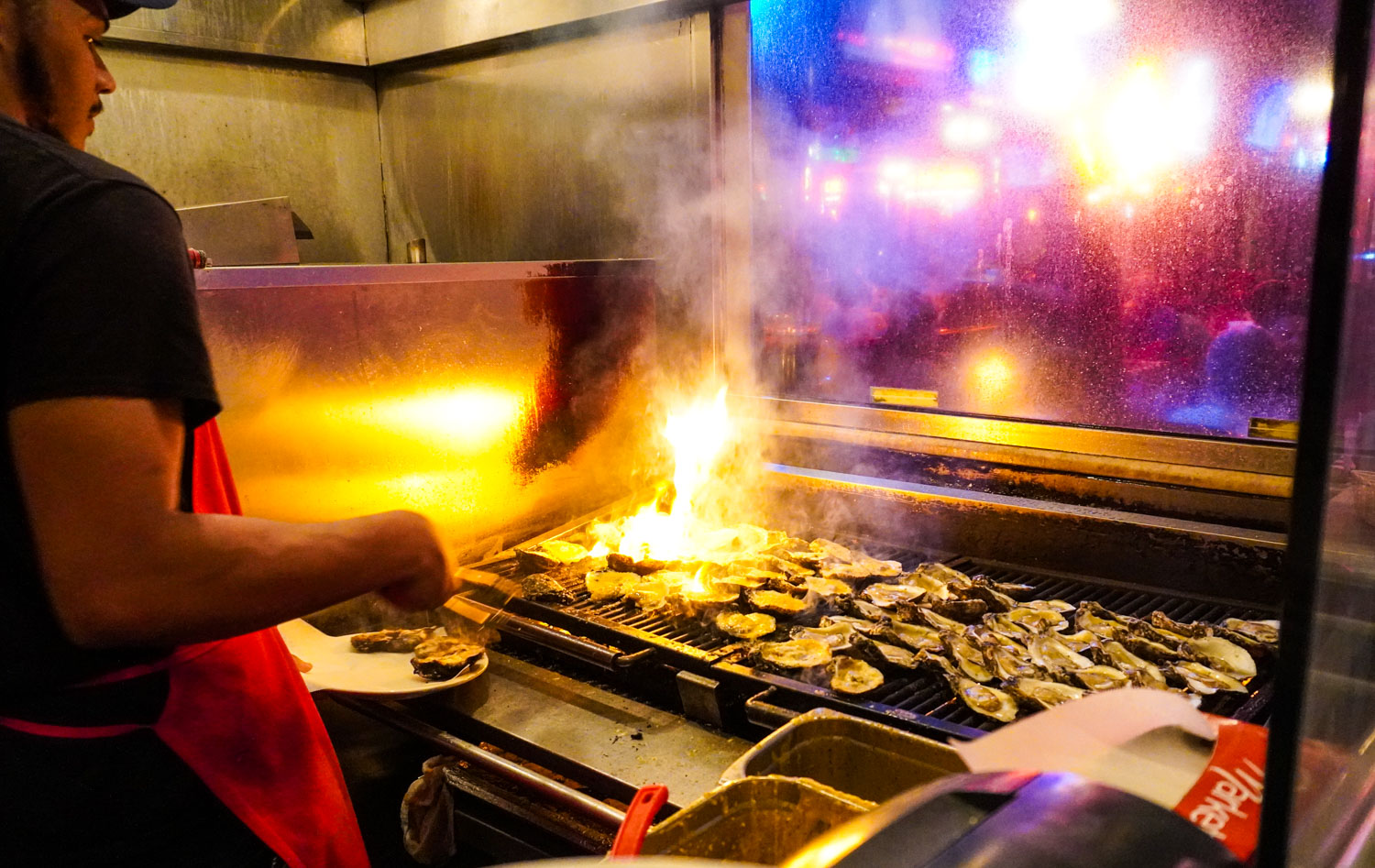
We didn’t go to New Orleans knowing anything about chargrilled oysters, but we left obsessed with them. And if I lived here, I’m pretty sure I’d eat them constantly—just like the locals seem to.
Chargrilled oysters are practically a New Orleans pastime. They remind me of the way a night in Boston somehow ends with a cannoli—it’s not just something you eat, it’s part of the culture. At Acme Oyster House, we were surrounded by local families ordering huge platters of them for the table, and that was the moment I realized these weren’t just a tourist must-try. This is how New Orleans eats.
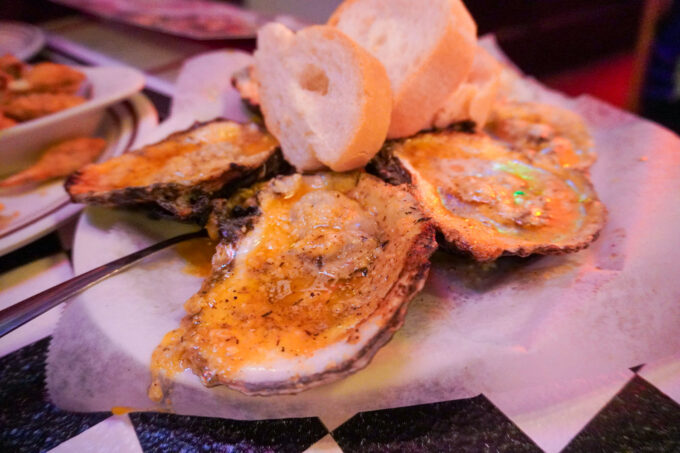
They’re oysters cooked right on the half shell over a hot grill, usually drenched in butter, garlic, herbs, and cheese until everything is bubbling and smoky around the edges. The crusty French bread served alongside them is an important tool because once the oysters are gone, you use it to soak up every last drop of that garlicky butter left in the shell.
Acme Oyster House convinced us we really liked them. Then locals started telling us where we really needed to try them, and suddenly comparing chargrilled oysters across New Orleans became an unofficial side quest.
We loved Acme enough that we returned three times during our 48-hour trip. That probably tells you everything you need to know.
Walk right down Royal Street until you're onto the corner across from Hotel Monteleone and find Mr. B's
Mr. B's Bistro
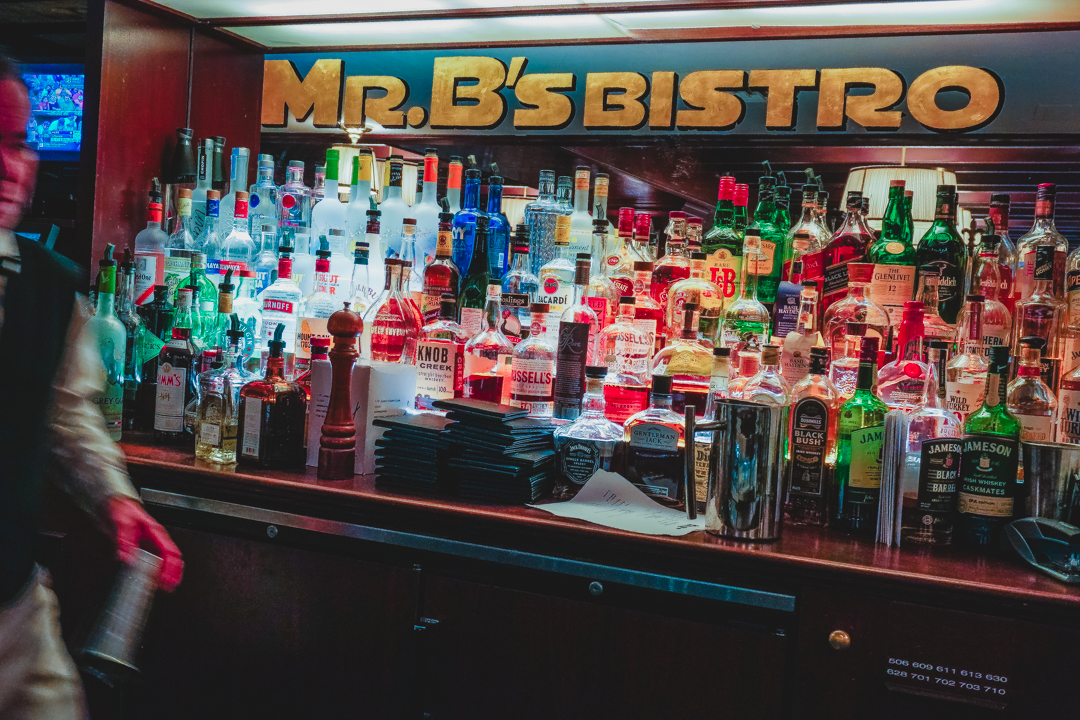
Another recommendation led us to Mr. B's Bistro, where I immediately wished I had another stomach.
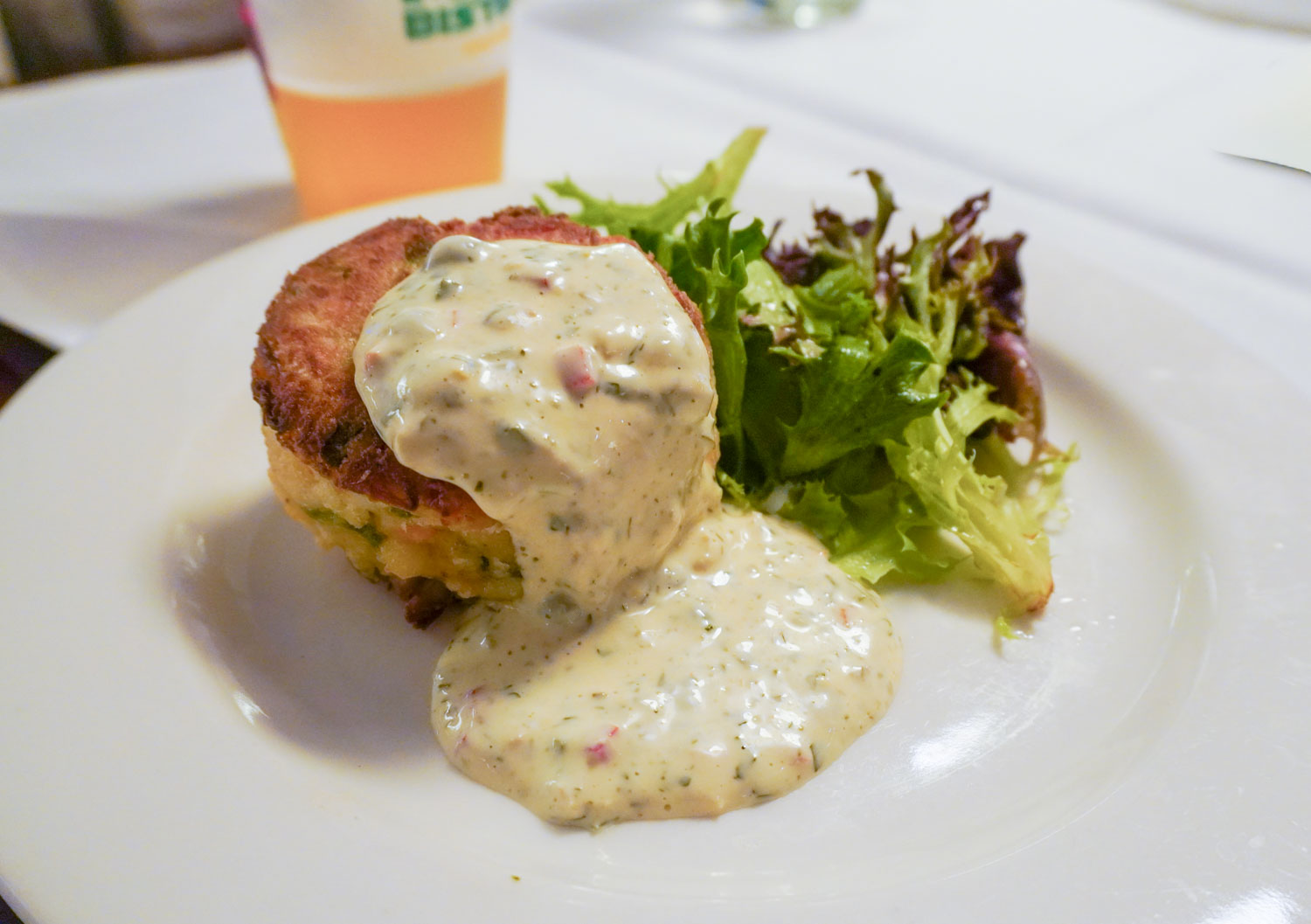
This is New Orleans food in its dressed-up clothes: crab cakes, barbecue shrimp and the kind of deeply flavored Creole cooking that makes you start mentally rearranging the rest of your trip so you can come back for dinner. I thought the Crab Cakes were the best I've ever had but the locals will insist you try the Shrimp and Grits. This one is your call.
If you're doing a tasting-style tour, the bar is perfect. Order a drink, split a few things and keep moving. If you're not trying to eat twelve meals in two days like a lunatic, make a reservation and give this one an entire evening.
Detour Outside the Quarter to Jacques-Imo's
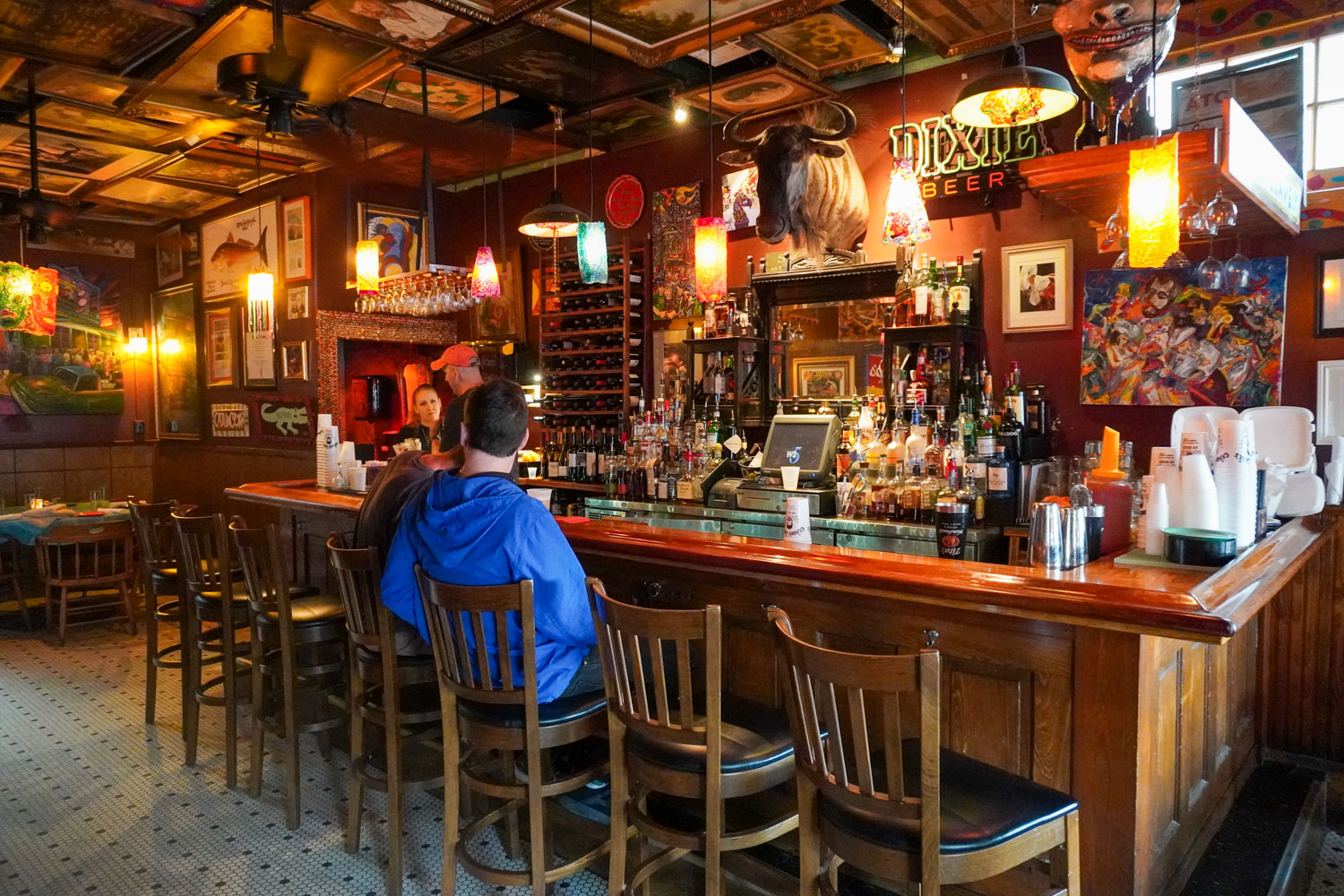
Our biggest detour was Jacques-Imo's, about a fifteen-minute ride outside the French Quarter.
Go.
Go for the quirky, hand-painted chart explaining the hierarchy of New Orleans chefs—hint: Emeril is at the top. Go for the completely bizarre experience of walking through the kitchen just to get to your table. And absolutely go for the alligator cheesecake, because where else are you going to order something like that and have it actually work?
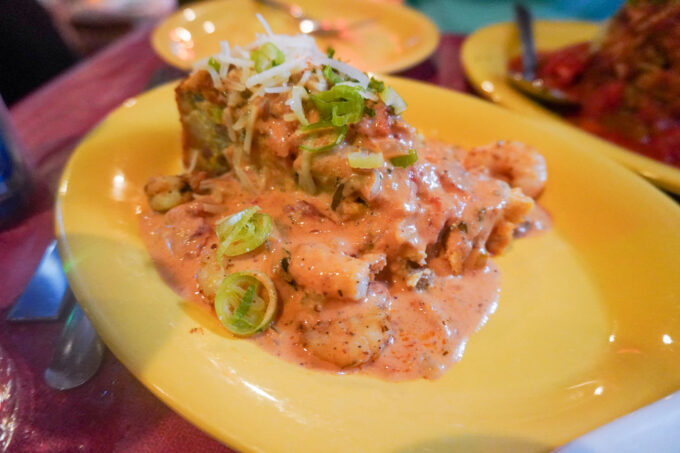
The atmosphere is completely different from the historic dining rooms we'd been visiting. It's quirky, relaxed, colorful and just a little chaotic—and then the food arrives.
Creole jambalaya. File Gumbo. Fried Boudin Balls. Shrimp remoulade Atop Fried Green Tomatoes. Smothered Red Snapper. And one of the strangest things we ate all weekend: a savory alligator sausage cheesecake.
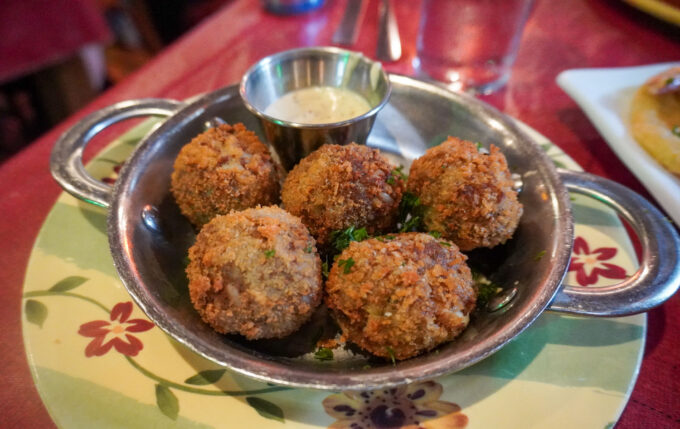
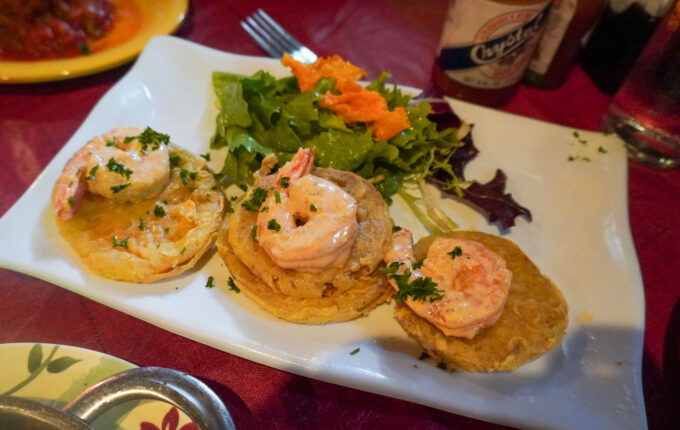
We ordered what essentially became an appetizer tasting and worked our way through as much of the menu as possible. It was one of the best ways to experience the range of Cajun and Creole flavors in a single meal.
One Last Oyster Debate: Drago's
By this point, we'd mentioned our chargrilled-oyster obsession to enough people that one name kept coming up: Drago's
So naturally, we went. Drago’s is basically New Orleans royalty when it comes to charbroiled oysters. The Cvitanovich family opened the original restaurant in Metairie in 1969, and it was second-generation owner who created their now-famous charbroiled oysters in 1993 by loading fresh oysters with garlic-herb butter, Parmesan and Romano and throwing them directly onto a screaming-hot grill.
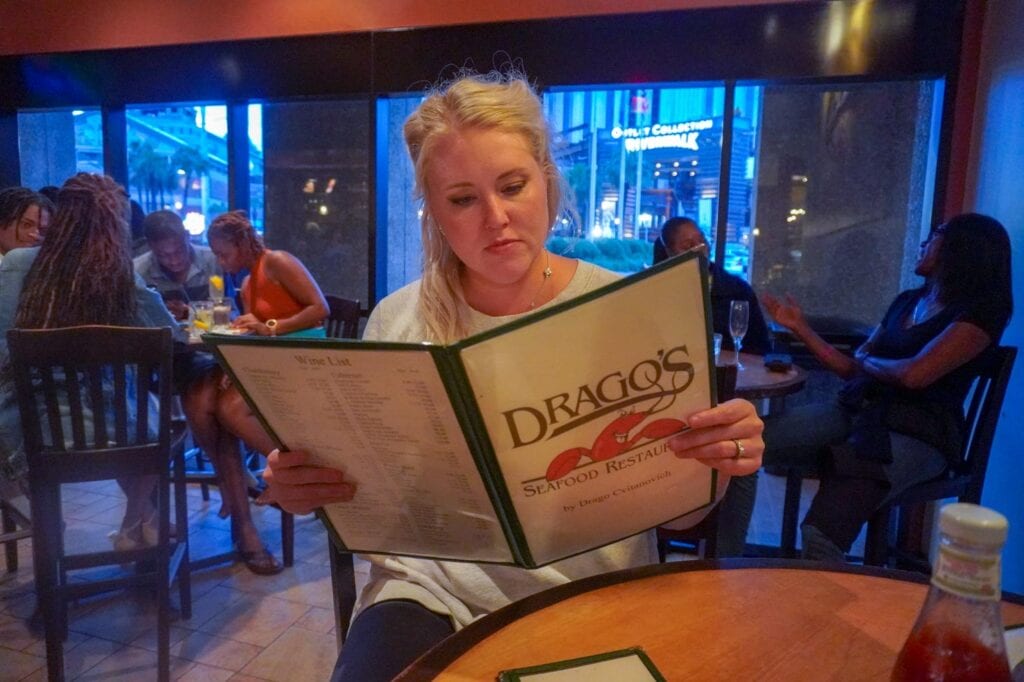
For visitors staying in the French Quarter, the easiest location is Drago’s inside the Hilton New Orleans Riverside, right near the river at the edge of the Quarter. But if you want the original experience, take the short ride out to Metairie, where the freestanding original still feels much more like a neighborhood New Orleans institution.
Their oysters are noticeably different from Acme’s—richer, cheesier, and absolutely swimming in that garlicky butter and oyster liquor that you’ll want to mop up with French bread. Dereck preferred Drago’s. I preferred Acme. This became a surprisingly serious marital debate.
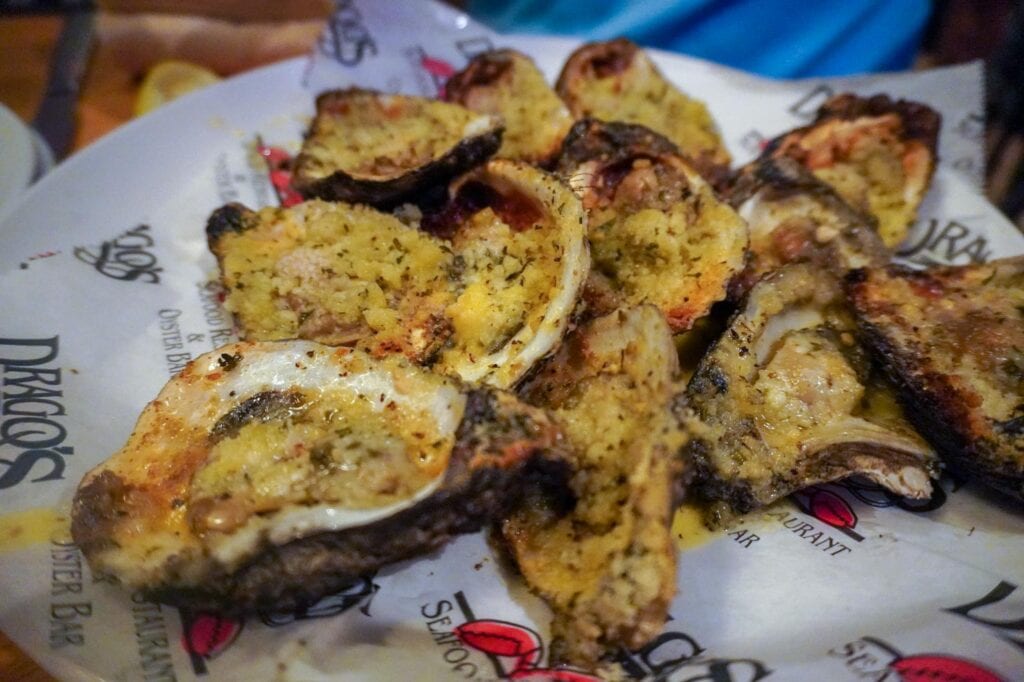
But whichever side you land on, Drago’s deserves a stop because this isn’t a restaurant that simply serves charbroiled oysters—they’re the family credited with creating the version that helped turn them into a New Orleans obsession.
The Best Way to Experience New Orleans? Stay Hungry.
We arrived with a list. We left with new favorites, five cookbooks, strong opinions about oysters and a dozen recommendations for the next trip!
That's the beauty of a self-guided food tour. The restaurants are the itinerary, but they aren't really the entire experience. They're what get you walking down Royal Street, lingering in Jackson Square, wandering through the French Market, listening to jazz under a gazebo, talking to the person sitting beside you at a bar and discovering the place through the people who know it best.
And that might be my favorite way to travel.
Duane says
Watched your YouTube travel in New Orleans and looked for your printable travel guide here on your site but did not find it. Is there somewhere I can find this travel guide?
Sarah Penrod says
Hi Duane! When I first made this guide I meant for the blog to serve as a written guide you could follow on your phone BUT WordPress just released a way that I can make it a printable!! SO, I'm excited to whip that up. Hopefully, it will be done before your trip!
Susie says
My husband and I LOVE NOLA and the food. We try to get information where the locals eat and haven’t been disappointed yet. I 100% agree that Cafe Beignet is much better.
Tami Parker says
Loved this posting of all things amazing Nola foods! The one place you have to go back to in the French Quarter is Toast on Decatur Street, they have the most amazing crepes with lemon curd, literally made me want to cry! Enjoy on your next visit ⚜️
Xoxo Tami
mike Harrell says
Really enjoyed your vid on Youtube! Agree that Dragos does a great job on the G/Os. Do You have additional vids on NOLA?