
Updated: September 14, 2026 | Originally Published: 2022
For barbecue beginners and those with small households, the idea of smoking an entire beef brisket can be daunting, expensive, and potentially wasteful. Clever pitmasters reach for brisket’s little brother—the chuck roast, for an inexpensive, entry-level cut of meat, which delivers a very similar eating experience in a smaller package.
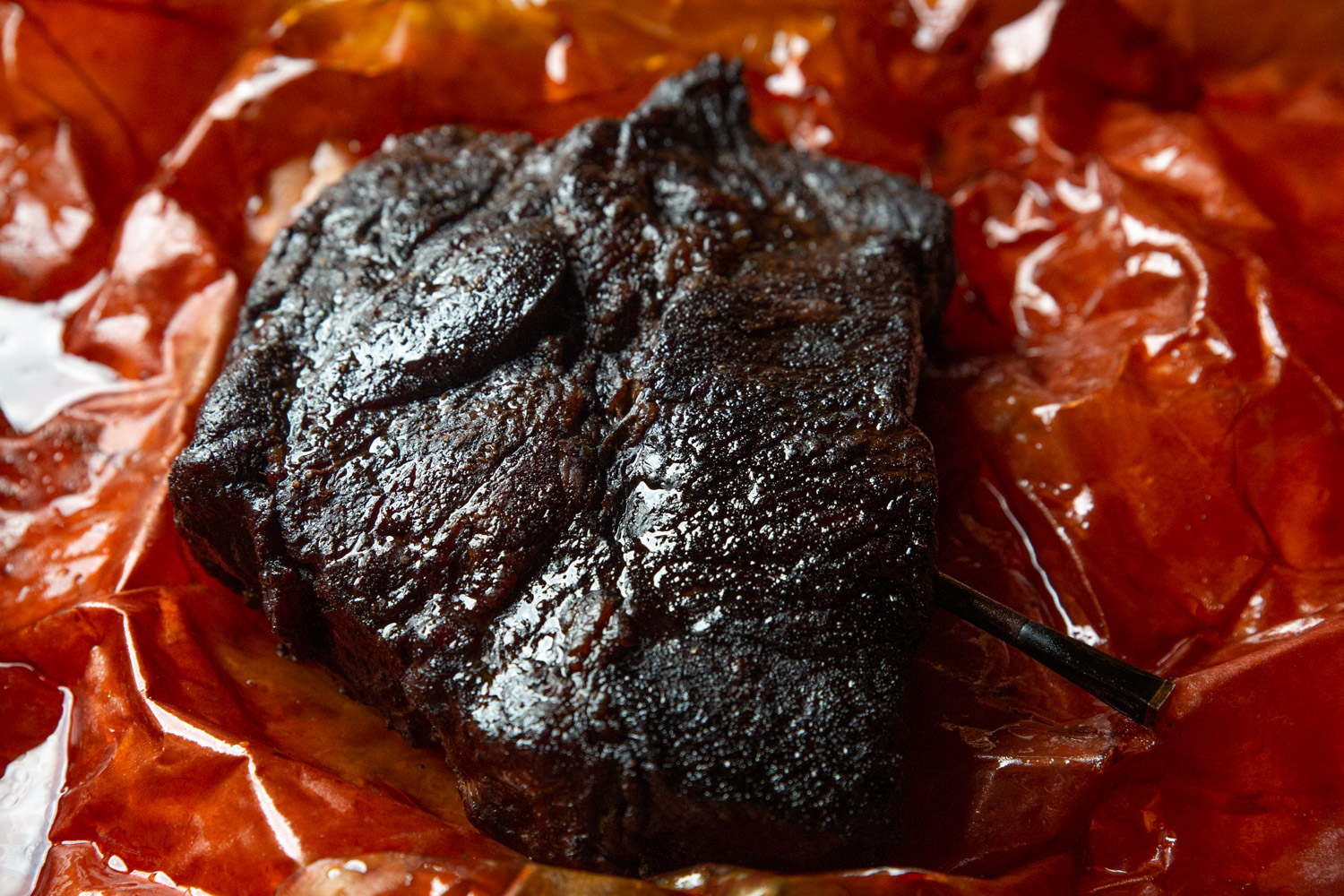
As a Texas chef and caterer, I've smoked many beef chuck roasts through the years and this step-by-step tutorial will reveal the secrets to ultra juicy meat and excellent smoke flavor that anyone can replicate in their own backyard.
This step-by-step tutorial will help you easily master smoked chuck roast, and here is what we will cover.
Table Of Contents
Jump to:
- Table Of Contents
- How Long To Smoke A Chuck Roast Per Pound
- How Long Does it Take to Smoke a Chuck Roast at 225 degrees?
- Where do the Variations in Cook Time for a Smoked Chuck Roast Come From?
- Where To Buy A Chuck Roast
- How To Prepare Your Smoker for Chuck Roast
- What Wood is Best for Smoking Beef?
- How to Trim a Chuck Roast for Smoking
- How To Dry Brine a Chuck Roast
- Dry Rub For Beef Chuck Roast
- How to Smoke Beef Chuck Roast
- Top Tip
- Resting the Wrapped Chuck Roast (Oven vs. Igloo Cooler)
- How To Slice Smoked Chuck Roast
- Step By Step Photo Guide
- Advice For Working With Small Chuck Roasts
- How to Store & Reheat Smoked Chuck Roast
- Related
- Pairing
- Ultra Juicy Smoked Beef Chuck Roast Recipe
The first thing you’ll need to know is how long to smoke chuck roast per pound, as well as what temperature to maintain in your smoker for the perfect cook.
How Long To Smoke A Chuck Roast Per Pound
Smoked Chuck Roast is smoked at 225° for 2 hours per pound, or 250° for 1 ½ hours per pound. This does not include time for resting the meat, usually 1-2 hours for best results.
Best results are achieved by cooking to temperature, not to time. Smoked Chuck Roast should be cooked to an internal temperature of 195 degrees, and rested for at least 1 hour. My full procedure for ultra juicy chuck roast includes wrapping the meat at 160-170 degrees, or for smaller roasts whenever it hits the stall.
How Long Does it Take to Smoke a Chuck Roast at 225 degrees?
A 3-4 pound chuck roast will take 6-7 hours, plus 1 hour of resting time. It's always a good idea to give yourself an hour or so of extra time to account for differences in smokers and mastering the method. Above all, when the chuck roast hits the stall, you must wrap, as it does not have the mass of a brisket and will lose moisture.
Where do the Variations in Cook Time for a Smoked Chuck Roast Come From?
Variations in your specific cook time come from temperature fluctuations in the smoker, as well as whether you choose to wrap the chuck roast (which will be demonstrated later in this tutorial). What qualities you are looking for in the final product will also affect how long you smoke the chuck roast…
For a sliced chuck roast that resembles sliced brisket, you will cook to an internal temperature of 195° or for pulled style meat you will need to cook to 205°.
Where To Buy A Chuck Roast
Fortunately, chuck roast is one of the easiest cuts of beef to find. Since it is essentially the same cut as pot roast you can find it at basic grocery stores and certainly your favorite butcher shop or big box stores like Costco and Sam’s Club carry chuck roast.
Like any cut of beef, the grades go in this ascending order – Select, Choice, Prime
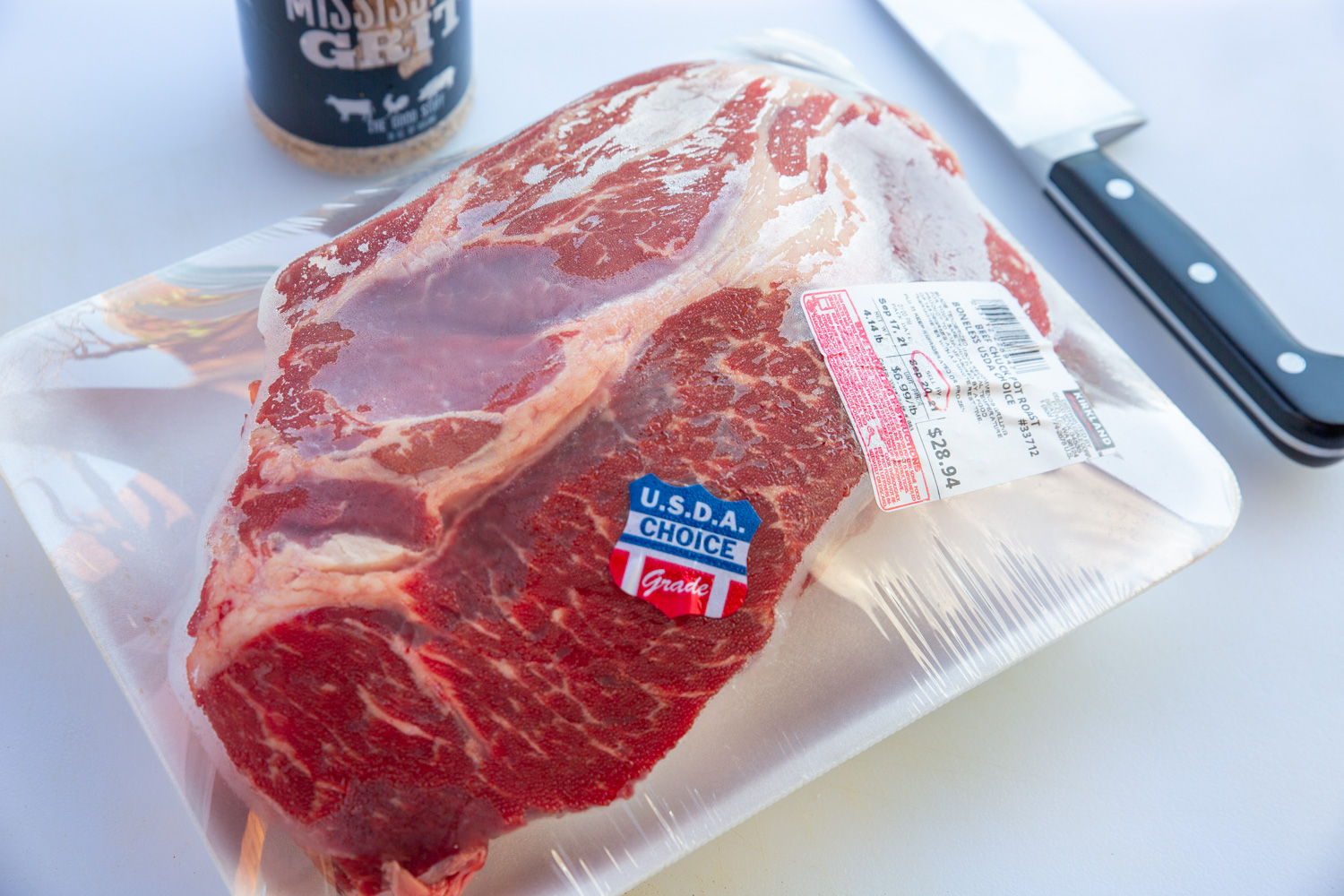
Select is the lowest grade but what most of us will be purchasing at our local grocery store. Choice or Prime can be found in specialty grocers and Costco. Higher grades of meat are associated with better flavor and tenderness, but with chuck roast, a choice grade cut is perfectly suitable for smoking.
How To Prepare Your Smoker for Chuck Roast
We use our RecTeq 1250 pellet smoker to smoke the majority of our meat and that is what we will use in this tutorial.
You can use a pellet smoker like ours, a traditional offset smoker, a Big Green Egg or whatever smoker you have handy. Just make sure that whatever you’re using provides indirect heat and lots of smoke. The smoker should be prepped with clean grill grates and be ready to receive meat.
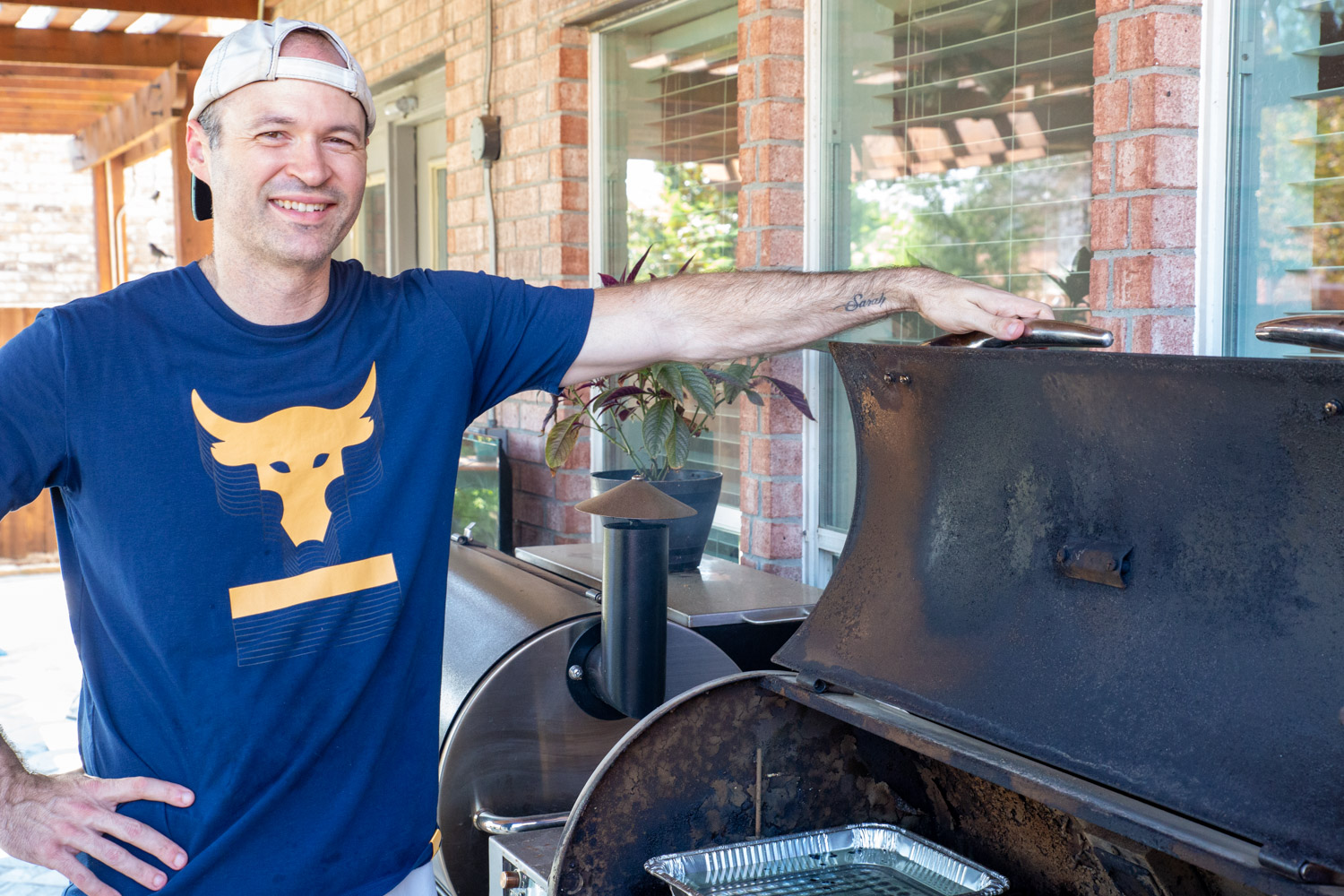
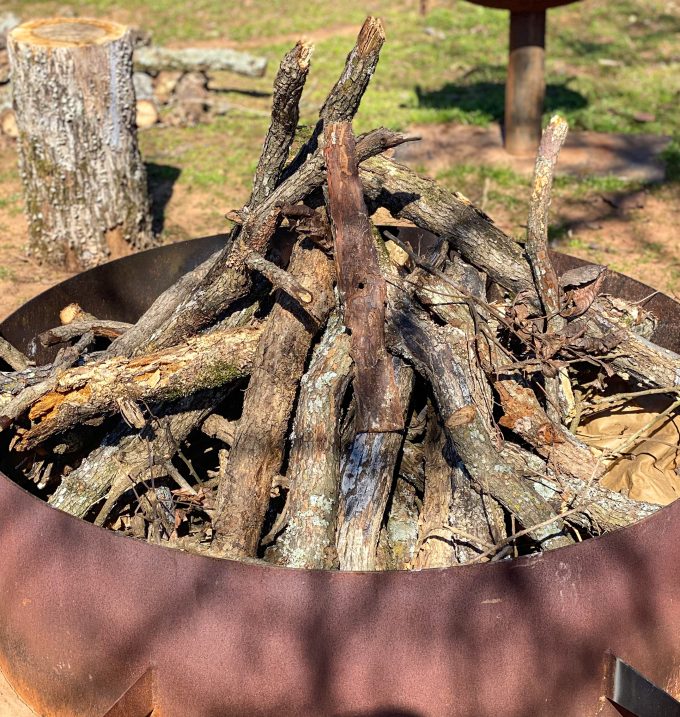
Offset smokers should start their fire and have wood nearby for adding to the wood box. Pellet Smokers should freshly be filled with pellets.
Bring the temperature of the smoker up to 225 degrees.
(Links are affiliate links to products we think are helpful and we may receive a small commission, at no cost to you, if purchased.)
What Wood is Best for Smoking Beef?
Traditional beef smoking woods such as Oak, Pecan, Hickory, Peach, and Mesquite Blends are excellent to smoke chuck roast.
Our favorite pellets for smoking any type of beef are the Lumberjack Competition Blend Pellets. We also enjoy Bear Mountain Pellet Blends in traditional beef varieties. Whether you’re smoking with pellets, wood, or wood chips, the choice of wood is a personal preference. We encourage everyone to try different types of wood and pellets to see which one is your personal favorite.
Adding A Water Pan to the Smoker
We put a water pan into our Pellet Smoker because it helps to even out the temperatures in the cooking chamber. By doing this, you can ensure that your smoked chuck roast cooks as evenly as possible—and it doesn’t have to be anything high-tech at all. We use a basic foil pan filled with scorching hot water.
Why do you fill it with hot water? I’m glad you asked. Filling it with hot water will allow the water to evaporate into your smoke chamber faster. This works because you’re starting with water at a higher temperature and therefore the water doesn’t have to heat up as much as putting cold tap water into the chamber.
How to Trim a Chuck Roast for Smoking
The first thing we do in this smoked chuck roast recipe is simple. Cut off the vacuum-sealed wrapping that your chuck roast comes in and pat dry.
Whatever you do, do not rinse the chuck roast off in the sink. Studies have shown that this can spread bacteria around your kitchen. Instead, just use a paper towel to pat dry your meat.
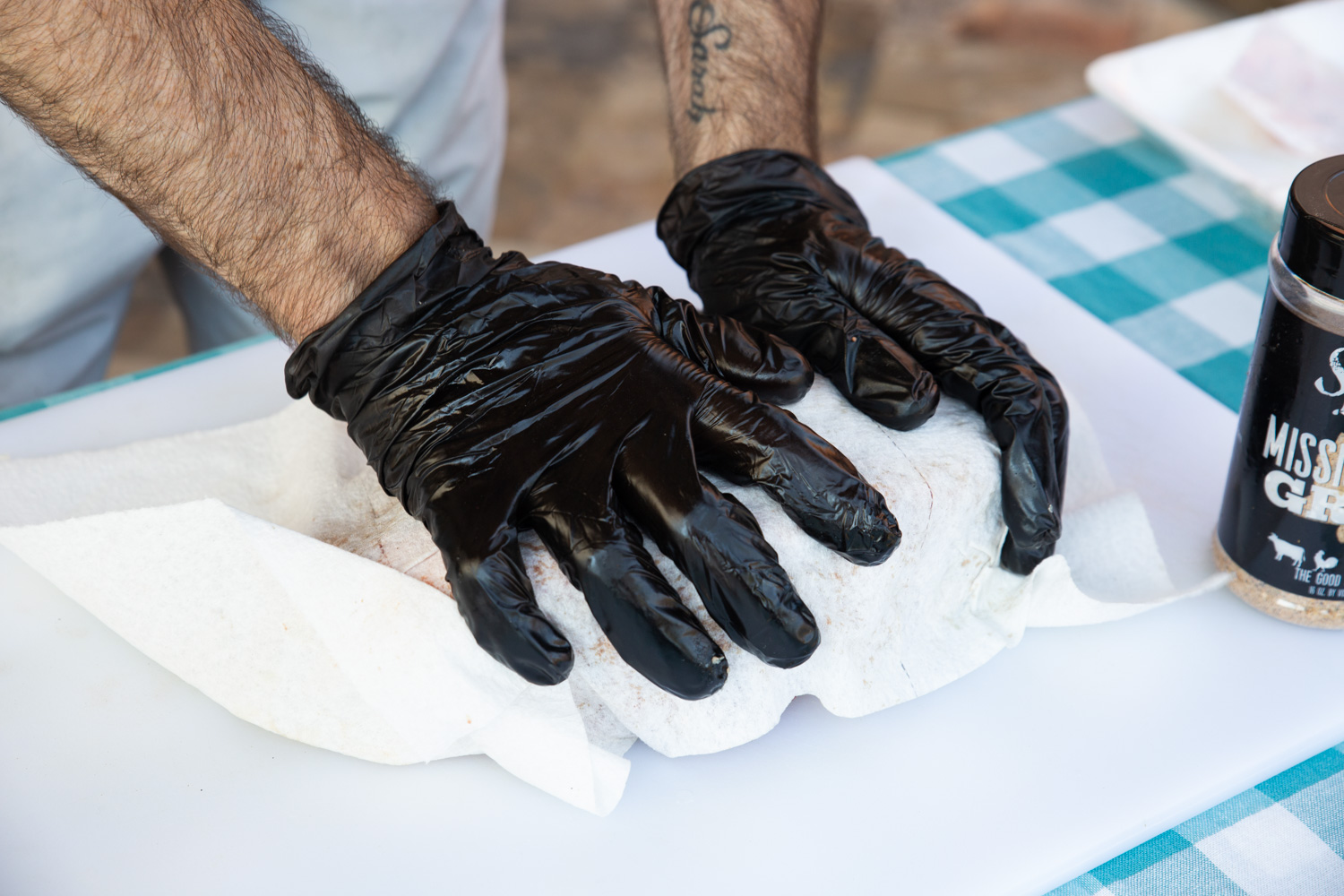
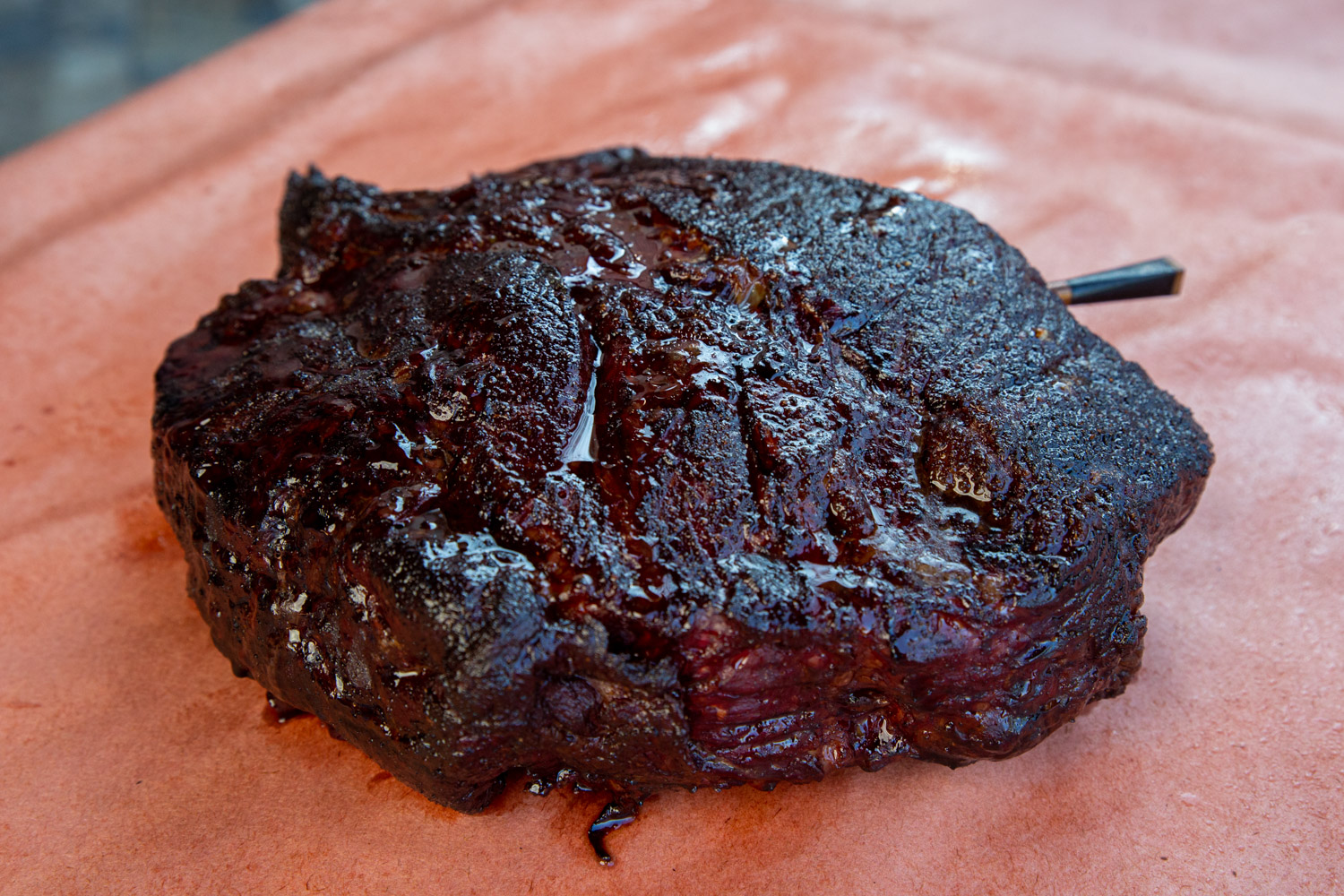
Unlike brisket, the great thing about smoking a beef chuck roast is that there is very little, if any, trimming that you have to do to it. The smoked beef chuck roast from the recipe video didn’t need any trimming whatsoever, which is common—let’s find out why.
Intramuscular Fat and Intermuscular Fat
Intramuscular fat is located within the meat and is referred to as marbling in the meat industry. This is the good fat that melts during the cook contributing to juicy meat and excellent flavor. Beef chuck roast has a lot of this intramuscular fat, which does not need to be trimmed out. The trick is making sure that all that fat renders out into liquid fat in your final smoked chuck roast.
There is also going to be intermuscular fat, the fat that separates the muscles. Chuck roast contains intermuscular fat because it is comprised of several different muscles.
Intermuscular fat is the fat that is chewy and will never break down all of the way. It will just soften and become chewy if you try to eat it. We’ve all had that chewy piece of meat that tires out our jaw and that was more than likely a piece of intermuscular fat.
You’ll notice this type of fat right away within your chuck roast as it will be very firm to the touch and typically runs through the middle of your meat like a web. Don’t worry about cutting it out or trimming it, because it’s holding the roast intact and once the cook is done it is easy to pull the meat and remove these intermuscular fat beds.
In summary, no necessary trimming is typically needed in a chuck roast as you might find in other cuts of meat.
Now, you have 2 options depending on if you’re prepping your chuck roast to smoke the night before or the morning of your party, whether or not to dry brine.
How To Dry Brine a Chuck Roast
If you’re preparing your beef roast the night before you plan on smoking it, you can lightly salt the exterior with kosher salt and allow it to dry brine overnight in your refrigerator. Make sure and cover the meat after salting it and before you put it into your refrigerator overnight—we accomplish this by wrapping it in saran wrap, aluminum foil, or placing the meat in a disposable catering tin and tenting it with foil.
Dry brining the chuck roast is going to draw the water out from your beef and dissolve the salt. The beef will then reabsorb that salt solution into your meat, enhancing the flavor, and breaking down some of the muscle fibers resulting in even more tenderness.
There is a point of diminishing returns, so all you want to do is dry brine it overnight. If you dry brine for too long, such as several days, you risk the meat becoming mushy. Overnight up to 24 hours is the perfect dry brine timeline.
And if you aren’t able to salt it the night before, don’t worry because there are many times, we either forget or just don’t have the time. Dry brining is an optional step that can boost flavor if you make plans early to complete the process.
Dry Rub For Beef Chuck Roast
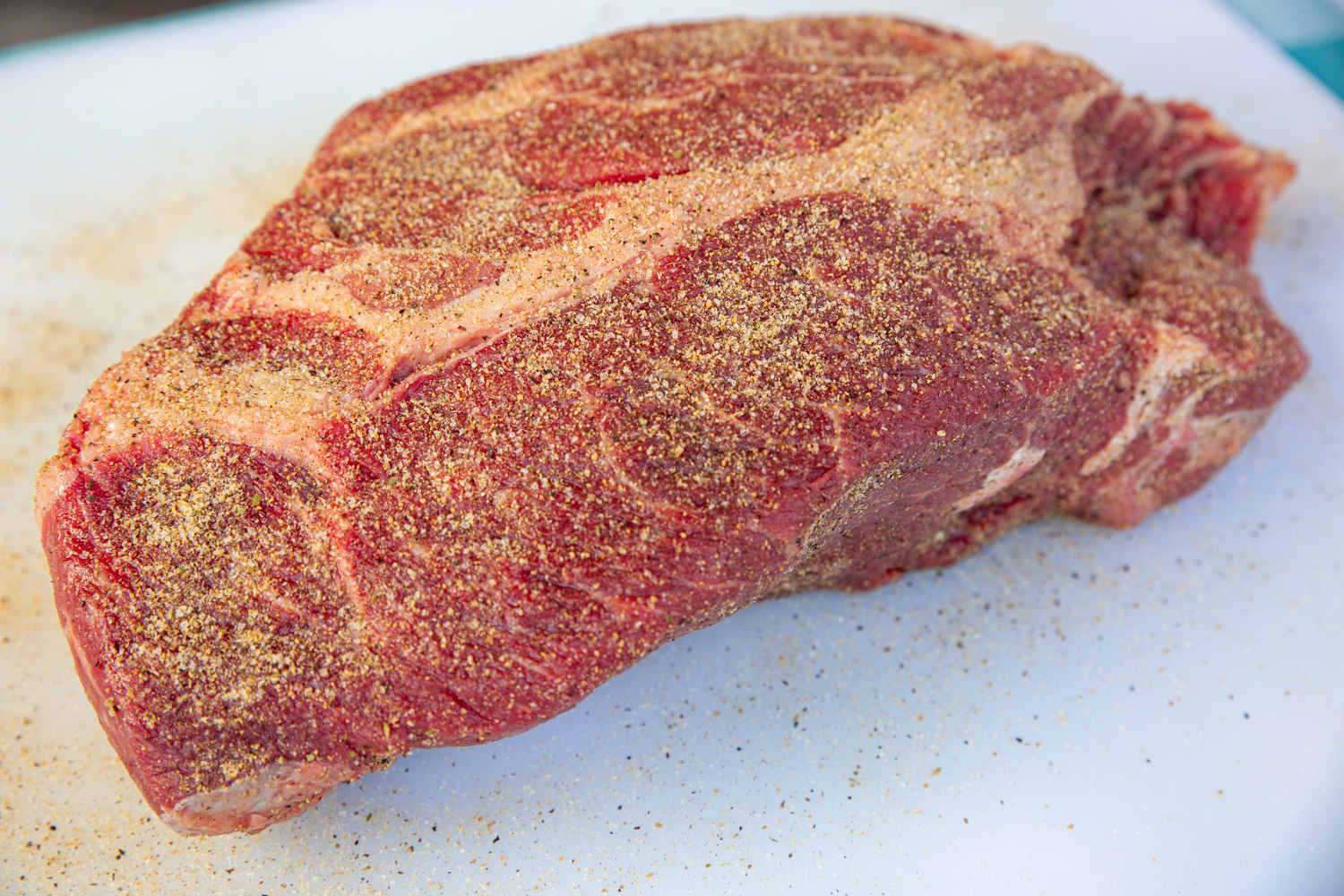
Now we’re going to season the meat. You can use whatever kind of rub you’d like but we prefer to use a beef rub with the main ingredients of kosher salt, pepper, garlic powder, and onion powder. Here is my personal recipe for Texas-style beef rub. We use this on everything from chuck to brisket.
When you season your chuck roast, you want to steer clear of covering it fully from top to bottom. I’ve seen some recipes and YouTubers that will give it an airtight coating of the rub. Their version of a good coating is to cover the meat until you can barely see it under the rub.
This is a huge mistake as it does two things, it keeps the smoke from penetrating into your chuck roast and it prevents the bark from forming.
You can watch the video playing on this page to see how much we season our chuck roast.
How to Smoke Beef Chuck Roast
The smoking process is a breeze. Once you’ve prepped your smoker and chuck roast, all that is really left is the time, temperature, and wrapping of your meat.
Bring the internal temperature of the smoking chamber to 225°-250°.
Probing the Chuck Roast with a Meat Thermometer
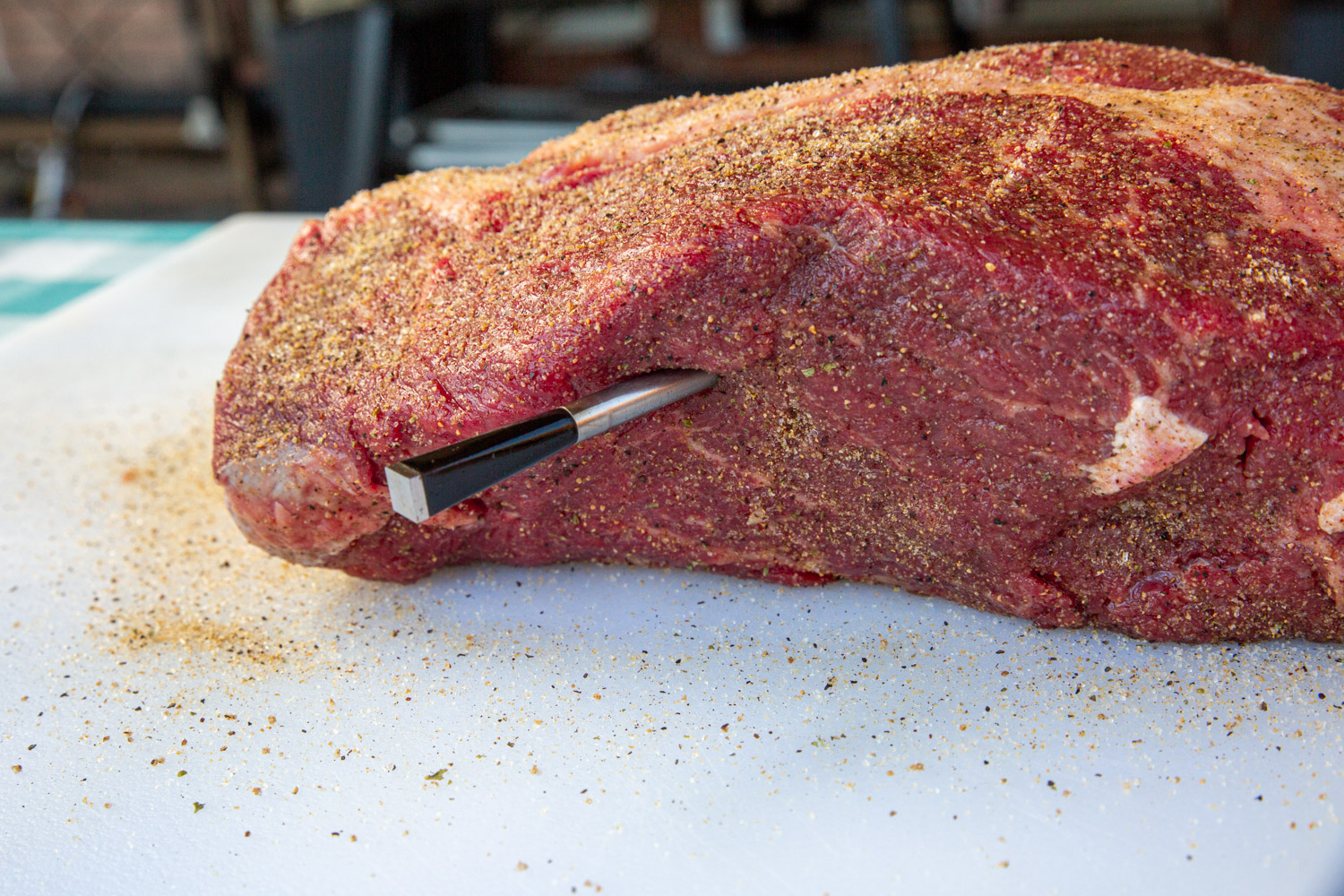
Once you’ve put your meat in the smoker, you’ll want to place a temperature probe in the middle of the roast in the thickest area. We use a Wireless Digital Thermometer for this cook. Some pellet grills come with a built-in probe thermometer that connects directly to the grill, and that works perfectly well, too. The important thing is to use a thermometer that gives you a continuous reading of the meat’s internal temperature without having to open the cooking chamber.
This is where we typically see people make mistakes—they smoke the roast for a certain amount of time (whatever a favorite cooking website tells them to do) but ignore the internal temperature of the meat, and this can be the difference between a great smoked chuck roast and a dry smoked chuck roast.
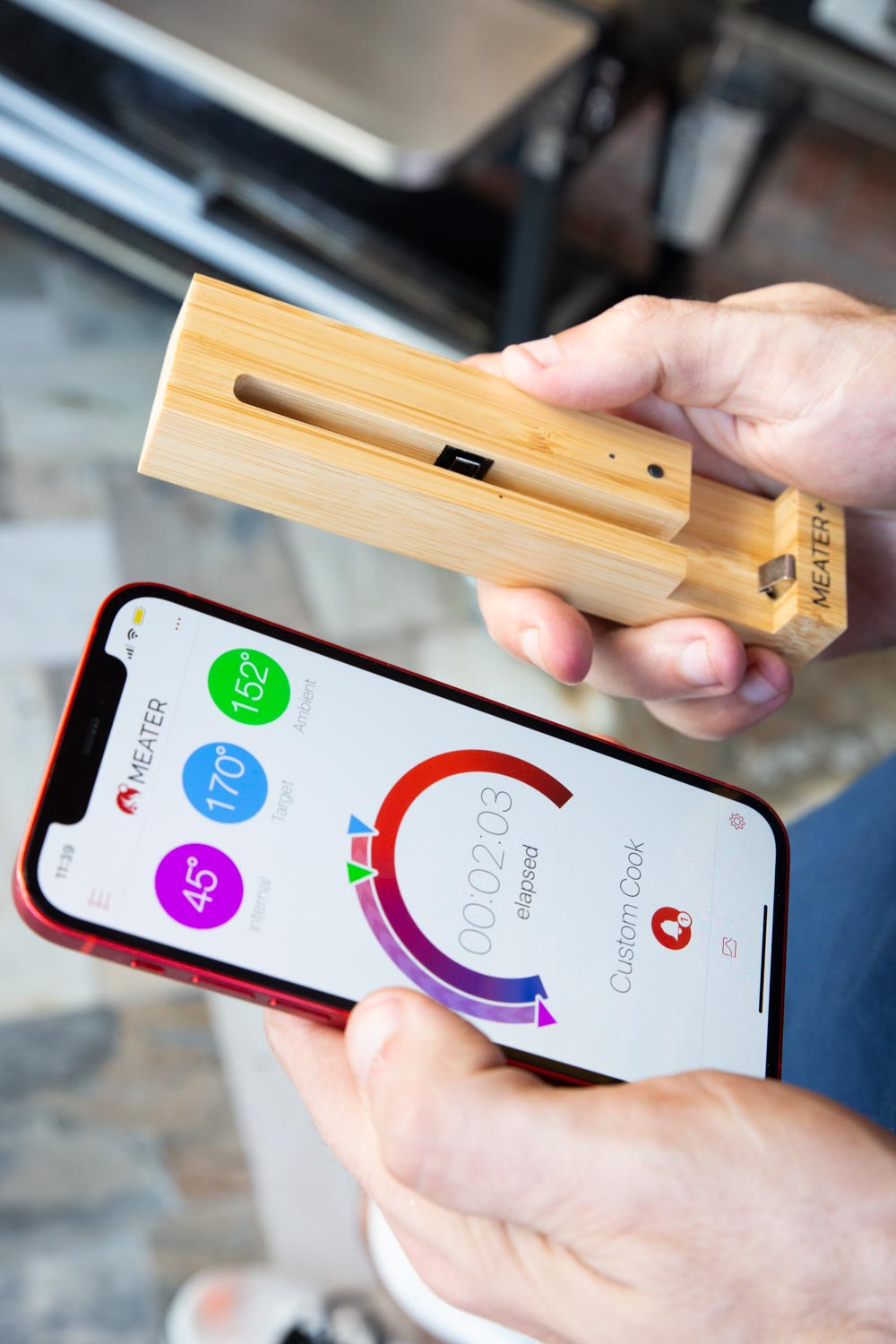
A wireless digital probe thermometer allows us to monitor the temperature of the chuck roast itself, without having to open the smoker and lose the built-up heat and smoke. Probing the meat really helps you navigate through the cook without feeling anxious and achieve swift delicious results.
And as for the temperature of the chamber, you probably already have a thermometer on your smoker giving you readings of the internal chamber temperature. Knowing the temperature in the chamber and within the chuck roast tells you exactly what is going on in there without opening and looking for yourself.
If you’re looking, you’re not cooking! You’ve heard this phrase hundreds of times if you’ve watched barbecue YouTube. (You are watching it right?! Check out our channel right here.) Although this an overused phrase, it’s very true and your choice of thermometer should support your efforts to monitor the meat you are cooking, as well as the internal temperature of the smoker.
Place the meat in the chamber and maintain the chamber at 225°-250°. You may spritz the chuck roast with apple juice, apple cider vinegar, or water once every 30-45 minutes if desired.
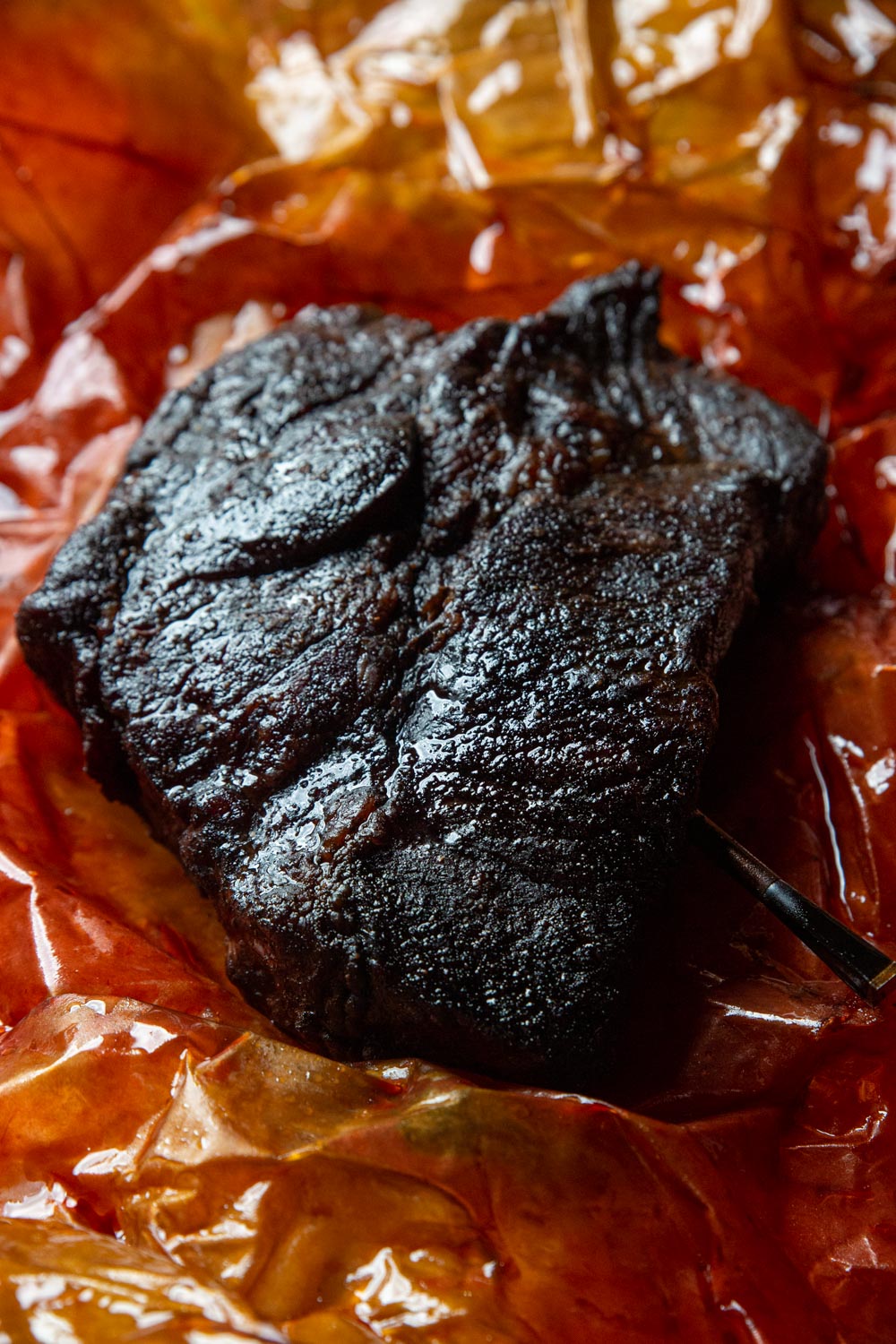
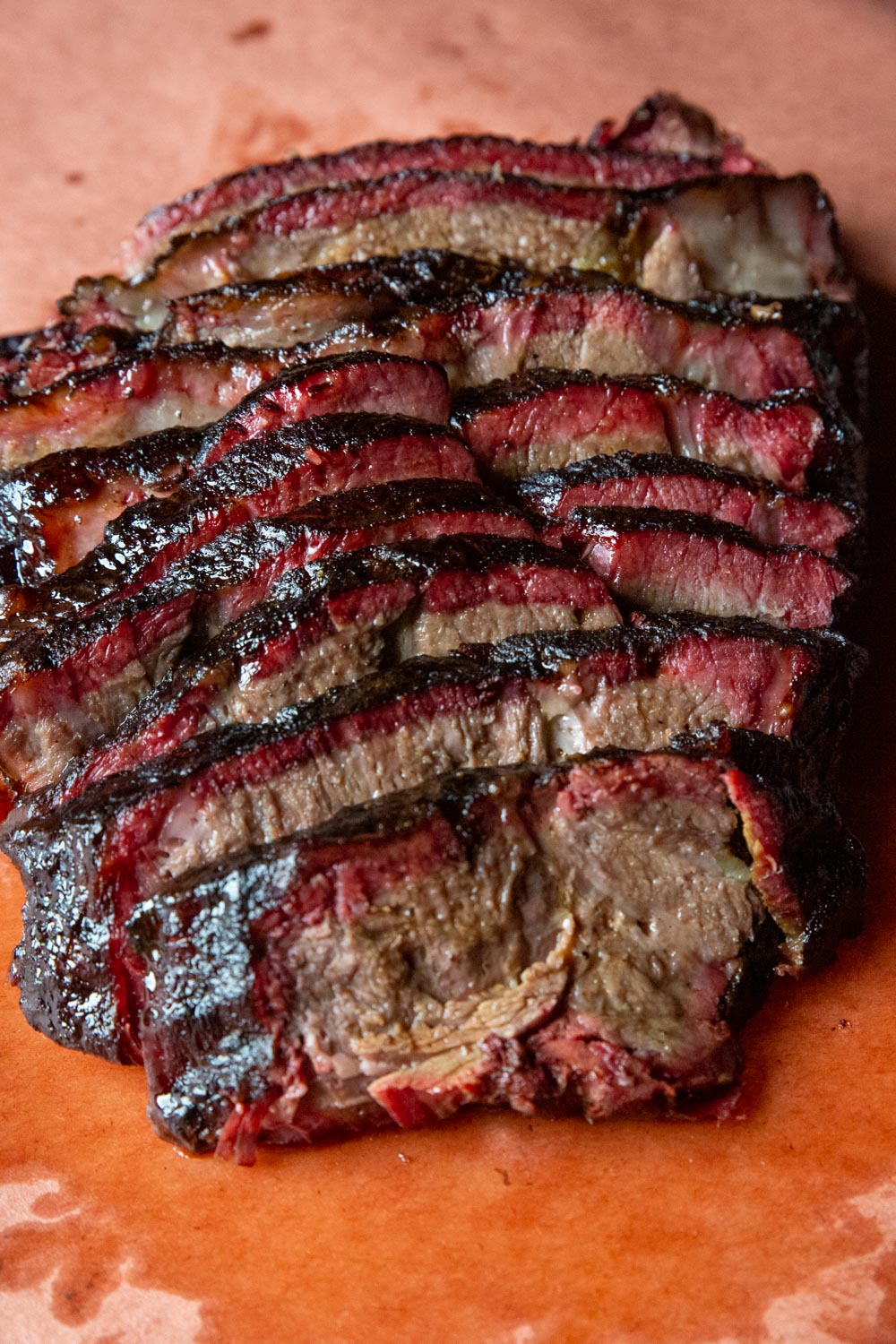
Once your probe thermometer shows the internal temperature of the chuck roast at 160-170° it’s time to wrap it. (Above all, when you hit the stall, wrap it. The exact time you hit the stall will be different for every chuck roast.) By this point, your chuck roast will have developed an amazing bark that we lovingly call “Bark Candy”.
This Bark Candy provides the most amazing flavor to any meat, including your chuck roast. And this is the reason we absolutely do not go overboard with our rub while prepping our meat. To preserve this bark candy, our favorite way to wrap is to double-wrap our beef chuck roast in pink butcher paper, instead of aluminum foil.
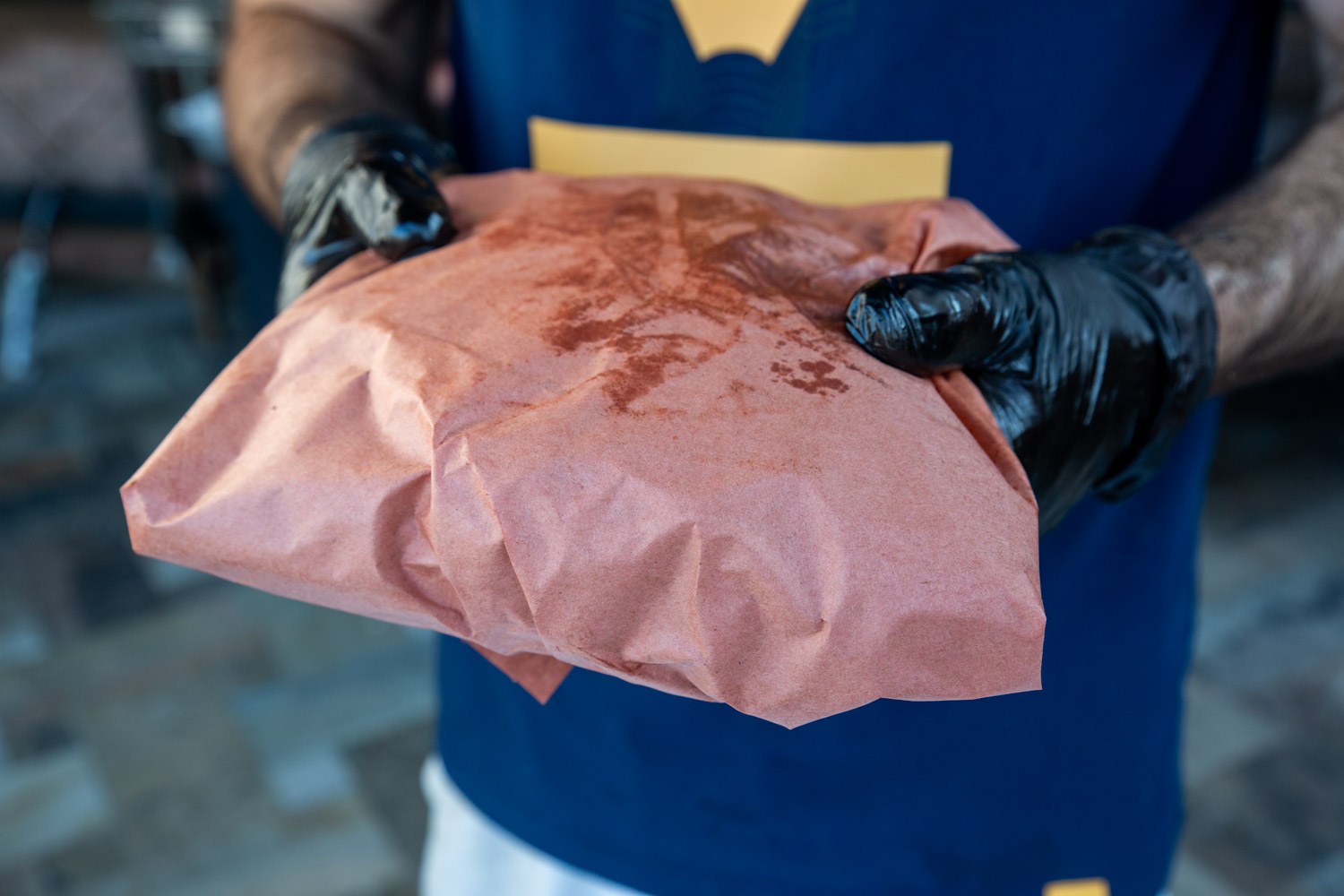
Pink butcher paper does 2 things for us. First, it helps to seal in juices that allow our chuck roast to stay nice and moist. Second, it allows some steam to escape which allows our Bark Candy to stay intact.
If you wrap your chuck roast in aluminum foil, it will trap all of the steam and you’ll have a nice, juicy pot roast—not the smoked beef chuck roast you are craving. Honestly, it will still be delicious either way, but butcher paper and foil produce slightly different results. Part of growing as a barbecue cook is experimenting with both and discovering which method you prefer.
Now that we know what to wrap our chuck roast with, the next temperature we’re aiming for is 195°F internal temperature, while keeping the smoker chamber at 225°F.
A Note On Temperature To Pull Your Meat:
Many recipes will take their chuck roast temperature up to 190° or 203° and sometimes even to 205°. The problem is the carryover heat will cause the 203° and 205° temps to go even higher, and that could potentially dry out your meat.
By taking your meat to 195°, the carryover heat will take us right around that magical 203° that gives us the perfect combination of tenderness and doneness. You should experiment with your specific smoker to find the sweet spot for your setup.
Top Tip
Once the chuck roast is wrapped, the smoker is essentially functioning as an oven. At this point, there is no real advantage to finishing the roast on the smoker, so if it’s more convenient, you can bring it inside and finish cooking it in a 225°F oven.
Resting the Wrapped Chuck Roast (Oven vs. Igloo Cooler)
Okay, your wrapped chuck roast has continued on its journey and has finally reached approximately 195° internal temperature. I bet it smells divine. Now it’s time to rest.
Keep the chuck roast fully wrapped with the probe thermometer still inserted while it rests. You can rest it in:
- a warm oven
- an insulated cooler, wrapped in a beach towel
- your pellet smoker set as low as it will go.
The goal is to keep the roast warm while allowing the meat to rest without continuing to cook aggressively. The reason for this extended rest is that the intramuscular fat and connective tissue will continue to soften as the meat gradually cools and relaxes, particularly while it remains in the 170–180°F range. You can hold the wrapped chuck roast this way for about 1–2 hours.
Another popular method is to place the still-wrapped roast in an insulated cooler, such as an Igloo, and wrap it in a beach towel. It can rest there for 1–3 hours. This keeps the meat warm while giving it time to rest and allowing the rendered fat and juices to redistribute throughout the roast.
How To Slice Smoked Chuck Roast
Now get out your cutting board because it’s time to slice your chuck roast against the grain. I always use this Cuisinart electric slicer for my large smoked beef cuts.
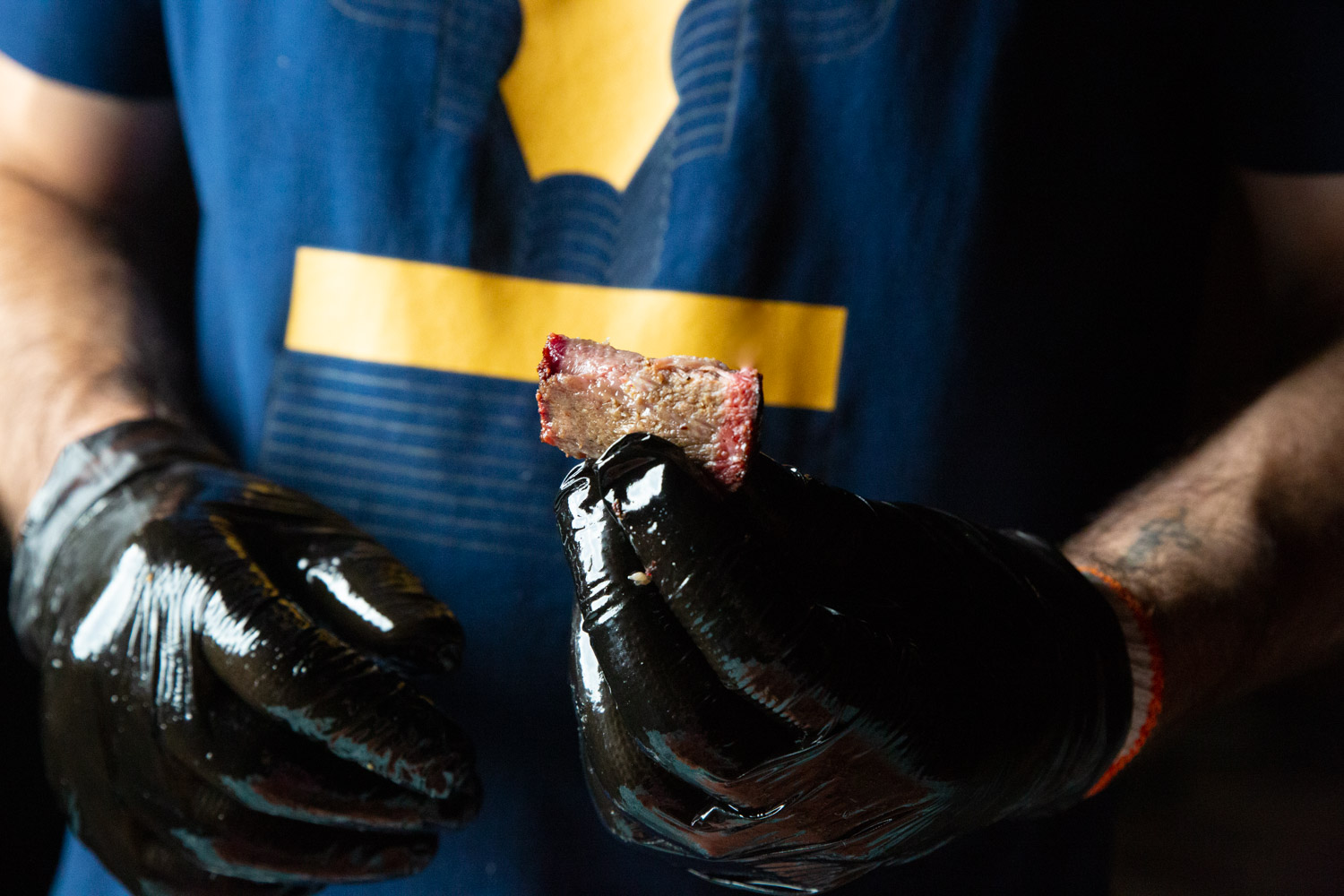
Once the chuck roast has finished resting, remove it from the wrapping and place it on a cutting board. Before you start slicing, take a moment to identify the direction of the grain, or the long muscle fibers running through the meat.
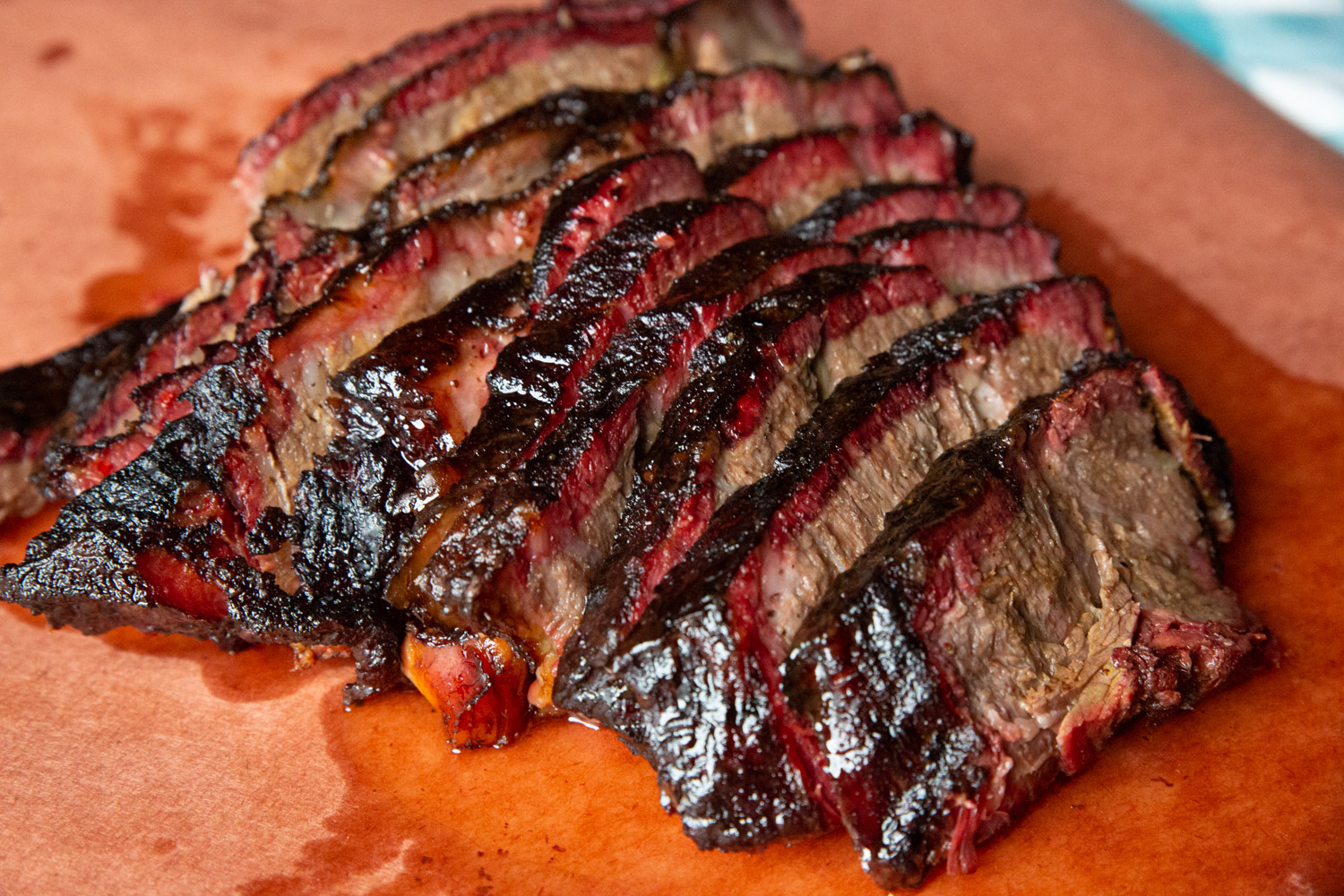
Slice the chuck roast against the grain for the most tender bite. Because chuck roast is made up of several different muscles, you may notice that the grain changes direction as you work your way through the roast. When that happens, simply turn the meat and continue slicing against the grain.
For serving, I like slices about 1/4-inch thick. If the roast is extremely tender and wants to fall apart as you slice it, slightly thicker slices will help it hold together.
Be sure to save any juices that collected inside the butcher paper or foil. Spoon them over the sliced beef just before serving for even more flavor and moisture.
Step By Step Photo Guide
- Step 1: Pat the chuck roast dry and coat with seasoning. Preheat your smoker to 225°-250° F.
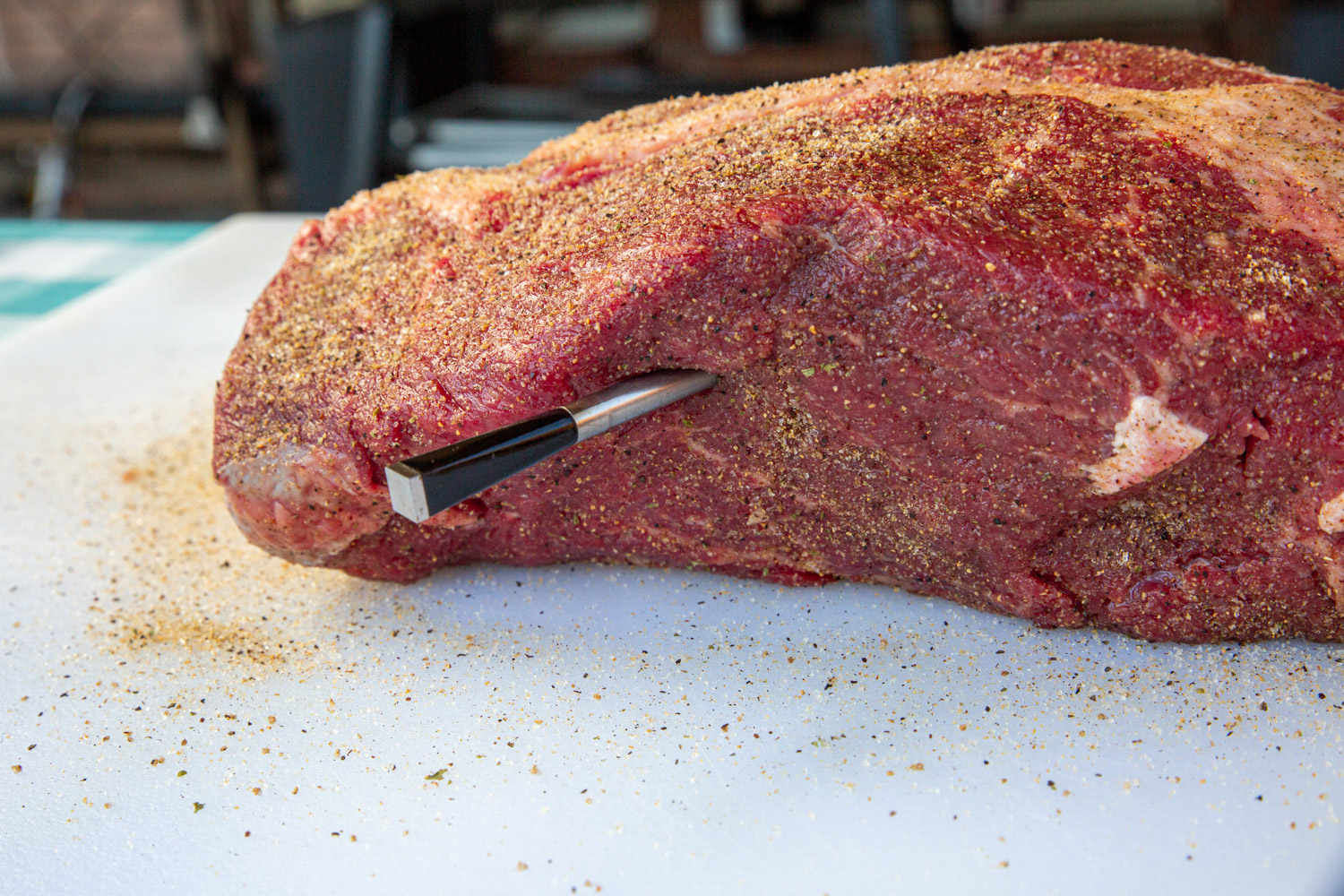
- Step 2: Insert a probe thermometer (or the thermometer wand that comes along with your pellet smoker).
- Step 3: Smoke until the chuck roast hits the stall. Spritz occasionally if desired.
- Step 4: Wrap in butcher paper. Small chucks should transfer to a foil pan and wrapped to retain moisture.
- Step 5: Continue cooking to internal temperature of 195°.
- Step 6: Rest at least 1 hour before slicing. Slice against the grain.
Advice For Working With Small Chuck Roasts
When I originally wrote this post in 2020, boneless chuck roasts were consistently around 4–5 pounds. Today, I hear from readers working with everything from 2-pound chuck roasts to massive 10-pound roasts, so the cooking method has to be adjusted accordingly.
Smoking a chuck roast under 3 pounds can be challenging but there are still ways to get great results. All large cuts of meat hit “the stall” while smoking, but with a small chuck roast, the stall creates a much bigger problem.
The meat doesn’t just stop climbing in temperature—it continues losing moisture while it sits there. With less mass to begin with, a small chuck roast can dry out before the connective tissue has had enough time to break down and become tender. The smaller the chuck roast, the greater the risk of it drying out during the stall.
Over time, one thing has become clear: chuck roasts around 2 pounds or smaller generally do not have enough mass to withstand a long, uncovered smoking process without drying out. Smaller roasts simply lose moisture much faster than larger cuts.
The Work Around
For these smaller chuck roasts, I recommend smoking them uncovered for about 1–2 hours to develop plenty of smoke flavor, then transferring them to an aluminum pan and covering the pan tightly with foil.
Once the roast is covered, continue cooking until the meat is completely tender. Rather than relying only on a specific internal temperature, check the roast with a thermometer or skewer. When it slides into the meat with very little resistance, the chuck roast is ready.
You can also add a little flavorful liquid to the pan before covering it. Good options include beef broth, barbecue sauce, prepared au jus, or even a can of onion soup. You generally only need 1–2 cups of liquid—enough to add flavor and moisture without completely submerging the roast.
This method gives you much more flexibility when smaller chuck roasts are all that is available while still allowing you to develop that wonderful smoked-beef flavor.
How to Store & Reheat Smoked Chuck Roast
Let any leftover smoked chuck roast cool slightly, then refrigerate it within 2 hours of serving. Store the beef in an airtight container along with any reserved cooking juices to help keep it moist.
Properly refrigerated smoked chuck roast will keep for 3–4 days.
For longer storage, wrap the meat tightly or place it in a freezer-safe container or freezer bag and freeze for up to 3 months. For the best texture, freeze the chuck roast with some of its juices.
When reheating, warm it gently in a covered dish with a splash of beef broth or reserved juices. Avoid overheating it, which can dry out the meat.
Related
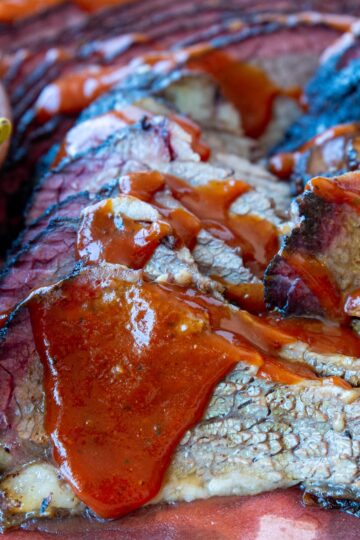
Looking for other smoked meat tutorial's like this? Try these:


Pairing
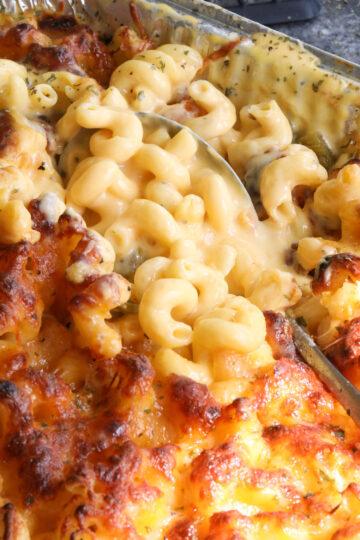
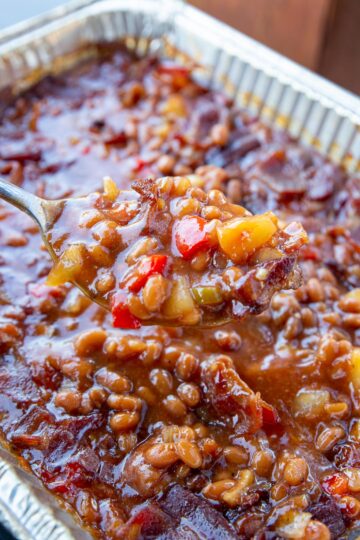
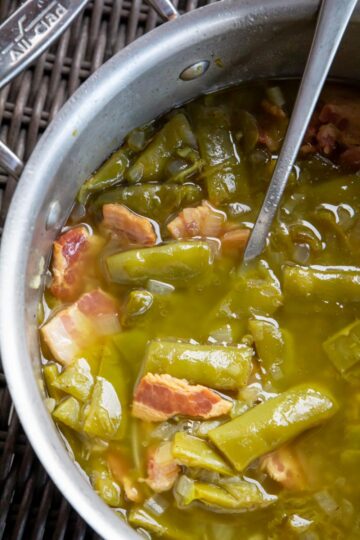
These are my favorite dishes to serve with Smoked Chuck Roast:

Have questions? Need help? Have an addition or a suggestion to a recipe? Drop me a comment below!
Join us on Social Media using the links below!!

Ultra Juicy Smoked Beef Chuck Roast Recipe
Ingredients
- 3-4 lb. boneless beef chuck roast
- kosher salt
- black pepper
- onion powder
- garlic powder
- 1 c. apple juice in a spray bottle
- 2 c. barbecue sauce for serving
Instructions
- Remove chuck roast from the package, if you are going to do an overnight dry brine, sprinkle liberally with kosher salt and wrap in saran wrap, or place in a dish tented with foil. Dry brine for 12-24 hours. After the dry brine, remove and pat dry. Continue on with the recipe.
- For the rub sprinkle the chuck roast liberally with salt and pepper first, then coat with onion powder and garlic powder. No measuring is needed just sprinkle directly from the shaker. Seasonings should be generous but meat should be able to peek through. (See photos or video for examples.)
- Prepare your smoker and set it to 225 degrees for a pellet smoker, or maintain heat from 225- 250 degrees for a standard wood-burning smoker. Place the chuck roast in the smoker and probe the meat in its thickest part. Close the chamber and smoke until the stall 160-170 degrees internal temperature, spritzing with apple juice every 30-40 minutes.
- At 160-170 degrees, remove the chuck roast and wrap well in pink butcher paper. Place back into the smoker at 225 degrees, until the internal temperature hits 195.
- Remove the chuck roast and place in the oven at 170-180 degrees for 1 hour, or rest in an igloo cooler (still inside the peach paper). The fat and meat fibers will continue to break down during this time giving you a very juicy chuck roast.
- Remove from the oven (or igloo cooler) and rest an additional hour if you like, or slice it up immediately. Serve with barbecue sauce if desired.
Amy says
I made this yesterday using a 2.5 lb bone-in roast. It took a total of 5 hours, which included a one hour rest (in a cooler). Going to 170 degrees took 2 hours, then I wrapped it in pink butcher paper and it took another 2 hours to go to 195 degrees. It was fantastic, thanks Urban Cowgirl!
KHALID AYYOUB says
This smoked beef chuck roast looks absolutely amazing! The slow smoking process must make it super juicy and tender with so much deep flavor. I love how BBQ recipes like this turn simple meat into something so rich and satisfying. Definitely a must-try for meat lovers!
Greg says
Turned out great. Thanks!
Kris says
Hard to believe but I followed this recipe to a T and this roast was unbelievable. As good as brisket just a little different. The tenderness and flavor was incredible. Maybe it is that pink butcher paper! Thank you Sarah.
Markus says
At the point that you wrap it can you throw it in the oven at 225 since the smoke will probably no longer have an affect on the meat?
Sarah Penrod says
Absolutely. There isn't a difference between the smoker and the oven after you wrap it.
brian brown says
Hi,
I just cooked my first chuck roast trying to get enough confidence to do a brisket.
I cooked a 5lb roast for about 4 1/2 hrs when it hit 165 degrees. I wrapped in paper and smoked till temp was 193, then turned the grill down to 180 and left for another hour.
The roast has great bark, good flavor but could be a little more tender. It’s not tough but maybe my expectations were too high for a chuck roast. The fat in the middle is not quite rendered down all the way.
Anything I could have done better or is this just normal for the type of meat it is?
Sarah Penrod says
Yeah, it kind of is like that with chuck roast. People want it to be an inexpensive substitute for brisket, but it really is it's own thing. I like to say its like a cross between steak and brisket.
I have a great smoked pork butt recipe that makes a smaller portion than smoking a whole brisket and pulls apart like smoked meats usually do. That might be more up your alley. Glad this worked out for you though!
Steven says
I am planning to make your smoked chuck roast for Christmas this year for my family. One note though: Choice is the second highest grade next to Prime. The order from low to high is Canner, Select, Choice and then Prime. In any case, the recipe sounds delicious!
Sarah Penrod says
Yes, you are right! Let me know how it goes!
James says
It just needed to cook longer, wrapped is all
Roger says
Thank you for the work you put into this.
Ron says
After following this recipe as it is written I had the following problem. After taking my chuck roast out of the fridge to warm up, I put my 3.25 pound chuck roast in my pellet smoker are 235F at 9:30AM thinking I would have lots of time to cook and rest. At the 4.5 hour mark the roast was still at 152F. Thinking it was at the stall I wrapped it in foil, didn't have paper. At the 6 hour mark, the roast was at 185F. I took the roast out of the pellet smoker and put it in the oven at 250F. Finally, 2 hours later the roast was at 200F with no time to rest because supper hour had arrived. It was a full 8+ hours for my 3.25 pound roast to reach temperature. I had a temp probe in at all times and checked with my Thermopen to confirm temps. I have to ask, why the length of time to cook?
Sarah Penrod says
Depending on the beef chuck roast you get, it can vary on cook time. Most will go along with the estimates provided but every now and then you have outliers. It can also depend on the smoker itself. Ours holds the temp extremely well and we have backup probes that measure our cook chamber temp because we did have the factory one fail once before. Once in about 7 years isn't bad! Chuck roast is can be more finnicky than brisket itself.
LekkerEten says
Hi!
I'm a novice so I'm wondering, I have 2x2lbs of chuck, do I smoke for 4h or 8h? I'm just trying to get my timings right!
Thanks!
Sarah Penrod says
They'll probably take less time since they're smaller individual cuts. I'd make sure to check the temp on them in order to know when to wrap them. Smaller cuts can dry out quickly if they're not watched.
Ashley says
Hi! Mine was 3 1/2 pounds and took almost 6 hours and I’d now resting for almost 2 hours. I thought it would take longer. My question is if I’m serving for company in 4 hours should I leave wrapped and in oven on warm until ready to serve or should I keep it wrapped and only warm it closer to the time of eating?
Sarah Penrod says
Hi Ashley! The more resting you can do the more fat will render! So long as your smoked chuck roast stays above 140 degrees Fahrenheit you'll be good to go. We normally wrap ours in towels and put it into a cambro container or a yeti style cooler.
Barbara says
I am making mine now. I am following your instructions to the "T". I will report how my chuck turns out. I am giving it plenty of time. It's going on at 8am. I am not an experienced barbecuer. However your instructions are pretty easy to follow. Wish me luck!
Sarah Penrod says
Hi Barbara, how did it turn out? Glad the instructions were easy to follow. I always worry if I am being clear enough without being too wordy! LOL
Kelley says
You are incorrect as select is the lowest grade of meat. Costco won’t even sell select meat in a burger grind, let alone sell any select meat product from their meat department. Choice is second and prime is obviously the best. You should learn your meat cuts before telling someone to buy select, as it’s basically like chewing on your leather work boot. The recipe itself was good but took much longer due to the stall, so make sure you plan accordingly.
Sarah Penrod says
Hi Kelley, thank you for the feedback! The stall is definitely variable based on the chuck roast size and quality you end up purchasing. If it stalls longer than 20-30 mins on us at a certain temp, we go ahead and wrap it.
John says
Almost all dry brining techniques suggest you DON'T cover the meat in the fridge and instead leave it exposed to the cool air, preferably on a gridded rack of some kind with airflow all around it. Your notes clearly say to wrap the meat after salting it so I'm curious about this and if you can share why you prefer that approach? Thanks in advance! I'm going to use your recipe and try it out this weekend.
Sarah Penrod says
I think a lot of people don't understand the science of brining. Brining is using the process of osmosis to get seasonings into the meat by using the power of equilibrium. The whole idea relies on water to be a vehicle. First the meat pushes water out due to the salt in the seasonings. Then, it will attempt to suck water (and other components like salt, rub, garlic powder, etc.) back in to the meat fibers to reach equilibrium.
We wrap the meat to catch the moisture which will flood from the meat for several hours at the beginning of this process. Then it will suck all that water back into the meat. When I was a chef this is also how it was done in the professional kitchen.
Another fun fact, a "dry brine" doesn't really exist in the professional kitchen, just a "dry rub". A wet brine does, and the concept of placing seasonings on meat the night before does. A brine requires water and salt, so a dry brine is in itself a misnomer. I suspect like many things it is a creation of the internet.
I am always interested in learning more and could be proven wrong, but as far as culinary science goes I don't see a way around this truth. If you are interested in reading more, I recommend the indispensable book, On Food and Cooking, by Harold McGee.
Adam says
Can I inject the chuck roast with apple cider of beef broth?
Sarah Penrod says
I'd say try it if you like that flavor! Let me know how it turns out!
Greg says
Was super excited to try this! I’ve never smoked meat before and this seemed like an easy one to start with. But I don’t know what’s going on as I’m almost to my 9th hour and it’s just stuck at 167. Here is what I did.
Traeger Pro 575 pellet
4lb Chuck roast
Tray of water inside
225 degrees.
I got impatient at 168 degrees so took roast out and wrapped it. Back in at almost another hour now and it’s down 1 degree.
What am I missing here? We should be eating by now but it’s taking way longer. Would love some help! I’m super discouraged.
Sarah Penrod says
Hi Greg, did you happen to check the temperature with another thermometer to verify it at 168 degrees? I recently had an issue with a brisket that seemed off but turns out the onboard smoker thermometer was reading incorrectly. So I now use our MEATER probe AND the onboard thermometer with every cook. Can't have that happen when it comes to expensive meats!
Chris says
Well explained 👏
Sarah Penrod says
Thank you good sir!
John Stern says
It appears that you use the Meater temp probe INSIDE the pink butcher paper wrapping.... Do you have any issues with it transmitting the temperature by doing it this way- such as having to move the Meater block closer to the grill/ smoker, etc.? I would prefer it this way, as poking the Meater through the paper would seem to potentially lose liquid, heat, steam, etc. THanks!
Sarah Penrod says
I don't have any problems wrapping the probe. My contact at Meater says that is not an issue. Hope this helps!
Kevin says
Had a 3.5 lb bone in chuck, went 12 hours!! Plan accordingly!!
Sarah Penrod says
If you wrap it in the 150's when it begins to stall it won't need to smoke that long. Hope this helps.
Tristan says
This is the most comprehensive article I have found, really good! Thank you. If I may comment, only addition would be if you meat happens to stall. My meat stalled at 61 degrees C at 6 hours, waited 1.5 hours (7.5 hours in) for it to only creep up only 1 degree. I had to move to the second phase due to time constraints and fear of drying out the meat.
Lyn says
I want to add to my post that everyone that tasted my no rub brisket and ribs, absolutely loved it and one couple travels the US tasting BBQ and they said if not the best it was one of the best they ever tasted. Their job requires coast to coast travel, during their travels they eat BBQ at different places.
Lyn says
I smoked a brisket for 3 hours before adding any rub. After 3 hours I pulled the brisket out and applied the rub, seasoned salt, coarse black pepper, onion powder, garlic powder, chili powder. I honestly think it enhanced the smoke flavor and still had a very nice bark.
Now on the flip side. I first started smoking brisket, ribs, etc 15 years ago and used no rubs, of any type, dry or wet. I took the brisket out of the Cryovac and straight on the smoker. No trimming, no rubs, wet or dry, out of package and in the smoker. I smoked at 150* for 20 hours, put the brisket in a deep, long SS pan covered air tight with extra heavy duty foil for 4 hours at 250 degrees. and to this day it is still the best tasting I have ever had, you get total meat and smoke flavor without all the rigamore.
Guy says
Hi. So over 3 paragraphs you espouse the idea of "if you lookin, you ain't cookin"... Then the next paragraph suggests spritzing very 40mins... How does that reconcile? Serious question by the way, not being smart arse
Sarah Penrod says
Open chamber, spritz, close chamber, walk away. Should take less than 8 seconds. In the beginning of your journey you will want to look at the meat, ask your family to look at the meat, take pictures with your cell phone, etc. LOL We all do it. But this drops the temperature and humidity in the chamber and it can take 30 minutes to return to the temperature it was at before you opened it. So, just keep it brief. It's always a balance between looking and learning versus keeping the chamber hot and humid. You'll get the hang of it after awhile.
Bruce says
Can I go through all the steps except for slicing, refrigerate and slice and heat the next day.
Sarah Penrod says
If you reheated in an oven and add 1 cup of beef broth that would work.
MB says
Used your recipe for 2.5lb prime chuck roast. It was fantastic! At 3 hours in it hit 190F. I wrapped it in brown paper (it was all I had) it immediately dropped to 160. Put it back on the grill for 45 minutes and it came up to 200. I pulled it and wrapped in newspapers for an hour, then we ate. Man was it good! Really nice black bark on the outside and tender, greasy, goodness throughout. Thanks for the great guidance and well-written recipe! P.S. My smoker ran a little hot at 275.
Jerry Clark says
I use this method every time I do chuck roast Sarah! It is different from brisket but with brisket prices so high this is a needed alternative. Love your brisket school by the way!
Jerry Clark says
Another win in this house! Wrapped mine a little early, as soon as a nice bark started.
Jacob says
Can I use parchment paper instead of butcher paper? And can I use a five pound roast? Thanks.
Sarah Penrod says
I think parchment paper would degrade on the smoker because it's not meant to hold in juice. I would def grab some butcher paper as long as you continue to use your smoker.
Luther says
@Jacob, HI- I am unable to get pink or untreated butcher paper at my small town grocery - will brown paper grocery bag wrapped double do the trick? Thank you in advance
Sarah Penrod says
Hey Luther, I'd use the link in the post for the pink butcher paper to be most convenient. The paper bags at stores can have adhesives/glues and other additives in them that may or may not be food safe. All I know if I wouldn't use the paper bags myself but I can't make decisions for you and your family! 🙂
Ben says
Second cook on my new pellet smoker. New to smoking overall. After following this recipe I’m hooked on smoking. Juicy tasty and cut it with your fork tender
Tyler says
I like to get prime beef no matter what I am cooking and smoking it with your recipe was so freakin' good. Bravo!
Celine says
Hi there,
Going to be trying this tonight; taking a break from brisket! FYI as someone who comes from a large cattle ranching family, I just wanted to point out that Select is the lowest grade while Choice is the next best. Then you have prime. We grade a high percentage of our stock in prime, but will use choice cuts for smoking low and slow. You can’t tell the difference. Steaks are typically what you want a prime finish on. Anyhow, thank you for the recipe. 🙂 excited to try!
Chris says
Hello, is peach paper a misspell and you meant pink paper? Or, is there something called peach paper?
Sarah Penrod says
Hi Chris, thanks to Amazon sellers they are calling it both. Peach butcher paper is what I have always called it but now other sellers are calling it pink butcher paper. It's the same thing. It's just butcher paper.
Don G says
Turned out perfect. Wrapped at 150 per instructions for a small chuck.
Neko says
Hi Sarah 🙂 About to try your recipe tomorrow with a beautiful 3.75 lb choice chuck roast I picked up on sale here in my area for $13 (BOGO sale at my local grocer). I am using a vertical pellet smoker. My question is related to the water pan in the vertical smoker - would you suggest with the chuck roast to use it or leave it empty during cooking?
Thanks 🙂
Sarah Penrod says
Always use a water pan forever, no matter what, no matter who tells you that you don't need to. Forever. 🙂 With that small of a chuck you prob want to wrap about 145-150.
Neko says
@Sarah Penrod,
Awesome - thanks for the quick reply. Yes, I was reading different info and getting so much mixed info on the water pan for my smoker. I'm ready to start my cooking adventure today soon 🙂
Matt forster says
This sounds delicious. Should I follow this for a 2.95 lb Chuck?
Daniel says
Thanks, great recipe! I'm going to try it next Saturday. My chuck roast (USA Grain Fed) is 3 lbs. At what temperature do yo recommend to wrap it?
Stephen says
I have a 2.95lb chuck roast - right on the verge. I guess what I’ll do is monitor temps between 140-150 and if I enter stall, to wrap then.
My cut is bone-in (are they usually?), and I don’t know whether that will affect things one way or another.
Rick Tara says
You wrote:
Like any cut of beef, the grades go in this ascending order – Select, Choice, Prime
Then said choice was lowest. Those sentences conflict. Otherwise a great recipe. Brilliant idea to leave in oven at 180 instead of cooler.
Sarah Penrod says
Thanks for catching that Rick! Thanks so much for your comment.
Lee says
I am not finding Pink Butcher Paper locally and I want to smoke this in 1.5 days. What can I use for a substitute? I know alum. foil is a no no 🙂
Kaz says
I've smoked a chuck roast so many time and the results are hit or miss. Your site was the first one to mention that a smaller roast has trouble cooking because it dehydrates too quickly (which makes perfect sense). Thank you for that info! Would you recommend wrapping it right before the stall to avoid this on let's say a 2.5 lbs roast(around 140-150)?
Sarah Penrod says
I definitely would wrap early like 140-145. I can't promise it will come out looking like mine when they are smallish, but it can be done. The reason it doesn't come out the same is you don't get a lot of bark if it is not exposed to the smoke for very long, but I totally understand that with meat so expensive we've got to do what we can to keep rolling smoke.
I would say wrap early, and add a bit of liquid to the wrap like butter or broth so it can truly braise once it is wrapped. That way in the end you will at least have something that is tender and juicy!! Hope this helps and can't wait to hear back! - Sarah
Perry says
@Sarah Penrod, I wonder if injecting a smaller roast would help to add enough moisture to keep the roast in the smoke longer and not dry out
Sarah Penrod says
Injections really add more flavor than moisture.
Instead of a small chuck roast, I can prob think of other things that would be more fun to smoke and still turn out juicy.
Right now I am working on eye of round because they are 15$ at Sam's and when you slice them thin they give prime rib vibes. Not as tender but you cook them to med rare and serve with au jus. Also, maybe smoking a whole chicken or turkey. These are inexpensive like a small chuck roast but the results are way better than smoking a small chuck.
Rush Shortley says
@Sarah Penrod, Beef tallow is a great moisturizer to use when wrapping the roast in the butcher paper. As with a brisket, it will keep the meat nice and moist while finishing. I make my own beef tallow in the pellet grill using the fat cut off briskets and the other cuts of beef that require trimming before grilling—smoked tallow is the greatest!
Michael says
You have choice as lowest grade which is incorrect. Select is lowest, choice is mid grade and prime is best.
Sarah Penrod says
Thanks Michael, you are right. I wrote them in the wrong order. 😉 Appreciate it!
Lex Quinton says
This is not correct.
"Choice is the lowest grade but what most of us will be purchasing at our local grocery store. Select or Prime can be found in specialty grocers and Costco." Choice grade is not the lowest it is just below prime. Select is below Choice in grade.
Drew says
Happy football Sunday. Just wanted to let you know that your method is spot on. For the others who have used/will use a smaller roast, pull the thing out at 150. Personally I think it's silly to smoke a 1.5 lb piece of meat (might as well be a steak at that point), but you HAVE to take it out earlier. I typically use a 2.5lb chuck for my chili I make for Sunday funday. Pull it out at 150, put it in a foiled container, add a tad of broth/beer and go up to 190ish. Takes basically a total of 4-5 hours for the whole process. Rest it for an hour. Cut up to chunks and add to final stages of chili. If you're using a 4lb roast, just follow the instructions given to you by this awesome smokin cowgirl! Good stuff!!!
Sarah Penrod says
Thanks Drew! I am glad to hear it worked out for you!
Mark says
Thank you for these tips. Here's my small roast success story w/ my Big Green Egg.
I dry brined a ~2.5 lb roast for 8 hours overnight, after coming up to room temp, used your simple rub suggestion and then placed in the Egg (w/ place setter) and several chunks of apple wood at 250°F (stayed 240–260 whole time). Meat hit 150° after 2 hours of smoking, and then wrapped in foil with some apple cider vinegar, water and a little bourbon. The wrapped meat temp rose quickly and hit 195° in just under 2 hours. Let it rest for a good 2 hours in cooler inside. So, it only took me about 4-4.5 hours of cooking on the grill.
As you mention, stability of internal heat makes a big difference and the Egg is great for that, but boy is it hard to keep down to 225°!
Sarah Penrod says
This sounds great Mark! Glad it worked out nicely. 🙂
Terri says
@Mark,
Thanks for your details on wrap & baste ingredients!
I've found that on warm summer days, lighting 2 small spots @ the edge of the pile, opposite each other & only opening the bottom & top vent halfway @ max while heating up to temp takes a little longer but helps with temp control, as it doesn't run away from you as fast as full open. That along with a full water pan, allows me to keep it @ 225 for at least the 1st 6 hours of my cook. I'll light 3 small spots on days below 60. The water pan helps a lot too.
Dale Parker says
Choice is a better grade than select
Mike B. says
On your Texas rub recipe: 2 Questions
Ingredients
½ c. table grind black pepper
½ c. Lawry’s seasoning salt
2 T. garlic powder
2 T. onion powder
1 T. Gebhardt’s Chili Powder
½ t. cumin
1/2 t. cumin does (t.) 1/2 mean tablespoon or teaspoon
2nd question: on your Ultra Juicy Smoked Beef Chuck Roast Recipe
don’t show some of the ingredients listed above, but you suggest your Texas rub for the chuck roast recipe. This is my first cook ever on a pellet grill (recteq RT 700) and I don’t want to mess it up. Which should I use? sorry for 3rd question.
3-4 lb. smoked chuck roast
kosher salt
black pepper
onion powder
garlic powder
1 c. apple juice, in a spray bottle
2 c. barbecue sauce for serving
Sarah Penrod says
Little t for teaspoon, big T for Tablespoon. I plan on moving away from kitchen shorthand! The rubs are almost identical and either choice will be terrific on this chuck roast.
Jack says
Instead of dry brining with salt. Could/should I use my beef rub to let the flavors set in over night? Thanks!
Sarah Penrod says
Yes, that's a great technique. I would add some additional rub before smoking because the first round will seep into the meaat.
Fred says
The details about the pink paper are very specific and clear, but then, there are no details about how long to cook this. I did read in the comments that you say it shouldn't take any longer than 6 hrs, but that is about how long it takes me to do a pot roast in a crock pot with this kind of cut of meat in order to truly get it tender. Could you estimate a bit on the time to reach those key steps of wrapping and then of resting?
Sarah Penrod says
Hi Fred, sorry it has taken me so long to get to you. I was out of town and then got covid from the airport.
I feel like there have been some issues with people using this recipe to smoke chuck roasts that are much smaller than 3-4 lbs. I will be adding some notes that smaller chuck roasts really need to be wrapped between 140-150. This is because the stall happens earlier for these little roasts, they dry out, and then they simply don't want to hit the wrapping temp because they have dehydrated.
So, if you wrap at 145-150, that gives you 2 hours of smoke time, then you wrap, spritz and continue smoking till you hit the pull temps listed. Using my Rec Teq Bull this is 6-7 hours. I rest for 1 hour at least. I feel like if anyone is struggling with longer smoke times its because they have smaller chuck roasts than what the recipe is made for... or are spritzing too often. Spritzing drops a minimum of 3 degrees and can take 20 minutes to recover in some cases. Regardless, I will be updating this recipe with additional information. Mainly, to smoke a chuck roast they need to be pretty large, the 3-4 lbs listed.
Yeo says
I used a trager grill with digital reads outs and a digital thermometer. No room for error at that point. Yes I did pull it at 180. Then let it rest for a hour. It should’ve hit your recommendation regardless.
Sarah Penrod says
Yes, and what your issue was, was that you used a 1.3 pound chuck roast, which you stated in another comment with so much profanity that it had to be removed. This recipe will only work for 3-4 pound chuck roasts, as stated in the recipe. The smaller chuck roast cannot hit 180 degrees because there is no water left in it to conduct heat. It was too dried out. With smaller chuck roasts it may work to wrap at 145-150 because they are hitting the stall faster than a 4 pound chuck roast. They can also be smoked for 2 hours, placed into an aluminum pan with some beef broth, tented with foil and braised the rest of the way. This allows some smoke flavor while still giving a smaller roast the liquid that it needs to finish cooking.
T Smokes Butts says
@Sarah Penrod, I'm sorry people can be so danged nasty! It's pretty easy for them NOT to put themselves out there with recipes and ideas and then criticize all the folks that do...fallout of the wonderful internet age I guess.
Anyway, your method has worked awesome for me on both a 2.5 and a 3# cheap roast and it is the only way I'll ever do a roast again. Can't wait to try more of your stuff, yall are killing it!
Cheers from Kansas!
Yeo says
This recipe works great when people actually read and follow the directions!
Sam says
Do you put the temp probe through the butcher paper or wrap it up inside? I’ve got meater probes like you do.
Sarah Penrod says
Oh just leave it in there...inside the butcher paper. I insert it in the beginning and never take it out until I am done resting. Have a good cook! -Sarah
JMTUTS says
1.67 lbs Chuck Roast, on hour 9, got to 170, wrapped in butcher paper, back in the smoker, temp back down to 167, when will this ever end?
Sarah Penrod says
You can't smoke a 1.67 pound chuck roast. This recipe is for a 3-4 pound chuck roast. Your small roast was dehydrated and did not contain enough moisture to conduct heat. If you want to use a smaller chuck I recommend smoking it for 2 hours and then placing it in an aluminum pan with a cup of beef broth seasoned with your favorite rub. Tent with foil and continue braising it. This way you will have some smoke flavor but you'll be adding moisture back into the roast.
Bearded Bear says
2.3 lb chuck roast.
Followed the instructions. I did not have red butcher paper, I used heavy foil. I'm currently in my 10th hour and still have not reached 195°.
I bumped the temp up at hour 9. 2/3 through a bottle of vodka, thinking this is at most a 6 hour cook. Wife and I had hot dogs for dinner. I'm seeing this through. Maybe smoked chuck roast and eggs for breakfast. Not sure I'm smoking beef again. I have always had great success with pork loin (on time) and trout. This has me tripped up
Sarah Penrod says
Hello Brian,
I am not sure what happened here but I would be happy to talk to you about it if you want to email me through my contact page. There are many variables when smoking barbecue, but I can't think of any situation where a 2.3 lb. chuck roast would take over 6 hours. Since it sounds like you have had some less-than-desirable experiences with other meat, I'm wondering if your smoker chamber is maintaining heat. The foil was fine to use and wouldn't cause any issues. Can you let us known what your smoker set up is like? Is it traditional smoker or a pellet grill? How many times did you open the chamber? When did you wrap? etc. Beef is just the tastiest barbecue in my opinion, so we want to help you figure out where things are going wonky. - Sarah